Category
page 1Sabellida

Siboglinidae
Siboglinidae is a family of polychaete annelid worms whose members made up the former phyla Pogonophora and Vestimentifera (the giant tube worms). The family is composed of around 100 species of vermiform creatures which live in thin tubes buried in sediment (Pogonophora) or in tubes attached to hard substratum (Vestimentifera) at ocean depths ranging from . They can also be found in association with hydrothermal vents, methane seeps, sunken plant material, and whale carcasses.

Osedax
Osedax is a genus of siboglinid polychaetes, commonly called snot worms or bone-eating worms. Osedax is Latin for 'bone devourer', derived from the worms' unique ecological niche of bone-boring. Osedax settle on a bone, then secrete an acid through specialized root tissues to dissolve the bone's external layers in order to access the lipids within. Osedax act as ecosystem engineers, enhancing the biodiversity of bones they inhabit by increasing their structural complexity, allowing microfauna to inhabit otherwise inaccessible regions of the internal bone.

Sabellida
Sabellida is an order of annelid worms formerly in the class Polychaeta. They are filter feeders with no buccal organ. The prostomium is fused with the peristomium and bears a ring of feathery feeding tentacles. They live in parchment-like tubes made of particles from their environment such as sand and shell fragments cemented together with mucus.

Sabellidae
thumb|Sabellidae tubes at Bremerhaven
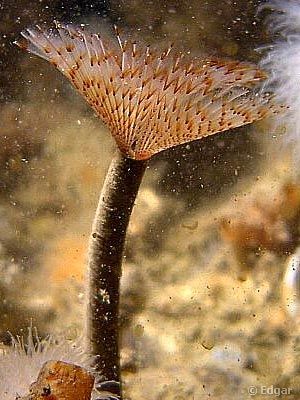
Sabellidae, or feather duster worms, are a family of marine polychaete tube worms characterized by protruding feathery branchiae. Sabellids build tubes out of a tough, parchment-like exudate, strengthened with sand and bits of shell. Unlike the other sabellids, the genus Glomerula secretes a tube of calcium carbonate instead. Sabellidae can be found in subtidal habitats around the world. Their oldest fossils are known from the Early Jurassic.

Oweniidae
Oweniidae is a family of marine polychaete worms in the clade Palaeoannelida. The worms live in tubes made of sand and are selective filter feeders, detritivores and grazers.
Lamellibrachia
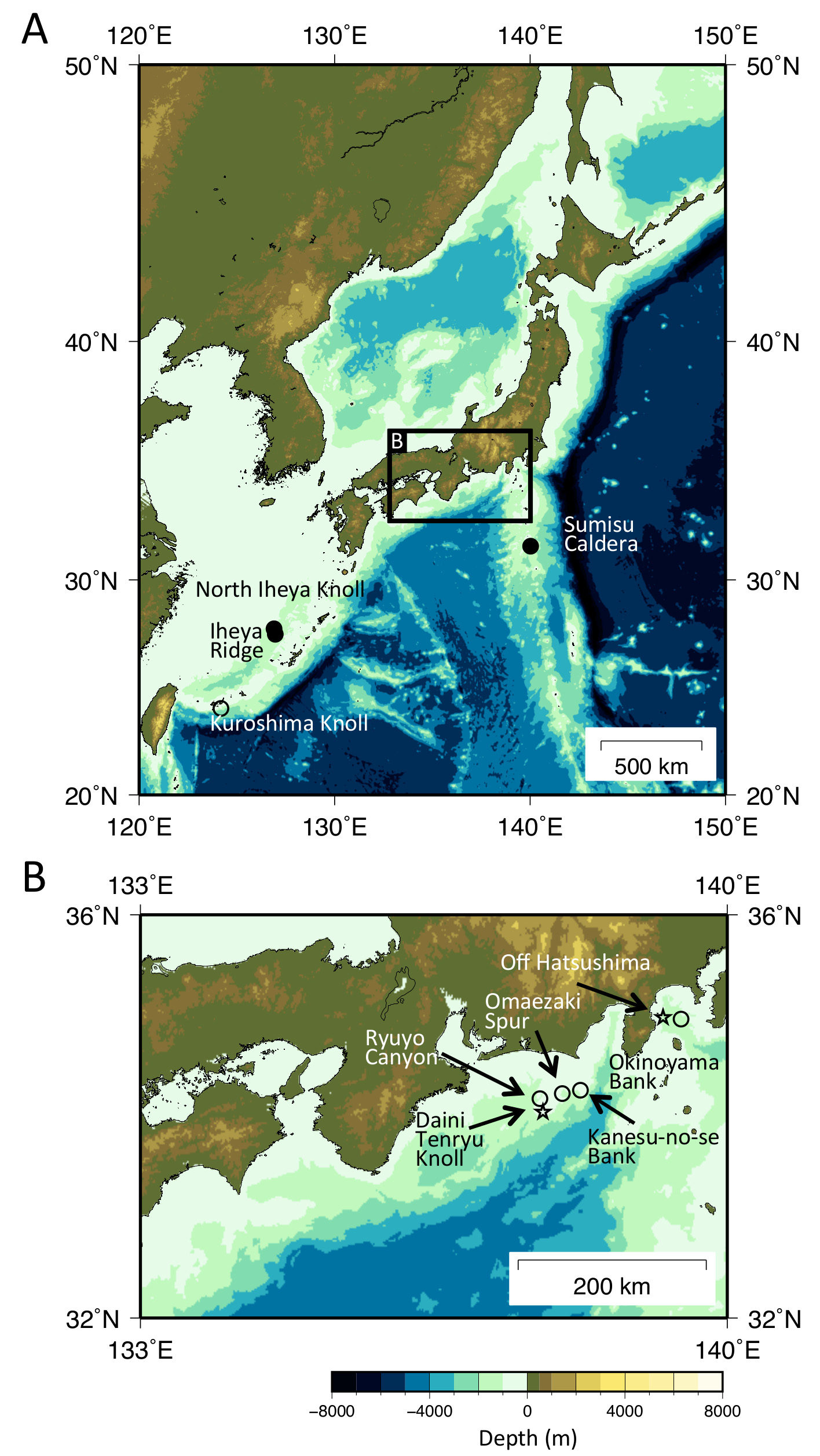
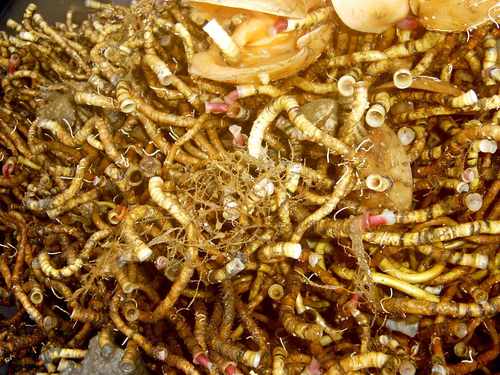
Lamellibrachia is a genus of tube worms related to the giant tube worm, Riftia pachyptila. They live at deep-sea cold seeps where hydrocarbons (oil and methane) leak out of the seafloor, and are entirely reliant on internal, sulfide-oxidizing bacterial symbionts for their nutrition. The symbionts, gammaproteobacteria, require sulfide and inorganic carbon (carbon dioxide). The tube worms extract dissolved oxygen and hydrogen sulfide from the sea water with the crown of plumes. Species living near seeps can also obtain sulfide through their "roots", posterior extensions of their body and tube. S

Peacock worm
species of annelid

Sabella spallanzanii
species of annelid
Bispira volutacornis
species of annelid
Lamellibrachia luymesi
species of tube worms in the family Siboglinidae

Sabellariidae
Sabellariidae is a family of marine polychaete worms in the suborder Sabellida. The worms live in tubes made of sand and are filter feeders and detritivores.
Sabella
genus of annelids

Sabellaria alveolata
species of annelid

Osedax rubiplumus
species of annelid
tube worm
common name for marine animals
Sabellaria
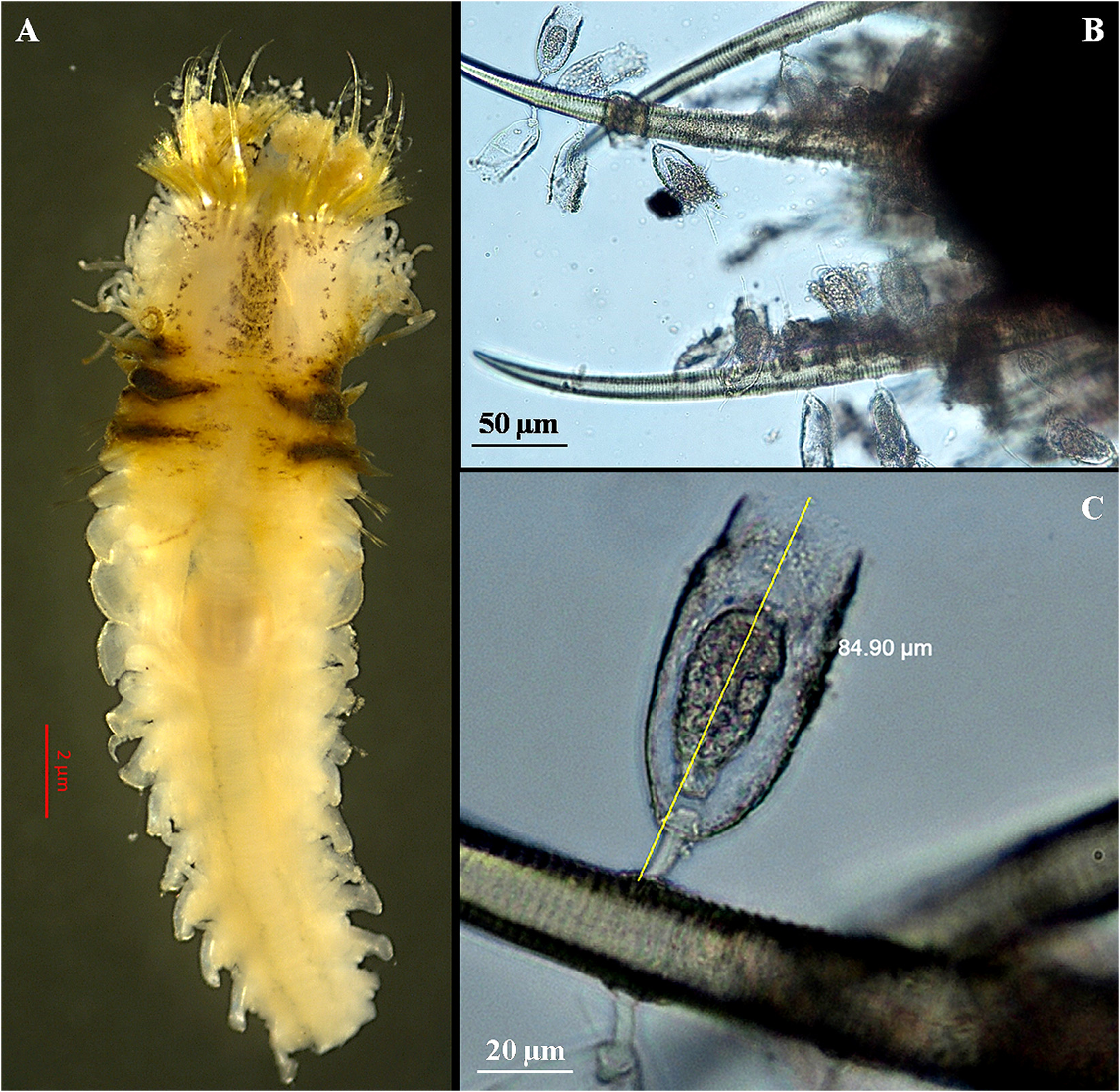
Sabellaria is a genus of marine polychaete worms in the family Sabellariidae. The type species is Sabellaria alveolata (Linnaeus, 1767). These worms are sedentary and build tubes in which to live from sand and shell fragments. Some species are called honeycomb worms and when they occur in great numbers they can form reefs on rocks and other hard substrates. They are filter feeders, extending a plume-like fan of radioles from the end of the tube in order to catch plankton and detritus floating past. They have a distinctive operculum which is used to block the opening of the tube when the radiol

Osedax frankpressi
species of annelid
Myxicola
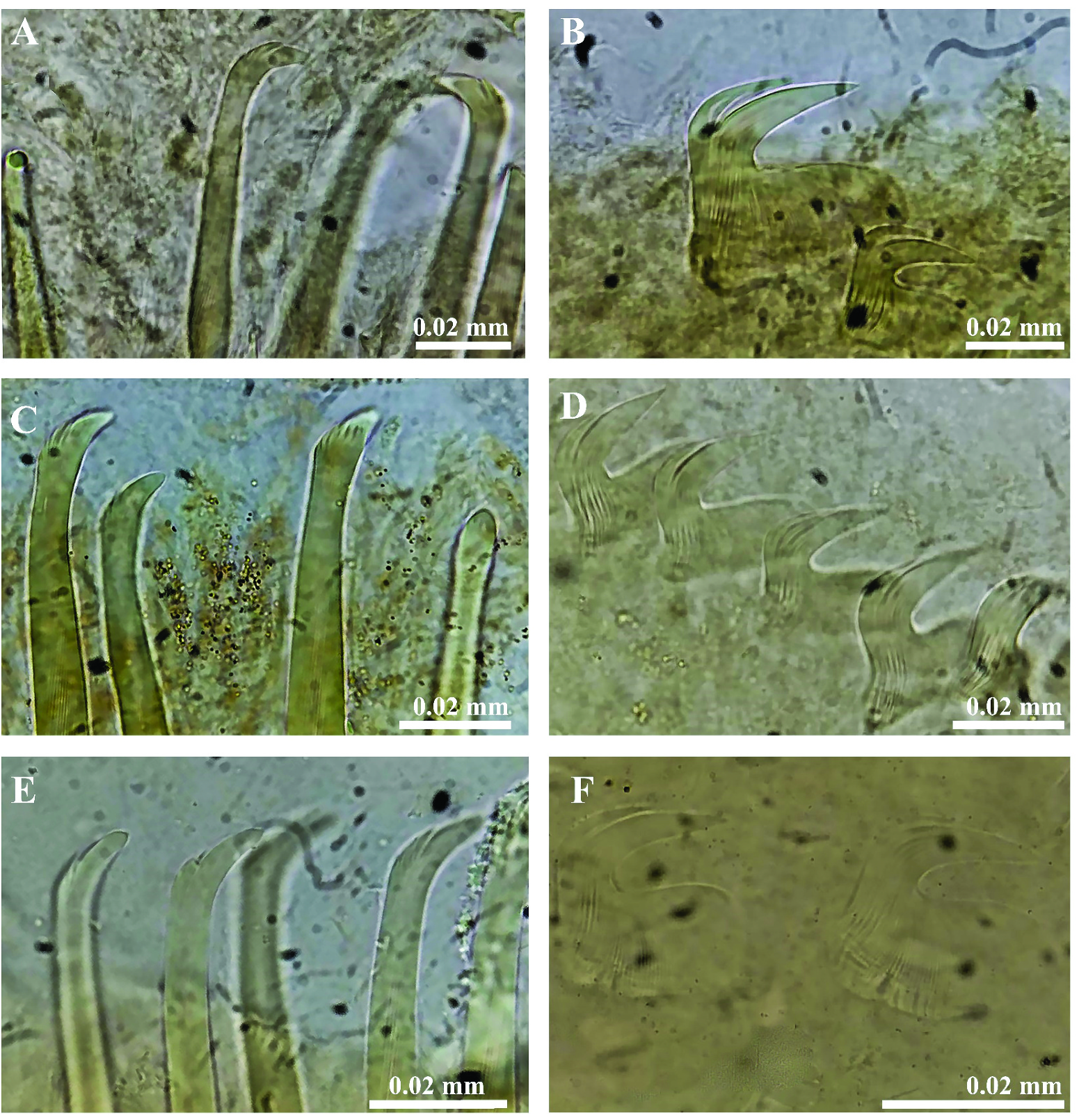
Myxicola is a genus of polychaetes belonging to the family Sabellidae.
Osedax mucofloris
species of annelid
Bispira
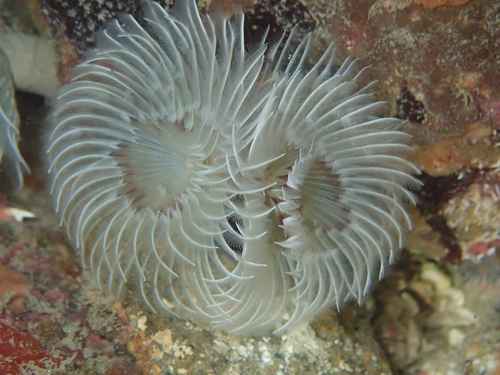
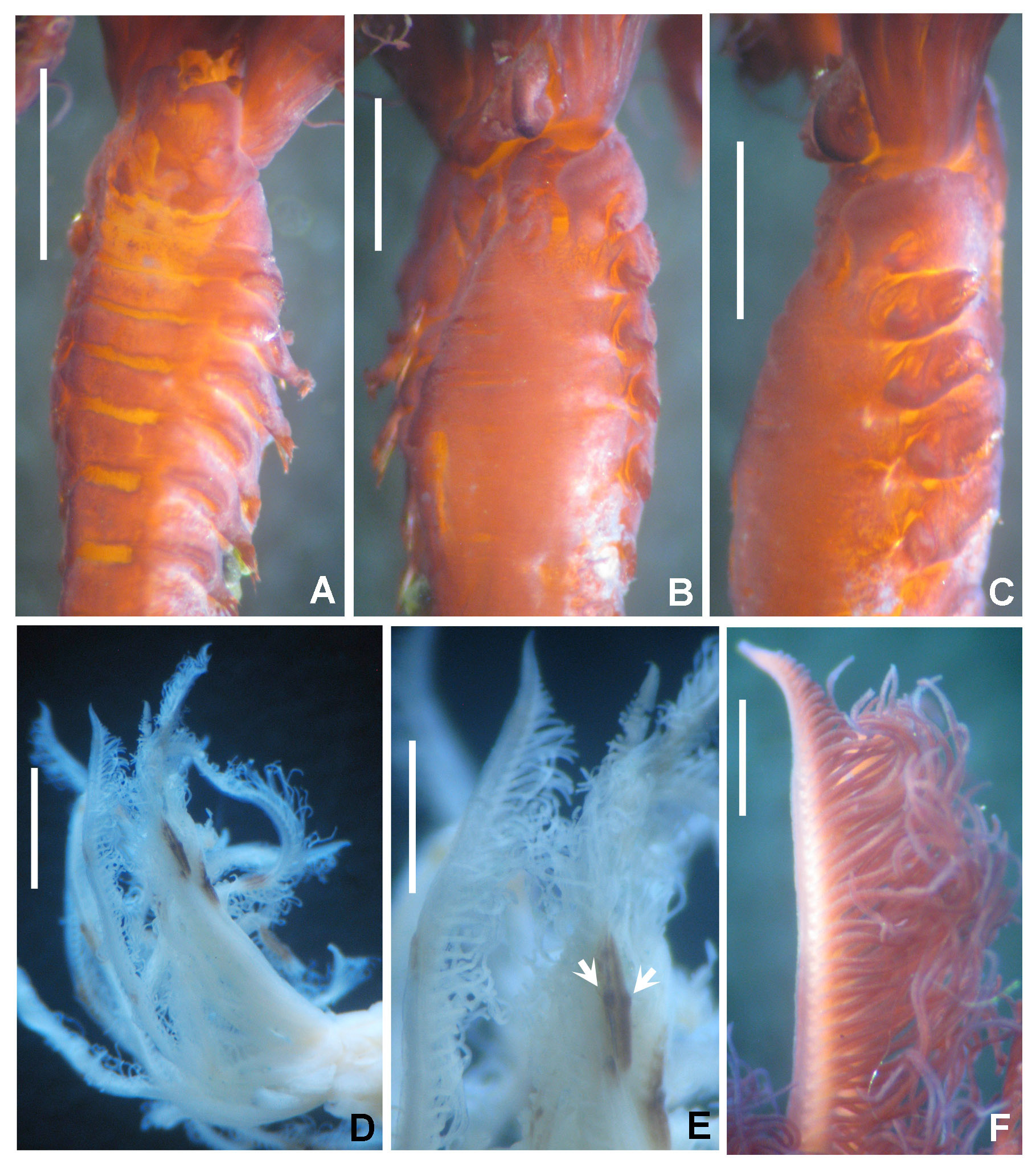
Bispira is a genus of marine bristleworm in the family Sabellidae. Its members were initially included in genus Sabella by Grube in 1851. In 1856, Krøyer described Bispira as a separate genus. Members of Bispira are defined by spirally-coiled, equally-divided branchial lobes.
Fabriciidae
Fabriciidae is a family of annelid worm in the class Polychaeta.
Eudistylia
Eudistylia is a genus of marine polychaete worms. The type species is Eudistylia gigantea, now accepted as Eudistylia vancouveri. This worm lives in a parchment-like tube with a single opening from which a crown of tentacles projects when the worm is submerged. It is a sessile filter feeder. Eudistylia vancouveri is unique because it has an operculum which makes it possible to fully retract into the tube when predators are sensed.
Owenia
genus of annelids
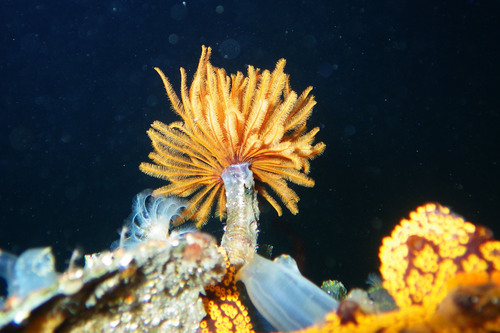
Eudistylia polymorpha
species of annelid
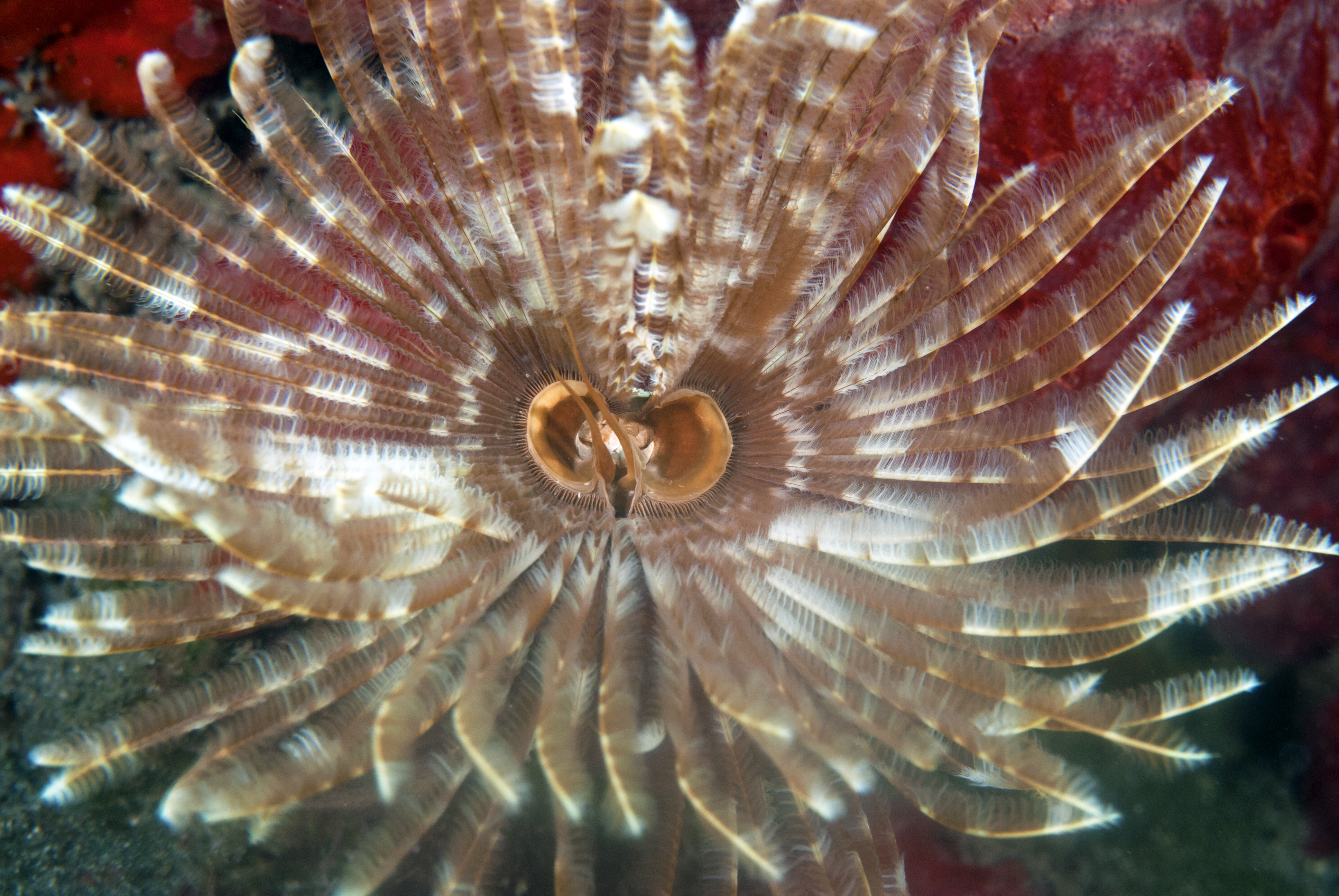
Sabellastarte magnifica
species of annelid

Sabellaria spinulosa
species of annelid

Fabricia
genus of annelids

Sabellastarte longa
species of annelid
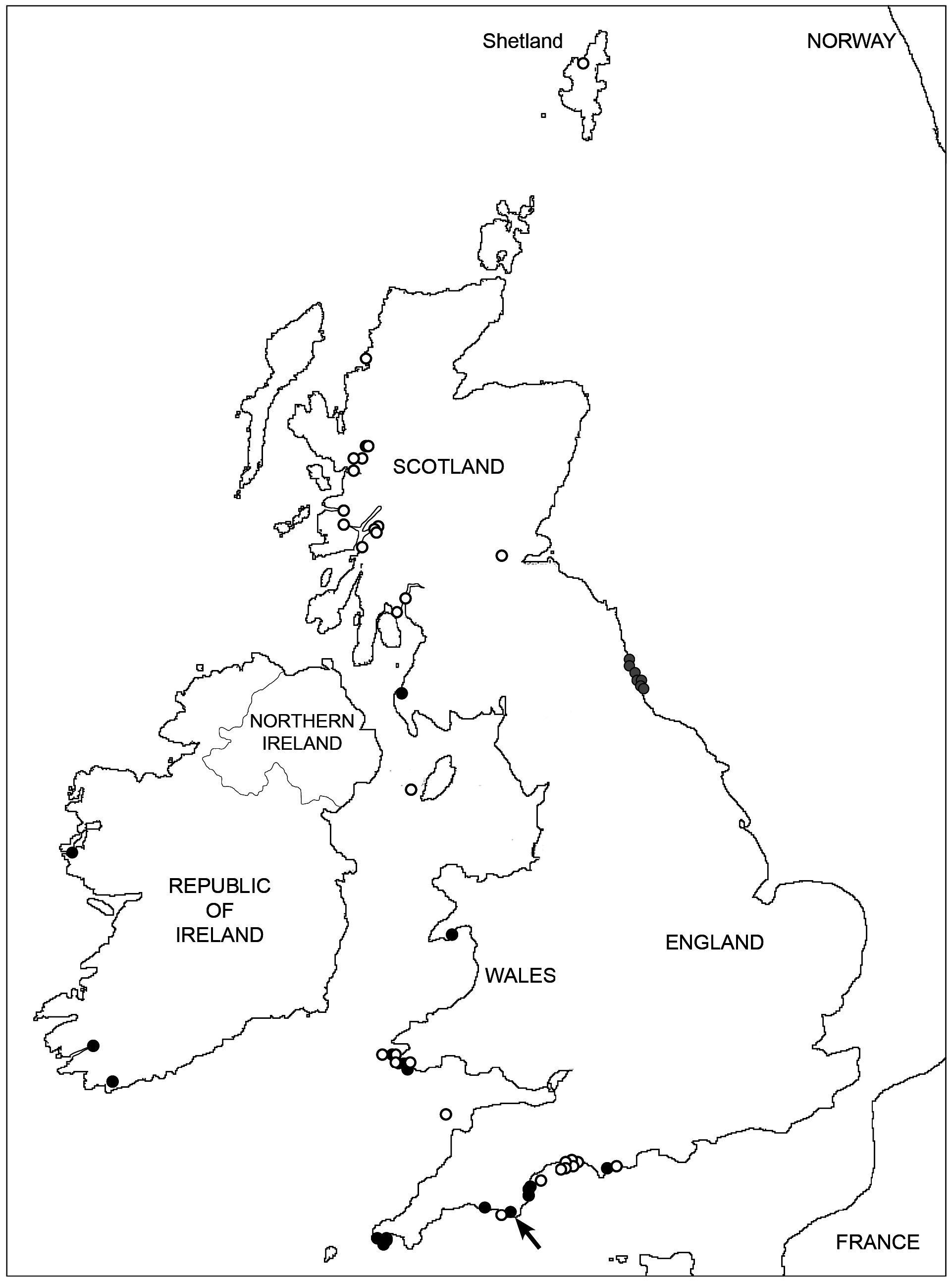
Myxicola infundibulum
species of annelid

Sabellastarte
Sabellastarte is a genus of marine polychaete worms in the family Sabellidae.
Sabellastarte spectabilis
species of annelid
Chone
genus of annelids
Sabellaria alcocki
species of annelid
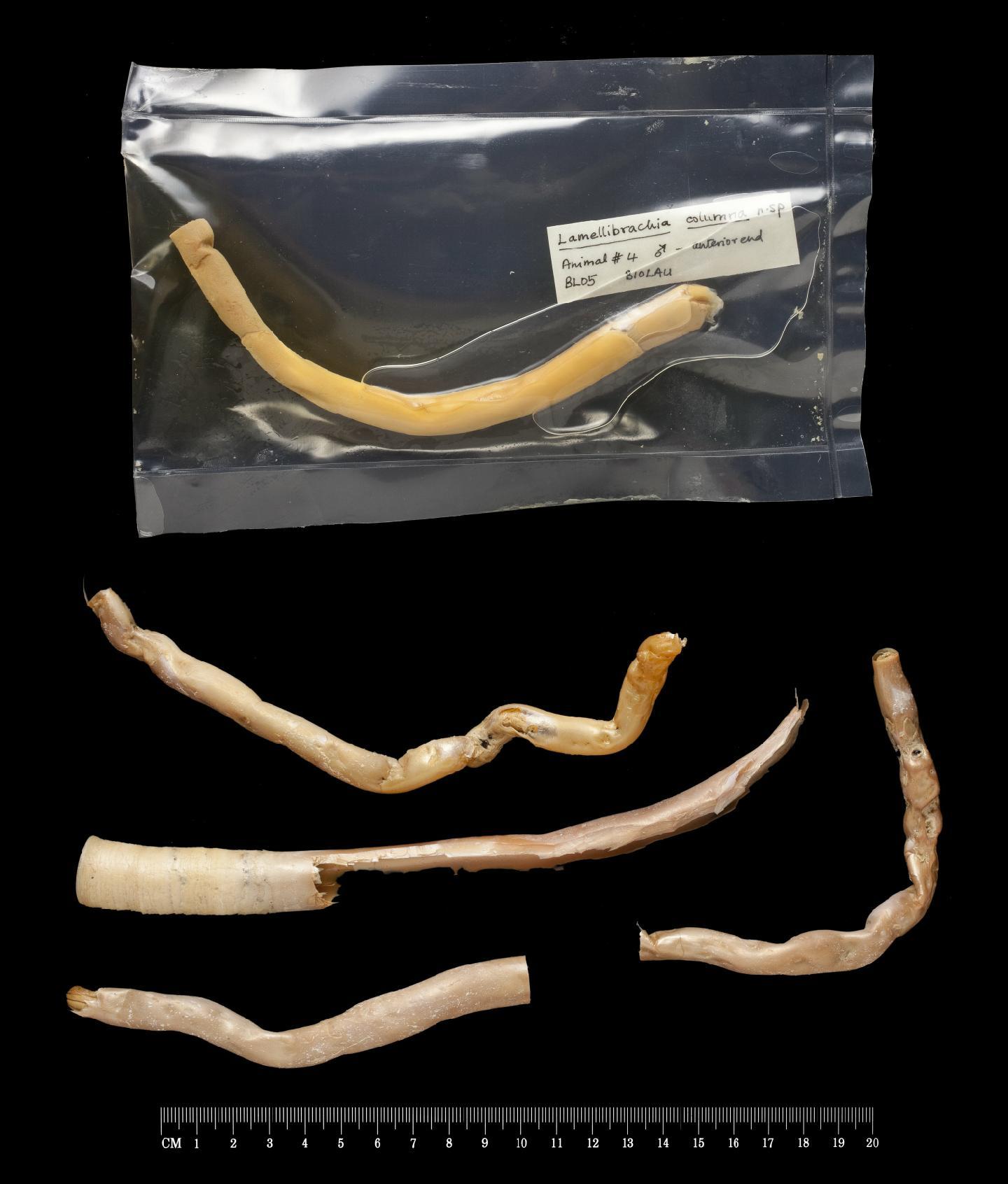
Lamellibrachia columna
species of annelid

Jasmineira
Jasmineira is a genus of polychaetes.
Lamellibrachia satsuma
species of annelid
Sabellastarte sanctijosephi
species of annelid
Sclerolinum contortum
species of annelid
Osedax roseus
species of annelid
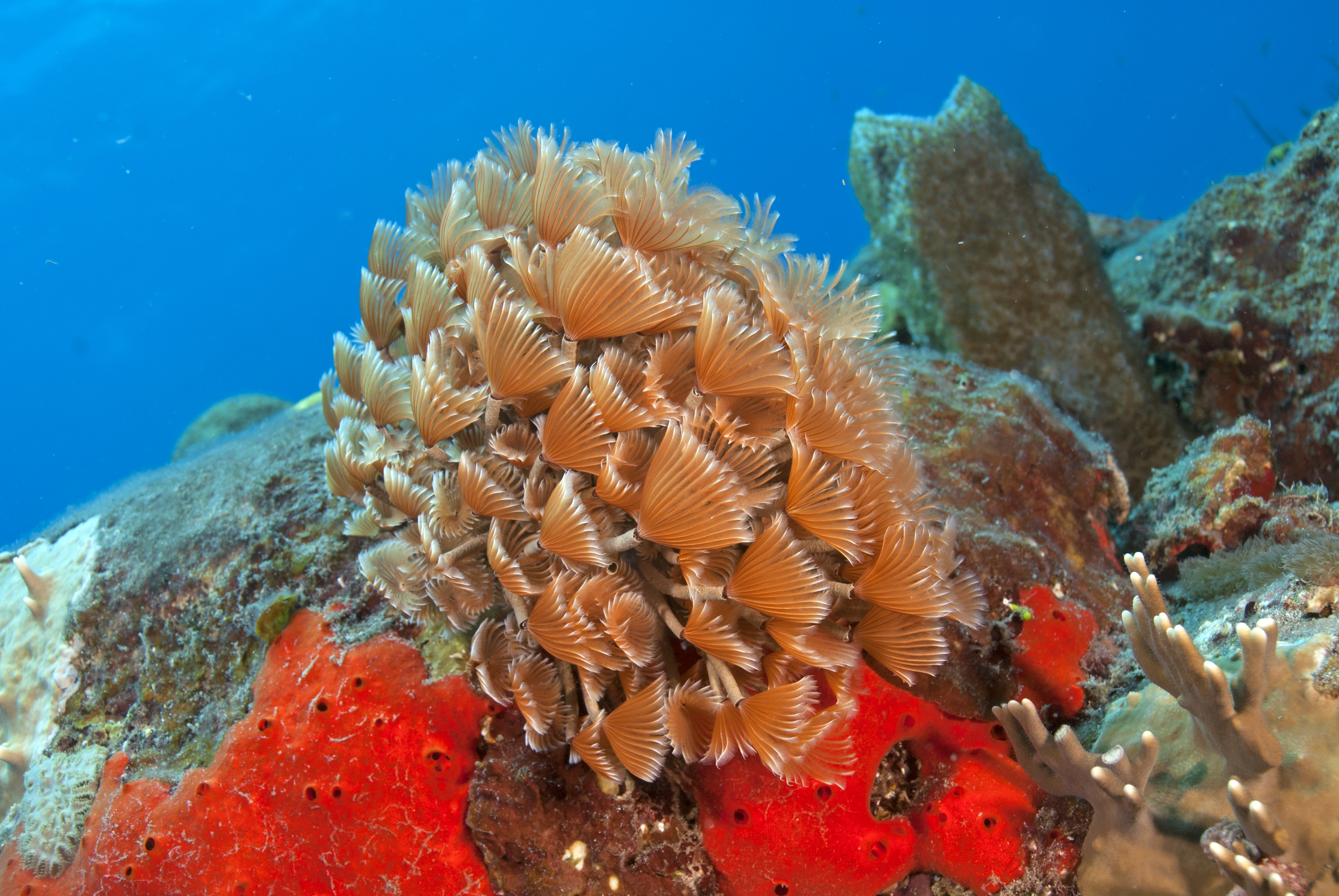
Bispira brunnea
species of annelid
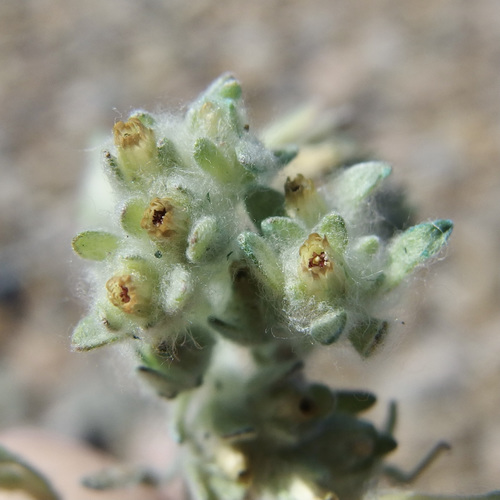
Glomerula
thumb|Glomerula piloseta, longitudinal section of the tube
Tevnia jerichonana
Tevnia is a genus of giant tube worm in the family Siboglinidae, with only one species, Tevnia jerichonana, living in a unique deep-sea environment. These deep sea marine species survive in environments like hydrothermal vents. These vents give off gas and toxic chemicals with the addition of having superheated temperatures. The giant tube worm prefers environments such as these despite the harsh temperature and toxic sea water.
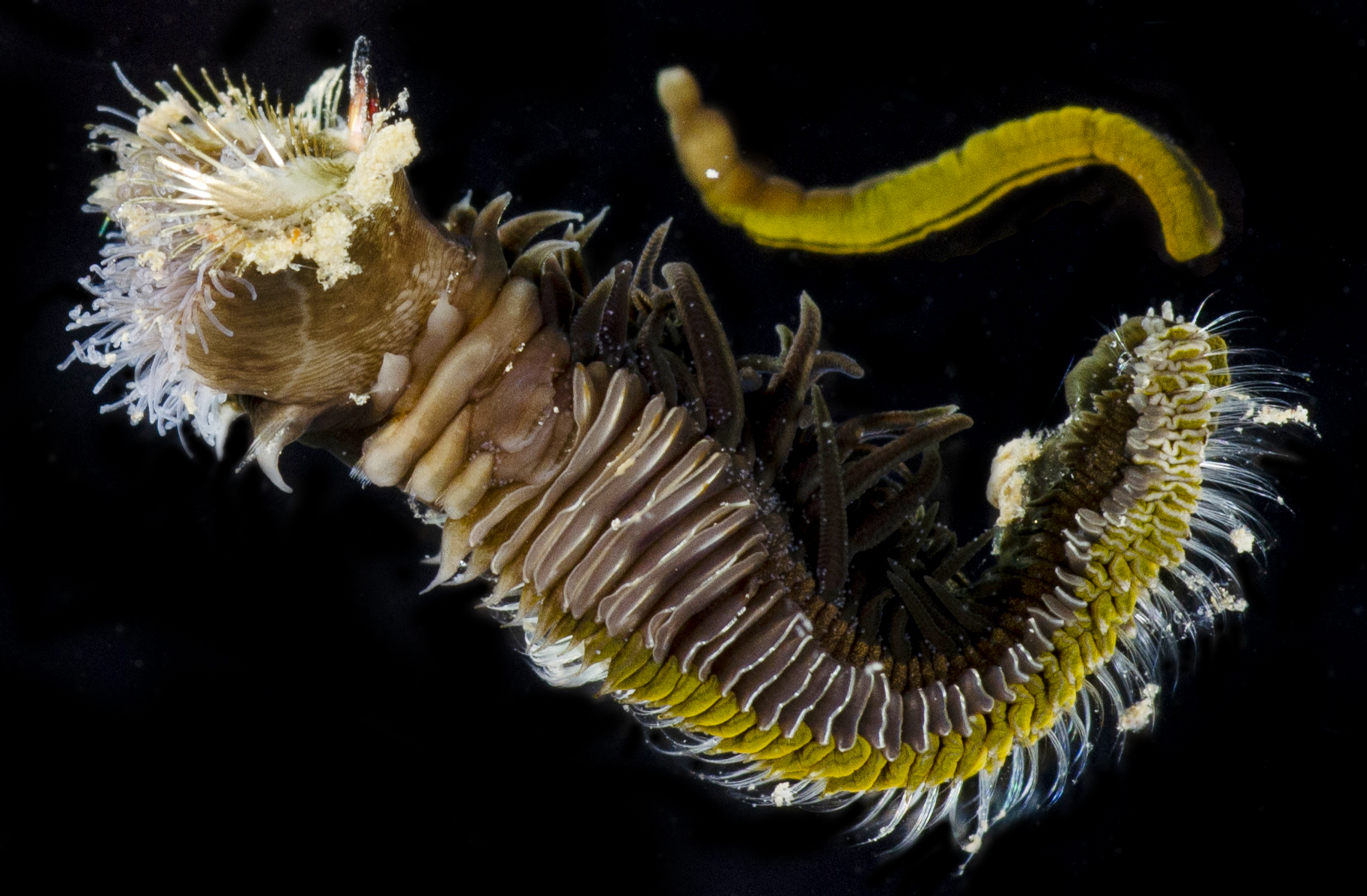
Idanthyrsus
genus of annelids
Jasmineira elegans
species of annelid
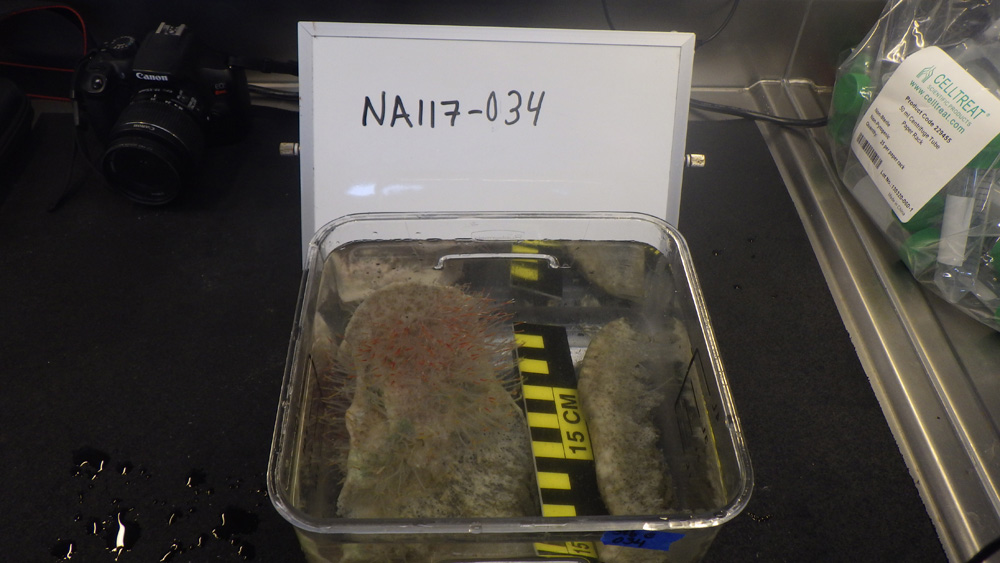
Oligobrachia
Oligobrachia is a genus in the family Siboglinidae, commonly known as beard worms. These beard worms are typically found at spreading centers, hydrothermal vents, and undersea volcanoes. The Siboglinidae are annelids that can often be found buried in sediments.
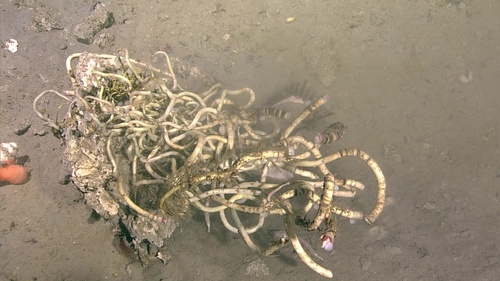
Lamellibrachia barhami
species of annelid

Schizobranchia insignis
species of annelid
Osedax priapus
species of annelid
Schizobranchia
Schizobranchia is a genus of marine feather duster worm. It is closely related to Pseudopotamilla and Eudistylia, and is distinguished by its dichotomously branched radioles.
Heptabrachia
Heptabrachia is a genus of tube worms in the family Siboglinidae.
trophosome
A trophosome is a highly vascularised organ found in some animals that houses symbiotic bacteria that provide food for their host. Trophosomes are contained by the coelom of tube worms (family Siboglinidae, e.g. the giant tube worm Riftia pachyptila) and in the body of symbiotic flatworms of the genus Paracatenula.
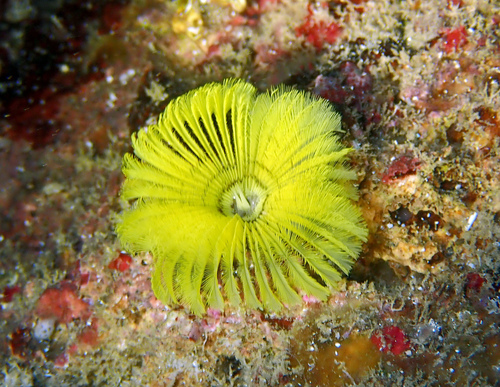
Notaulax occidentalis
species of annelid
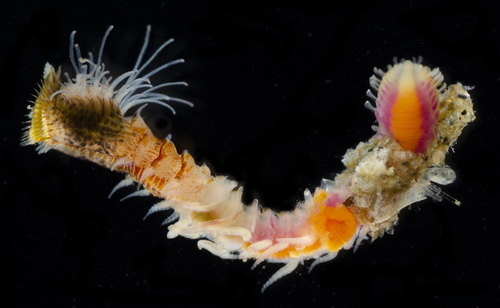
Neosabellaria cementarium
species of annelid