Category
page 1Sacred rocks

Uluru
Uluru (; ), also known as Ayers Rock ( ) and officially gazetted as UluruAyers Rock, is a large sandstone monolith. It crops out near the centre of Australia in the southern part of the Northern Territory, south-west of Alice Springs.

menhir
upright=1.5|thumb|Large menhir located between Millstreet and [[Ballinagree, County Cork, Ireland]]
thumb|The Caramujeira Menhir, currently preserved at the Silves Municipal Archeology Museum, in [[Portugal]]
thumb|Cwm Rhaeadr Fawr maen hir (menhir) near Aber Falls, [[Gwynedd, Wales]]
thumb|Dry Tree menhir – a standing stone at [[Goonhilly Downs, Cornwall]]

megalith
thumb|Dolmen at [[Ganghwa Island, South Korea (c. 300 BC)]]
thumb|Megalithic Batu Brak, Lampung Province, Indonesia (c. 2100 BC)
thumb|Megalithic grave Harhoog in [[Keitum, Sylt, Germany (c. 3000 BC)]]

Black Stone
rock set into the eastern corner of the Kaaba in Mecca, Saudi Arabia, revered by Muslims
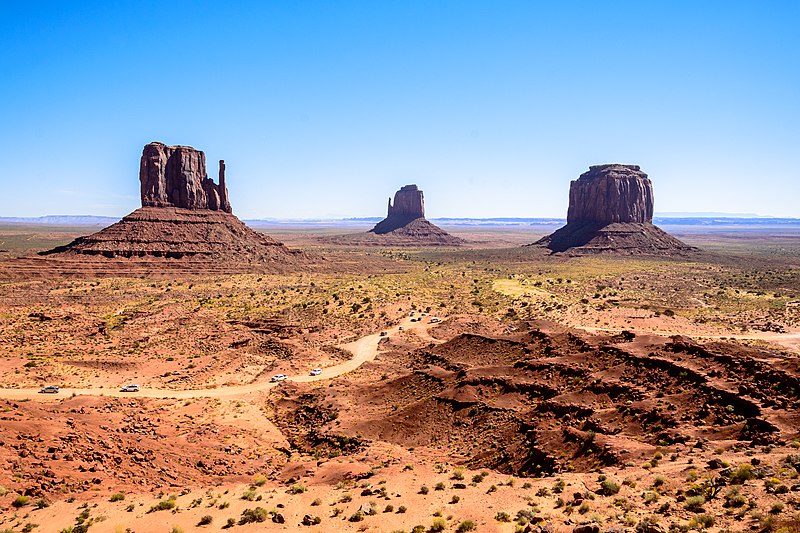
Monument Valley
basin of the Colorado Plateau on the Arizona–Utah border in the western United States

Stone of Scone
block of red sandstone that has been used for centuries in the coronation of the monarchs of Scotland
Kata Tjuta
domed rock formation in the Northern Territory of Australia

pyramidion
thumb|right|Close-up of the Pyramidion of Amenemhat III at Dahshur. [[Egyptian Museum, Cairo]]A pyramidion (plural: pyramidia) is the capstone of an Egyptian pyramid or the upper section of an obelisk. Speakers of the Ancient Egyptian language referred to pyramidia as benbenet and associated the pyramid as a whole with the sacred benben stone.

inuksuk
thumb|An inuksuk at the Foxe Peninsula, [[Nunavut, Canada]]

Benben
In the creation myth of the Heliopolitan form of ancient Egyptian religion,
Benben was the mound that arose from the primordial waters (Nu), and upon which the creator deity Atum settled. The Benben stone is associated with the top stone of a pyramid, which is called a pyramid's pyramidion (or benbenet). It is also related to the obelisk.

Omphalos
An omphalos is a religious stone artefact. In Ancient Greek, the word () means "navel". Among the Ancient Greeks, it was a widespread belief that Delphi was the center of the world. According to the myths regarding the founding of the Delphic Oracle, Zeus, in his attempt to locate the center of the Earth, launched two eagles from the two ends of the world, and the eagles, starting simultaneously and flying at equal speed, crossed their paths above the area of Delphi, and so that was the place where Zeus placed the stone. The Latin term is umbilicus mundi, 'navel of the world'.
Station of Abraham
stone associated with Ibrahim, in what is now the Great Mosque of Mecca in Saudi Arabia

Shiprock
Shiprock (, "rock with wings" or "winged rock") is a monadnock rising nearly above the high-desert plain of the Navajo Nation in San Juan County, New Mexico, United States. Its peak elevation is above sea level. It is southwest of the town of Shiprock, which is named for the peak.
Meoto Iwa
Pair of sacred rocks in Ise Japan
Foundation Stone
rock at the heart of the Dome of the Rock in Jerusalem
Boris stones
Inscribed stones in Belarus
.jpg)
Baetylus
thumb|right|The Emesa temple to the sun god Elagabalus (deity)|Elagabalus with baetyl at centre. Roman coin of 3rd century AD.
El Peñón de Guatapé
inselberg in Colombia
Willamette Meteorite
iron-nickel meteorite from the state of Oregon, largest found in North America
Karlu Karlu / Devils Marbles Conservation Reserve
protected area in the Northern Territory, Australia
sieidi
Sieidis (, , , ) are Sami cultural items, usually a rock with unusual shape. Sieidis are found in nature in certain sacred places, for example at the sea or river beaches or on the mountain. The word sieidi has also been used for holy rocks or wooden figures that have undergone some processing. The victory was a symbol of the divine power ruling over the natural resources that humans needed for their survival. Samis sacrificed parts of their catch at sea to get a successful hunting or fishing in the future.
Alatyr
mountain in Russian mythology
Mani stone
Buddhist prayer stone
Giant Rock
Large freestanding boulder in the Mojave Desert
pyramidion of Amenemhat III
former capstone of the pyramid of Amenemhat III
Lapis manalis
Roman sacred stones
iwakura
Shinto sacred rock
petrosomatoglyph
thumb|A footprint (replica shown) carved into the rock on Dunadd, in [[Argyll, is linked to the crowning of the Scots kings of Dál Riata.]]
Siwash Rock
submerged rock in Metro Vancouver Regional District, British Columbia, Canada
Coronation Stone
stone in Kingston, United Kingdom associated with the coronation ceremonies of Anglo-Saxon kings
Sacred Rock of Hunza
predominantly Buddhist ancient Indian cultural site in Gilgit−Baltistan, Pakistan
bullaun
thumb|250px|Bullaun at St John's Point Church, County Down, [[Ulster, Ireland, October 2009]]
thumb|250px|
A bullaun (; from a word cognate with "bowl" and French bol) is the term used for the depression in a stone which is often water filled. Natural rounded boulders or pebbles may sit in the bullaun. The size of the bullaun is highly variable and these hemispherical cups hollowed out of a rock may come as singles or multiples with the same rock.
matzevah
A masseba or matzeva (,, plural maṣṣēḇoṯ) is a term used in the Hebrew Bible for a baetyl, a type of sacred column or standing stone. In the Septuagint, it is translated as .