Category
page 1Samaritan culture and history

Holon
Holon (, ) is a city in the Tel Aviv District of Israel, located south of Tel Aviv. Holon is part of the Gush Dan metropolitan area. In , it had a population of , making it the tenth most populous city in Israel. Holon has the second-largest industrial zone in Israel, after Haifa.

Israelites
thumb|Map of the territorial allotment of the Twelve Tribes of Israel before Dan moved next to Naphtali due to conflict with the [[Philistines, based on the Book of Joshua]]

Samaria
Samaria (), the Hellenized form of the Hebrew name Shomron (), is used as a historical and biblical name for the central region of the Land of Israel. It is bordered by Judea to the south, Galilee to the north, the Jordan River to the east, and the Mediterranean Sea to the west. The region is known in Arabic under two names, Samirah (, as-Sāmira), and Mount Nablus (جَبَل نَابُلُس, Jabal Nābulus).

Sargon II
king of Assyria (722-705 B.C)
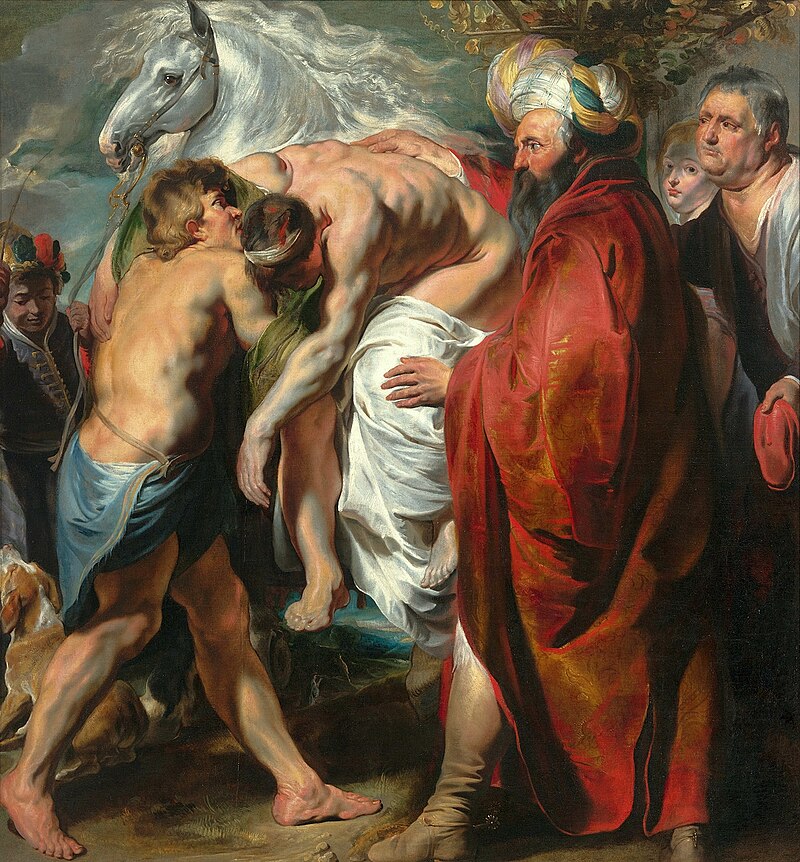
parable of the Good Samaritan
didactic story told by Jesus in Luke 10:25–37

Mount Gerizim
mountain in Judea and Samaria Area, Palestine

Simon Magus
religious figure who confronted Peter
Tribe of Ephraim
Tribe of Israel
Tribe of Manasseh
tribe of Israel
Samaritan Hebrew
language used liturgically by the Samaritans

Samaritanism
Samaritanism (; ) is an Abrahamic monotheistic ethnic religion. It comprises the collective spiritual, cultural, and legal traditions of the Samaritan people, who often prefer to be called Israelite Samaritans. Samaritans originated from the Hebrews and Israelites and began to emerge as a relatively distinct group after the Kingdom of Israel was conquered by the Neo-Assyrian Empire during the Iron Age. Keeping the Patriarchal and Mosaic covenant as specified in the Samaritan Torah (Biblical Hebrew: תּוֹרָה, 'Law') is central to the Samaritans' continuity as an Indigenous Heritage in the Holy L
Mount Ebal
mountain in the immediate vicinity of the city of Nablus in the West Bank
Samaritan Aramaic
dialect of Aramaic used by the Samaritans
Samaritan alphabet
writing system
Tribe of Joseph
one of the twelve tribes of Israel

Kutha
Kutha, Cuthah, Cuth or Cutha (, Sumerian: Gû.du8.aki, Akkadian: Kûtu), modern Tell Ibrahim (also Tell Habl Ibrahlm) (), is an archaeological site in Babil Governorate, Iraq. The site of Tell Uqair (possibly ancient Urum) is just to the north. The city was occupied from the Akkadian period until the Hellenistic period. The city-god of Kutha was Meslamtaea, related to Nergal, and his temple there was named E-Meslam.
Malthace
Malthace () was a Samaritan woman who lived in the latter half of the 1st century BC. She was one of the wives of Herod the Great and the mother by Herod of Herod Antipas, Archelaus, and a daughter, Olympias.
She died in 4 BC at Rome, while her sons Archelaus and Antipas were disputing the will of their father before the emperor Augustus.
Samaritan Revolts
5th/6th century revolts by Samaritans against the Byzantine Empire
Dositheos
1st century AD Samaritan religious leader and founder of a gnostic Samaritan sect
Yahu-Bihdi
thumb|right|250px|Yahu-Bihdi being flayed alive, from an Assyrian engraving.
Yahu-Bihdi (Akkadian: 𒅀𒌑𒁉𒀪𒁲 ia-ú-bi-ʾ-di, "Yahu created me"), also spelled Yahubidi and additionally recorded as Ilu-Bihdi (Akkadian: 𒀭𒁉𒀪𒁲 ìl-bi-ʾ-di, "El created me") was a governor of Hamath appointed by the Assyrian government. He declared himself king of Hamath in 720 BC and led a revolt which was promptly suppressed. Yahu-Bihdi himself was flayed alive. His revolt occurred roughly shortly after the conquest of the Kingdom of Israel by Sargon II and roughly simultaneously with revolts in Babylon as well
Hamam al-Sammara
Turkish bath in Gaza

Book of Joshua
Samaritan chronicle
Olympias
daughter of Herod the Great
Neve Pinchas
Israelite Samaritan neighborhood in the city of Holon, Israel
Rudolf Macúch
Slovak Protestant theologian and expert on Mandaean language and Samaritan language (1919-1993)
Wadi Daliyeh
archaeological site in Israel