Category
page 1Sample return missions

Apollo 17
Apollo 17 was the eleventh and final crewed mission of NASA's Apollo program, the sixth and most recent time humans have set foot on the Moon. Commander Gene Cernan and Lunar Module Pilot Harrison Schmitt walked on the Moon, while Command Module Pilot Ronald Evans orbited above. Schmitt was the only professional geologist to land on the Moon; he was selected in place of Joe Engle, as NASA had been under pressure to send a scientist to the Moon. The mission's heavy emphasis on science meant the inclusion of a number of new experiments, including a biological experiment containing five mice that was carried in the command and service module.

Apollo 12
second crewed Moon landing

Apollo 14
third Moon landing and eighth crewed flight of the United States Apollo program

Apollo 15
fourth Moon landing and ninth crewed flight of the United States Apollo program

Apollo 16
fifth Moon landing and tenth crewed flight of the United States Apollo program
.jpg)
OSIRIS-REx
thumb|OSIRIS-REx in Launch Configuration
Hayabusa2
is an asteroid sample-return mission operated by the Japanese state space agency JAXA. It is a successor to the Hayabusa mission, which returned asteroid samples for the first time in June 2010. Hayabusa2 was launched on 3 December 2014 and rendezvoused in space with near-Earth asteroid 162173 Ryugu on 27 June 2018. It surveyed the asteroid for a year and a half and took samples. It left the asteroid in November 2019 and returned the samples to Earth on 5 December 2020 UTC. Its mission has now been extended through at least 2031, when it will rendezvous with the small, rapidly-rotating asteroi

Chang'e 5
Chinese lunar lander

Hayabusa
was a robotic spacecraft developed by the Japan Aerospace Exploration Agency (JAXA) to return a sample of material from a small near-Earth asteroid named 25143 Itokawa to Earth for further analysis.
Hayabusa, formerly known as MUSES-C for Mu Space Engineering Spacecraft C, was launched on 9 May 2003 and rendezvoused with Itokawa in mid-September 2005. After arriving at Itokawa, Hayabusa studied the asteroid's shape, spin, topography, color, composition, density, and history. In November 2005, it landed on the asteroid and collected samples in the form of tiny grains of asteroidal material, whi

Luna 16
space probe

Stardust
space probe launched by NASA in 1999

Fobos-Grunt
Fobos-Grunt or Phobos-Grunt () was an attempted Russian sample return mission to Phobos, one of the moons of Mars. Fobos-Grunt also carried the Chinese Mars orbiter Yinghuo-1 and the tiny Living Interplanetary Flight Experiment funded by the Planetary Society.

Luna 24
last sovietic space probe
Luna 20
space probe
Luna 15
space probe
Chang'e 6
Chinese uncrewed lunar expedition
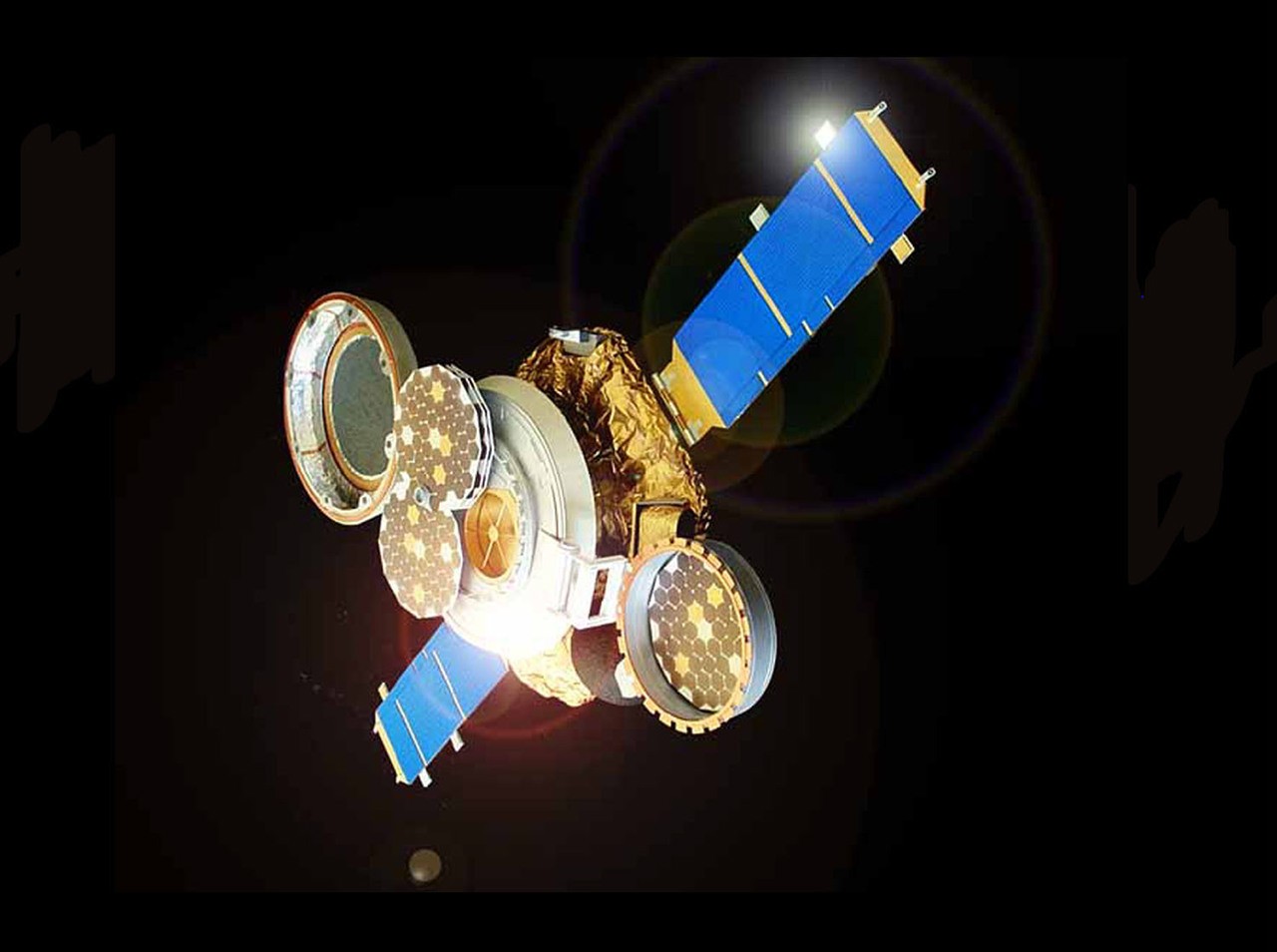
Genesis
NASA sample return probe
Luna 18
space probe
Luna 23
space probe
Mars sample return mission
type of spaceflight for samples return

Tianwen-2
Tianwen-2 () is a Chinese asteroid sample return and comet exploration mission that launched on 28 May 2025. The China National Space Agency (CNSA) plans for the probe to return samples from 469219 Kamoʻoalewa—a near-Earth asteroid that is currently a quasi-satellite of Earth—in 2027. After the mothership drops off the sample return vessel to Earth, it is planned to rendezvous with the main-belt comet 311P/PanSTARRS and explore it with its 11 onboard instruments.
sample-return mission
space mission to retrieve tangible samples from an extraterrestrial location and return with them to Earth for analysis
Kosmos 300
failed Soviet lunar sample-return mission (1969)
Kosmos 305
failed Soviet lunar sample-return mission
Luna-Glob
Luna-Glob (, meaning Lunar sphere) is a Moon exploration program by Roscosmos meant to progress toward the creation of a fully robotic lunar base. When completed, the program is intended to continue with crewed lunar missions, starting with a crewed orbiter spacecraft called Orel.
Martian Moons Exploration
JAXA-led mission to robotically explore and sample Mars' moons
Luna E-8-5M No.412
soviet space probe

NASA-ESA Mars Sample Return
proposed Mars sample return mission

Tianwen-3
Tianwen-3 () is a planned Mars sample-return mission by China which would send two spacecraft (an orbiter/Earth-returner and a lander/ascent-vehicle) via two separate launches to Mars. Together, the two spacecraft will seek to obtain samples of Martian rocks and soil and then return the cached samples to Earth. The mission is scheduled to launch in 2028. The primary goal of the mission is to search for signatures of life on Mars.
Luna E-8-5 No.402
lunar spacecraft which was destroyed in a launch accident
Luna E-8-5 No.405
space probe
OKEANOS
OKEANOS (Oversize Kite-craft for Exploration and Astronautics in the Outer Solar system) was a proposed mission concept to Trojan asteroids, which share Jupiter's orbit, using a hybrid solar sail for propulsion; the sail was planned to be covered with thin solar panels to power an ion engine. In situ analysis of the collected samples would have been performed by either direct contact or using a lander carrying a high-resolution mass spectrometer. A sample-return to Earth was an option under study.
MoonRise
MoonRise was a robotic mission concept to the south pole of the Moon. It was proposed in 2010 and 2017 for NASA's New Frontiers program mission 3 and 4, respectively, but it was not selected. If funded and launched by another NASA opportunity, it would focus on the giant South Pole–Aitken basin (SPA basin) on the far side of the Moon between the Moon's South Pole and Aitken Crater, 16° south of the Moon's equator. This basin measures nearly in diameter and in depth. This region is the oldest and deepest observable impact basin on the Moon and provides a window into the deep crust of the Moon a
CAESAR (spacecraft)
proposed sample-return mission to a comet
Marco Polo
proposed space mission to collect material from an asteroid