Category
page 1Sand art
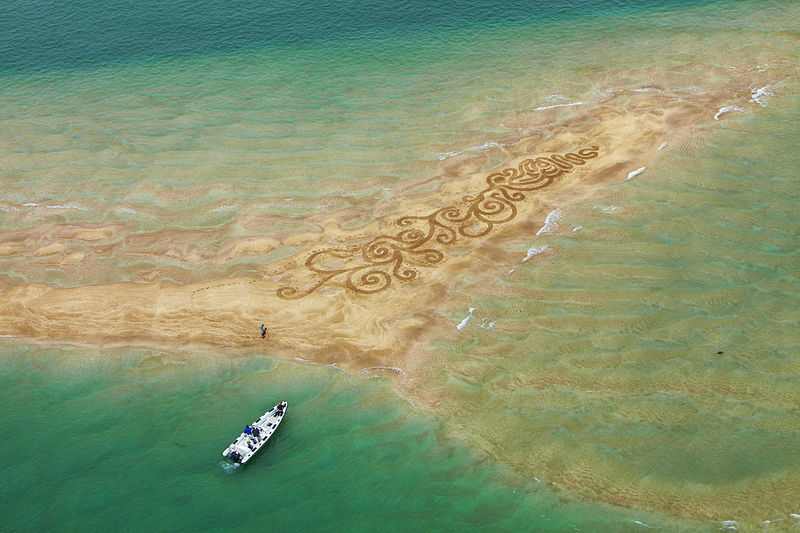
sand castle
building-like sculpture made with moist sand

Rangoli
thumb|upright=1.3|A rangoli on the occasion of Diwali, Goa, India
thumb|A rangoli made with flowers on the occasion of Onam
thumb|Rangoli at Delhi, India
Rangoli is an art form that originates from the Indian subcontinent, in which patterns are created on the floor or a tabletop using materials such as powdered limestone, red ochre, dry rice flour, coloured sand, quartz powder, flower petals, and coloured rocks. It is an everyday practice in some Hindu households; however, making it is mostly reserved for festivals and other important celebrations, as rangolis are time-consuming. Rangolis are

penjing
Penjing, also known as penzai, is the ancient Chinese art of depicting artistically formed trees, other plants, and landscapes in miniature.
sand animation
manipulation of sand to create animation, by applying sand to a surface and then rendering images by drawing lines and figures in the sand with one's hands; a sand animation performer will often use the aid of an overhead projector or lightbox
sand drawing
artistic and ritual tradition and practice of Vanuatu
sand mandala
Tibetan Buddhist tradition involving the creation and destruction of mandalas made from coloured sand
Sand Museum
art museum in Tottori, Tottori, Japan
bonseki
thumb
thumb|left|A woman making a tray landscape showing the full moon. Ukiyo-e woodblock print by Yōshū Chikanobu, 1899
Bonseki (, "tray rocks") is the ancient Japanese art of creating miniature landscapes on black trays using white sand, pebbles, and small rocks.
International Sand Sculpture Festival
Festival in Portugal