Category
page 1Scientific method

research
Research is creative and systematic work undertaken to increase the stock of knowledge. It involves the collection, organization, and analysis of evidence to increase understanding of a topic, characterized by a particular attentiveness to controlling sources of bias and error. These activities are characterized by accounting and controlling for biases. A research project may be an expansion of past work in the field. To test the validity of instruments, procedures, or experiments, research may replicate elements of prior projects or the project as a whole.

hypothesis
thumb|right|350px|The hypothesis of Andreas Cellarius, showing the planetary motions in eccentric and epicyclical [[orbits]]

scientific method
techniques used in the construction and testing of scientific hypotheses; in particular mathematical and experimental techniques employed in the natural sciences

positivism
thumb|right|upright=1|Auguste Comte, the founder of modern positivism

observation
thumbnail|Observing the air traffic in Rõuge, [[Estonia]]

causality
Causality is an influence by which one event, process, state, or subject (i.e., a cause) contributes to the production of another event, process, state, or object (i.e., an effect) where the cause is at least partly responsible for the effect, and the effect is at least partly dependent on the cause. The cause of something may also be described as the reason behind the event or process.

analysis
thumb|Adriaen van Ostade, "Analysis" (1666)

prediction
thumb|''The Old Farmer's Almanac'' is famous in the U.S. for its (not necessarily accurate) long-range weather predictions.

scientific theory
explanation of some aspect of the natural world which can be tested and corroborated
scientific law
statement based on repeated experimental observations that describes some aspects of the universe

sampling
in statistics and (including qualitative) research, a term for the selection of data points from a larger population
scientism
Scientism is the belief that science and the scientific method are the best or only way to render truth about the world and reality.
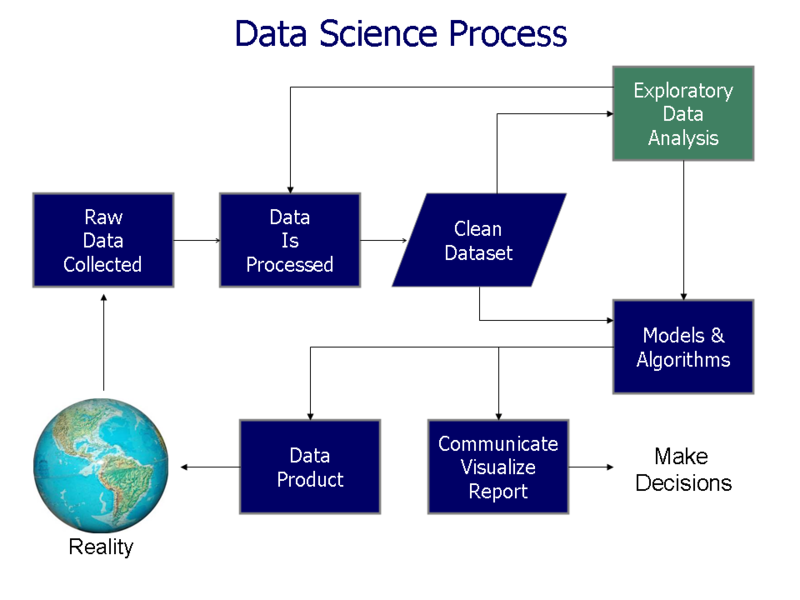
data analysis
activity for gaining insight from data

case study
intensive analysis of an individual unit stressing developmental factors in relation to context

serendipity
thumb|Portrait of Horace Walpole by [[Joshua Reynolds, 1756]]Serendipity is an unplanned fortunate discovery. The term was coined by Horace Walpole in 1754.
statistical inference
process of deducing properties of an underlying probability distribution by analysis of data
level of measurement
classification that describes the nature of information within the numbers assigned to variables
inverse-square law
physical law
blind experiment
experiment in which information about the test is masked to reduce bias

reproducibility
Reproducibility, closely related to replicability and repeatability, is a major principle underpinning the scientific method. For the findings of a study to be reproducible means that results obtained by an experiment or an observational study or in a statistical analysis of a data set should be achieved again with a high degree of reliability when the study is replicated. There are different kinds of replication but typically replication studies involve different researchers using the same methodology. Only after one or several such successful replications should a result be recognized as sci
protoscience
In the philosophy of science, protoscience ( protoscientific) is a research field that has the characteristics of an undeveloped science that may ultimately develop into an established science. Philosophers use protoscience to understand the history of science and distinguish protoscience from science and pseudoscience.
source criticism
process of evaluating an information source
research ethics
ethical practice concerning scientific research

operationalization
thumb|right|300px|An example of operationally defining personal space
In research design, especially in psychology, social sciences, life sciences and physics, operationalization (or operationalisation) is a process of defining the measurement of a phenomenon which is not directly measurable, though its existence is inferred from other phenomena. Operationalization thus defines a fuzzy concept so as to make it clearly distinguishable, measurable, and understandable by empirical observation. In a broader sense, it defines the extension of a concept—describing what is and is not an instance of t
selection bias
selection of individuals, groups or data for analysis such that proper randomization is not achieved
scientific evidence
evidence which either supports or counters a scientific hypothesis
evidence-based practice
practice that relies on evidence to form arguments for guidance and decision-making
Stigler's law of eponymy
law stating that no scientific discovery is named after its original discoverer
replication crisis
ongoing methodological crisis in science stemming from failure to replicate many studies
hypothetico-deductive model
proposed description of the scientific method
fringe science
inquiry in an established field of study which departs significantly from mainstream theories in that field and is considered to be questionable by the mainstream
pilot experiment
small scale preliminary study conducted in order to evaluate feasibility, duration, cost, adverse events, and improve upon the study design prior to performance of a full-scale research project
metascience
Metascience (also known as meta-research) is the use of scientific methodology to study science itself. Metascience seeks to increase the quality of scientific research and enhance its efficiency. It is also known as "research on research" and "the science of science", as it uses research methods to study how research is done and find where improvements can be made. Metascience concerns itself with all fields of research and has been described as "a bird's eye view of science". In the words of John Ioannidis, "Science is the best thing that has happened to human beings... but we can do it bett
consilience
In science and history, consilience (also convergence of evidence or concordance of evidence) is the principle that evidence from independent, unrelated sources can "converge" on strong conclusions. That is, when multiple sources of evidence are in agreement, the conclusion can be very strong even when none of the individual sources of evidence is significantly so on its own. Most established scientific knowledge is supported by a convergence of evidence: if not, the evidence is comparatively weak, and there will probably not be a strong scientific consensus.
scientific control
subject or observation selected to minimize the effects of variables other than the independent variable of an experiment

provenance
thumb|upright=1.35|Diana and Actaeon (Titian)|Diana and Actaeon by [[Titian has a full provenance covering its passage through several owners and four countries since it was painted for Philip II of Spain in the 1550s.]]
experimentum crucis
an experiment capable of decisively determining whether or not a particular hypothesis or theory is superior to all other hypotheses or theories whose acceptance is currently widespread in the scientific community
probabilistic logic
use of probability and logic to deal with uncertain situations
PubPeer
PubPeer is a website that allows users to discuss and review scientific research after publication, i.e. post-publication peer review, established in 2012.
testability
Testability is a primary aspect of science and the scientific method. There are two components to testability:
Falsifiability or defeasibility, which means that counterexamples to the hypothesis are logically possible.
The practical feasibility of observing a reproducible series of such counterexamples if they do exist.
protocol
predefined written procedural method in the design and implementation of experiments in natural sciences
isotopic dilution
Method of determining the quantity of chemical substances
construct
ideal object, whose existence depends upon a subject's mind
deductive-nomological model
scientific methodology
nursing process
method of nursing care
Mertonian norms
Philosophical ideals for the practice of science
open-label trial
research study in which both the researcher and the participant know which treatment is being used
pseudoskepticism
Pseudoskepticism (also spelled as pseudoscepticism) is a philosophical or scientific position that appears to be that of skepticism or scientific skepticism but in reality is a form of dogmatism.
scholarly peer review
process of collecting reviews of a scholarly work by scholars in the relevant field

Anomalistic psychology
The study of human behaviour and experience with the paranormal, with the assumption that there is nothing paranormal involved
Woozle effect
frequent citation of previous publications that lack evidence misleads individuals, groups, and the public into thinking or believing there is evidence
post-normal science
use of science on urgent issues involving uncertainty in facts and moral values
secondary research
summary of research
Jadad scale
procedure to independently assess the methodological quality of a clinical trial
Quietism
view on the purpose of philosophy
HARKing
HARKing (hypothesizing after the results are known) is an acronym coined by social psychologist Norbert Kerr that refers to the questionable research practice of "presenting a post hoc hypothesis in the introduction of a research report as if it were an a priori hypothesis". Hence, a key characteristic of HARKing is that post hoc hypothesizing is falsely portrayed as a priori hypothesizing. HARKing may occur when a researcher tests an a priori hypothesis but then omits that hypothesis from their research report after they find out the results of their test. Post hoc analysis or post hoc theori
scientific integrity
concept in research ethics
self-experimentation
Self-experimentation refers to single-subject research in which the experimenter conducts the experiment on themself.
Structuralism
theory of science, reconstructing empirical theories
history of scientific method
aspect of history outlining changes in the methodology of scientific inquiry, as distinct from the history of science itself