Category
page 1Scientific Revolution

Isaac Newton
Sir Isaac Newton was an English polymath who was a mathematician, physicist, astronomer, alchemist, theologian, author and inventor. He was a key figure in the Scientific Revolution and the Enlightenment that followed. His book Philosophiæ Naturalis Principia Mathematica, first published in 1687, achieved the first great unification in physics and established classical mechanics. Newton also made seminal contributions to optics, and shares credit with the German mathematician Gottfried Wilhelm Leibniz for formulating infinitesimal calculus, although he developed calculus years before Leibniz. Newton contributed to and refined the scientific method, and his work is considered the most influential in bringing forth modern science.

Age of Enlightenment
period of European history and cultural movement of the 17th and 18th centuries

scientific method
techniques used in the construction and testing of scientific hypotheses; in particular mathematical and experimental techniques employed in the natural sciences

Scientific Revolution
events that marked the emergence of modern science in the early modern period

Encyclopédie
The , better known as the Encyclopédie (), was a general encyclopedia published in France between 1751 and 1772, with later supplements, revised editions, an index, and translations. It had many contributors, known among contemporaries as the Encyclopédistes. It was edited by Denis Diderot and, until 1759, co-edited by Jean le Rond d'Alembert.

Bibliotheca Alexandrina
major library and cultural center in Alexandria, Egypt

Alexandre Koyré
French philosopher (1892–1964)
paradigm shift
fundamental change in the basic concepts and experimental practices of a scientific discipline.
Scottish Enlightenment
intellectual movement in 18th–19th century Scotland
Copernican Revolution
Belief, initiated by Copernicus, that planets orbit the sun
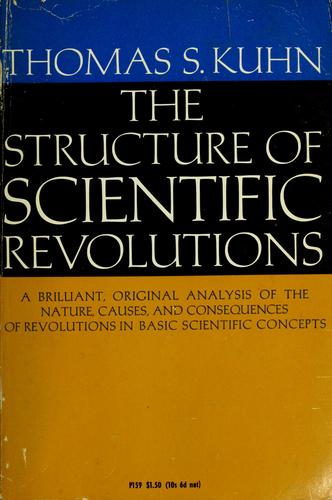
The Structure of Scientific Revolutions
1962 essay by Thomas Kuhn

Answering the Question: What Is Enlightenment?
1784 essay by Immanuel Kant

Counter-Enlightenment
thumb|Divine Justice smites Jean-Baptiste Pigalle's statue of [[Voltaire. Anonymous, 1773]]
The Counter-Enlightenment refers to a loose collection of intellectual stances that arose during the European Enlightenment in opposition to its mainstream attitudes and ideals. The Counter-Enlightenment is generally seen to have continued from the 18th century into the early 19th century, especially with the rise of Romanticism. Its thinkers did not necessarily agree to a set of counter-doctrines but instead each challenged specific elements of Enlightenment thinking, such as the belief in progress, th
Science in the Age of Enlightenment
Science during the 16th-19th century
Planck's principle
principle that scientific change is generational

Pseudodoxia Epidemica
non-fiction work by Thomas Browne
Othernet
Othernet Inc. was a broadcast data company. Othernet sold a portable satellite data receiver that combined an amplifier, radio, and CPU in a single unit.
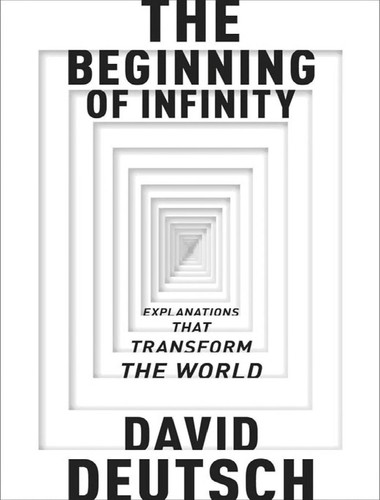
The Beginning of Infinity
non-fiction work by David Deutsch
David Wootton
British historian of science