Category
page 2Scorpius
Iota1 Scorpii
star in the constellation Scorpius
G Scorpii
star
Mu1 Scorpii
star in the constellation Scorpius
Beta Scorpii
multiple star
Omicron Scorpii
star

OGLE-2005-BLG-390L
OGLE-2005-BLG-390L is a star thought to be a spectral type M (a red dwarf; 95% probability, 4% probability it is a white dwarf, <1% probability it is a neutron star or black hole). This galactic bulge star is located in the Scorpius constellation at a far distance of about 21,500 light years, near the border with Sagittarius.
Jyeshtha
18th lunar mansion in Hindu astronomy

OGLE-2006-BLG-109L
OGLE-2006-BLG-109L (where the last 'L' stands for lens) is a dim magnitude 17 M0V galactic bulge star approximately 4,920 light-years away in the constellation of Scorpius.
SN 393
supernova within Scorpius, observed in 393
Mula
19th lunar mansion of Hindu astronomy
Xi Scorpii
star system
Scorpius–Centaurus Association
OB association

OGLE-2006-BLG-109Lb
thumb | right | Scheme of OGLE-2006-BLG-109 planetary system created with POV-Ray, based on graphic from Gazeta Wyborcza (15.02.08); please note, that there may be more than two planets. Second version.
OGLE-2006-BLG-109Lb is an extrasolar planet approximately 4,920 light-years away in the constellation of Scorpius. The planet was detected orbiting the star OGLE-2006-BLG-109L in 2008 by a research team using Microlensing.

Sharjah
star
Cotton Candy Nebula
protoplanetary nebula
Anuradha (nakshatra)
Star
Omega¹ Scorpii
star
OGLE-2006-BLG-109Lc
OGLE-2006-BLG-109Lc is an extrasolar planet approximately 4,925 light-years away in the constellation of Scorpius. The planet was detected orbiting the star OGLE-2006-BLG-109L in 2008 by a research team using Microlensing. The host star is about 50% the mass of the Sun and the planet is about 90% the mass of Saturn.

U Scorpii
recurrent nova
V1280 Scorpii
star
Mu Scorpii
Wikimedia disambiguation page
AR Scorpii
double star in Scorpius
Psi Scorpii
star
HD 162020
star
HD 146624
star
GRO J1655-40
binary star
Terzan 1
globular cluster
EWS 2005-BLG-71
OGLE-2005-BLG-071L is a distant, magnitude 19.5 galactic bulge star located in the constellation Scorpius, approximately 11,000 light years away from the Solar System. The star is probably a red dwarf with a mass 43% of that of the Sun.
RCW 120
H II region in the constellation Scorpius
Mu² Scorpii
star
Oph 162225-240515
star
Zeta2 Scorpii
star
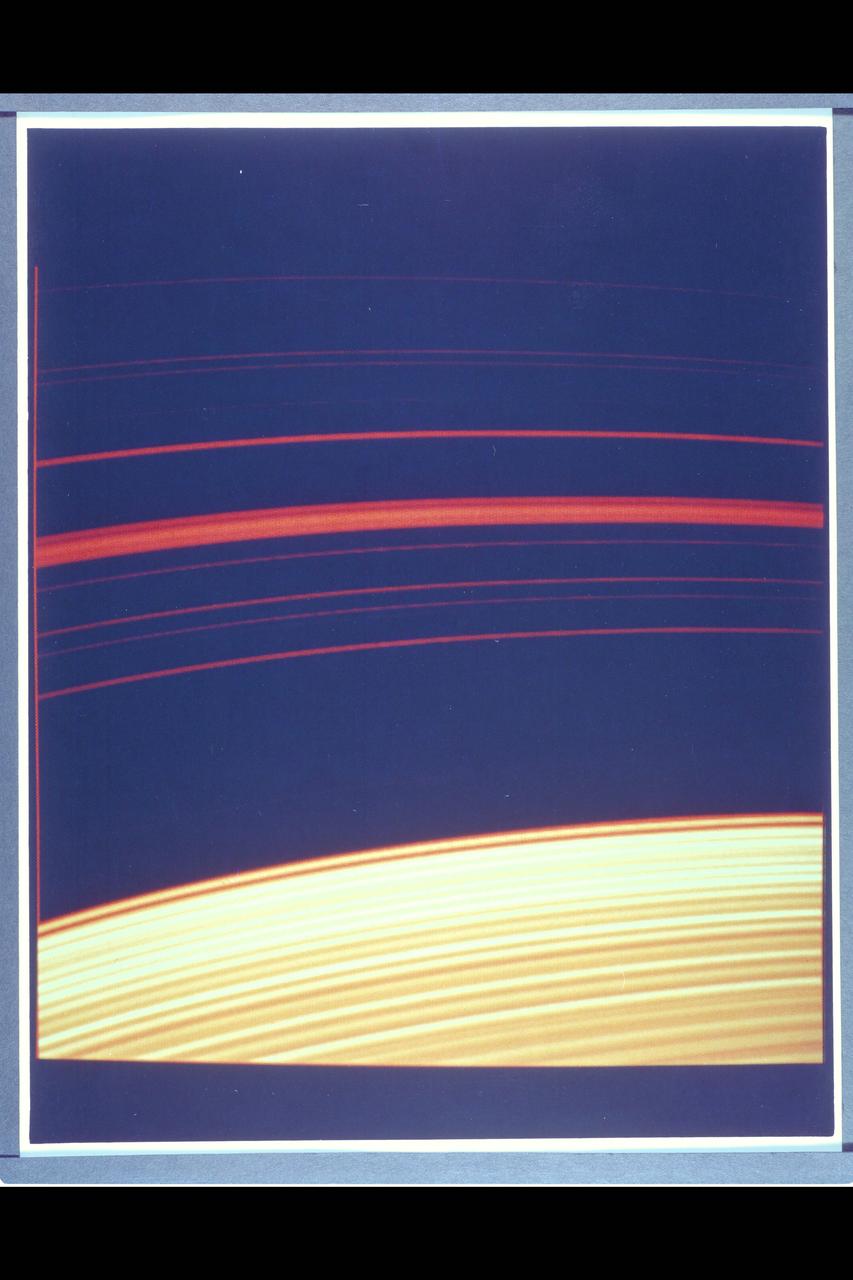
1 Scorpii
star in the constellation Scorpius
IGR J17091-3624
black hole called IGR J17091-3624
HD 159868
star
G350.1-0.3
G350.1-0.3 is a supernova remnant which is located in the constellation Scorpius. It is in the Milky Way, and possibly associated with a neutron star (XMMU J172054.5-372652) formed in the same supernova explosion. The object was formerly mistakenly classified as a distant galaxy.
OGLE-2005-BLG-071Lb
OGLE-2005-BLG-071Lb is a planet discovered by the Optical Gravitational Lensing Experiment (OGLE) and others in 2005, using gravitational microlensing. According to the best fit model, it has about 3.5 times the mass of Jupiter and a projected separation of 3.6 astronomical units from the star. This would result in an effective temperature around 50 K, similar to that of Neptune. However, an alternative model which gives a slightly lower mass of 3.3 times that of Jupiter and a projected separation of 2.1 AU is only slightly less likely. It may be the most massive planet currently known around
Omega² Scorpii
star
K Scorpii
star
EPIC 204278916
a young, pre-main-sequence star about 5 million years old, of spectral type M1, located in the Upper Scorpius sub-group of the Scorpius–Centaurus Association

Zeta Scorpii
Wikimedia disambiguation page
Iota Scorpii
Wikimedia disambiguation page
OGLE-2007-BLG-368L b
thumb | right
OGLE-2007-BLG-368Lb is an extrasolar planet located approximately 19,230 light-years away in the constellation of Scorpius, orbiting the star OGLE-2007-BLG-368L. This planet was detected on December 8, 2009 by the gravitational microlensing by Sumi. It has mass 6.94% of Jupiter (i.e. 22 times that of Earth) and is located 3.3 AU from the star when observed. Based on those properties it would classify as a Cold Neptune. It is the second Cold Neptune to be observed, the first being OGLE-2005-BLG-169Lb. This planet is most likely be similar to Uranus and Neptune in the Solar System
Iota2 Scorpii
star in the constellation Scorpius
K2-33 b
K2-33b (also known by its EPIC designation EPIC 205117205.01) is a very young super-Neptune exoplanet, orbiting the pre-main-sequence star K2-33. It was discovered by NASA's Kepler space telescope on its "Second Light" mission. It is located about away from Earth in the constellation of Scorpius. The exoplanet was found by using the transit method, in which the dimming effect that a planet causes as it crosses in front of its star is measured.
22 Scorpii
star in the constellation Scorpius
HD 145377 b
extrasolar planet
HD 160529
star
K2-33
K2-33 is an extremely young pre-main-sequence star located about away from the Earth in the constellation of Scorpius. It is known to host one planet, a super-Neptune, named K2-33b. It is also notable for its young age.
H Scorpii
star in the constellation Scorpius
Q Scorpii
star
HD 142250
star
Sh2-1
Nebula
HD 145377
star
Trimobe
extrasolar planet
HIP 79098
star
N Scorpii
star
V915 Scorpii
star
Chi Scorpii
star
UScoCTIO 108
binary star system