Category
page 1Seals (insignia)
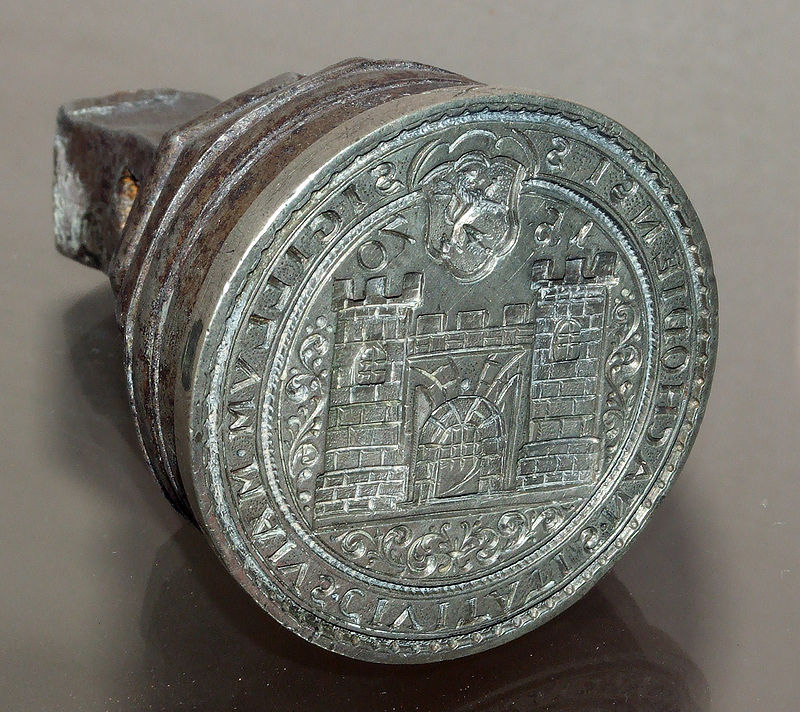
seal
mark of a personal distinctive emblem intended to guarantee the authenticity of the author of a document onto which it is printed, embossed or affixed

papal bull
type of letters patent or charter issued by a Pope of the Catholic Church

Ring of the Fisherman
signet that is part of papal regalia, formerly used to seal official documents
.png)
sigillography
thumb|right|upright=1.5|19th-century drawings of the seal of Richard de Clare, 2nd Earl of Pembroke|Richard de Clare ("Strongbow"), Earl of Pembroke (1130–1176)
Golden Bull
Byzantine and mediaeval European legal decrees
cylinder seal
form of seal used in ancient times to roll an impression onto a two-dimensional surface

tamga
thumb|Tamgha of the Bayundur, which represents a [[falcon according to Mahmud al-Kashgari]]
A tamga, or tamgha (from ), was an abstract seal or brand used by Eurasian nomads and cultures influenced by them, initially as a livestock branding. The tamga was used as a livestock branding for a particular tribe, clan or family. They were common among the Eurasian nomads throughout Classical Antiquity and the Middle Ages. As clan and family identifiers, the collection and systematic comparison of tamgas is regarded to provide insights into relations between families, individuals and ethnic groups in
scarab
scarab beetle-shaped amulets and impression seals of ancient Egypt
seal script
general term for the various writing styles of Chinese characters in the latter half of the 1st millennium BCE during the Zhou Dynasty
Luther rose
widely recognized symbol for Lutheranism
sealing wax
material of a seal
bulla
inscribed token used in commercial and legal documentation as a form of authentication
Seal of Solomon
ring worn by Solomon, in which was a stone from which, according to the Rabbins, he learned whatever he wished to know
engraved gem
small carved gemstones
Asian seal
East Asian use of printing images and impressions in lieu of signatures on documents
Seal of Muhammad
sacred Islamic relic
seal cutting
Chinese art of cutting a pattern into the bottom face of a seal, for stamping
Pashupati seal
steatite seal that was discovered at the Mohenjo-daro archaeological site
Seven seals
symbolism in the Book of Revelation
national seal
official seal (insignia) of a nation or country

LMLK seal
Hebrew seals stamped on the handles of large storage jars dating from reign of King Hezekiah (circa 700 BC)
Pylos Combat Agate
Mycenean sealstone from Pylos, Greece
rota
sign which makes up part of the pope's signature
bird-worm seal script
type of ancient Chinese seal script, with ornate letterforms reminiscent of worms or bird heads and tails
shuin
----
pintadera
Pintaderas are a form of stamp used by the pre-Hispanic natives of the Canary Islands. They were commonly made of fired clay. However, a number of wooden pintaderas have also been found. Most pintaderas come from archaeological sites in Gran Canaria, although natives from other islands in the Canarian archipelago used them too.
Pintaderas were usually decorated with ornate geometric shapes, including zigzags, triangles, rectangles, squares and circles. These decorative motifs are similar to those found on pre-Hispanic Canarian pottery. Similar geometric patterns can also be seen in pre-Hispani
plica
fold which reinforces the lower edge of a charter or deed
privy seal
personal seal of a reigning monarch
stamp seal
carved object, usually stone, used to impress their carving into soft material such as clay
equestrian seal
type of seal