Category
page 1Seasons

season
A season is a division of the year based on changes in weather, ecology, and the number of daylight hours in a given region. On Earth, seasons are the result of the axial parallelism of Earth's tilted orbit around the Sun. In temperate and polar regions, the seasons are marked by changes in the intensity of sunlight that reaches the Earth's surface, variations of which may cause animals to undergo hibernation or to migrate, and plants to be dormant. Various cultures define the number and nature of seasons based on regional variations, and as such there are a number of both modern and historica

tropics
thumb|upright=1.5|World map with the intertropical zone highlighted in crimson
thumb|upright=1.5|Areas of the world with [[tropical climates.

Demeter
In ancient Greek religion and mythology, Demeter (; Attic: Dēmḗtēr ; Doric: Dāmā́tēr) is the Olympian goddess of the harvest and agriculture, presiding over crops, grains, food, and the fertility of the earth. Although Demeter is mostly known as a grain goddess, she also appeared as a goddess of health, birth, and marriage, and had connections to the Underworld. She is also called Deo ( Dēṓ).
.JPG)
Persephone
In ancient Greek mythology and religion, Persephone ( ; , classical pronunciation: ), also called Kore () or Cora, is the daughter of Zeus and Demeter. She became the queen of the underworld after her abduction by her uncle Hades, the king of the underworld, who later took her into marriage. The myth of her abduction, her sojourn in the underworld, and her cyclical return to the surface represents her functions as the embodiment of spring and the personification of vegetation, especially grain crops, which disappear into the earth when sown, remain hidden for a period, sprout from the earth, a

wet season
yearly period of high rainfall, especially in the tropics
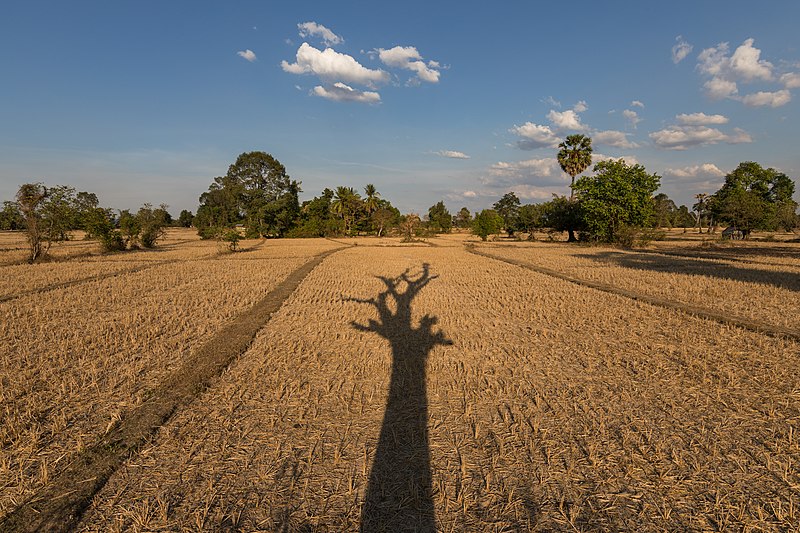
dry season
yearly period of low rainfall, especially in the tropics

liturgical year
annually recurring fixed sequence of Christian feast days

harmattan
thumb|right|300px|Harmattan haze surrounding Abuja National Mosque in [[Abuja]]
Christmas and holiday season
Christmas period with related and unrelated holidays between the end of November until the first days of January
growing season
part of the year during which local weather conditions permit normal plant growth
silly season
annual period when frivolous news becomes more common
tellurion
A tellurion (also spelled tellurian, tellurium, and yet another name is loxocosm), is a clock, typically of French or Swiss origin, surmounted by a mechanism that depicts how day, night, and the seasons are caused by the rotation and orientation of Earth on its axis and its orbit around the Sun. The clock normally also displays the phase of the Moon and the four-year (perpetual) calendar.
effect of Sun angle on climate
amount of heat energy received at any location on the globe affecting climate
growing-degree day
heuristic tool in phenology
season
traditional annual period when members of a social elite hold social events
Shishir
season in the Hindu calendar
fog season
time of year in which fog is most common