Category
page 1Semen

semen
thumb|right|287px|spermatozoon|Spermatozoa, in this case human, are a primary component of normal semen, and the agents of fertilization of female ova.

ejaculation
Ejaculation is the discharge of semen (the ejaculate; normally containing sperm) from the penis through the urethra. It is the final stage and natural objective of male sexual stimulation, and an essential component of natural conception. After forming an erection, many men emit pre-ejaculatory fluid during stimulation prior to ejaculating. Ejaculation involves involuntary contractions of the pelvic floor and is normally linked with orgasm. It is a normal part of male human sexual development.
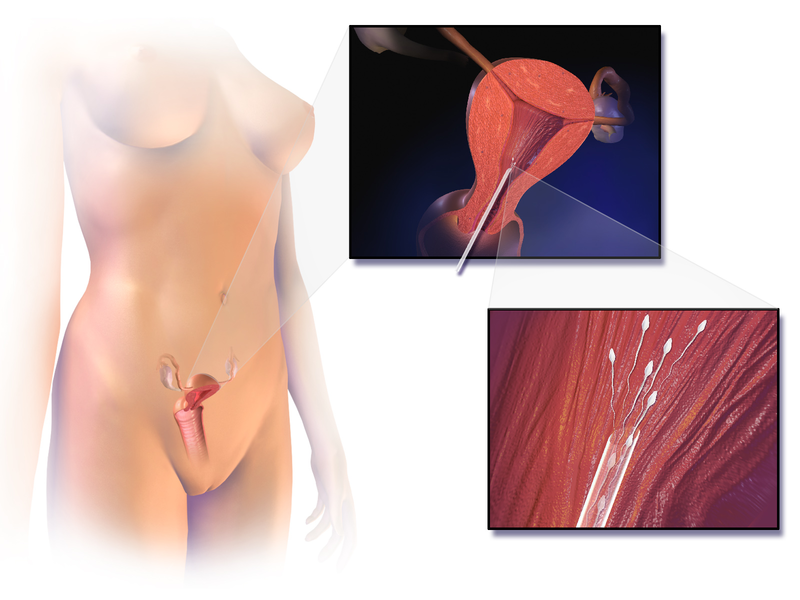
artificial insemination
pregnancy through in vivo fertilization
sperm
Sperm (: sperm or sperms) is the male reproductive cell, or gamete, in anisogamous forms of sexual reproduction (forms in which there is a larger, female reproductive cell and a smaller, male one). Sperm cells contribute approximately half of the nuclear genetic information to the diploid offspring (excluding, in most cases, mitochondrial DNA). Animals produce motile sperm with a tail known as a flagellum, which are known as spermatozoa, while some red algae and fungi produce non-motile sperm cells, known as spermatia. Flowering plants contain non-motile sperm inside pollen, while some more ba

pre-seminal
thumb|Pre-ejaculate on the Glans penis|glans of the penis
sperm donation
process of donating sperm for reproduction

milt
thumb|Collecting Chinook salmon milt at a [[USFWS hatchery]]
semen analysis
analysis that evaluates certain characteristics of a male's semen
Intracytoplasmic sperm injection
in vitro fertilization procedure

insemination
Insemination is the introduction of sperm (in semen) into a female's reproductive system in order to fertilize the ovum through sexual reproduction. The sperm enters into the uterus of a mammal or the oviduct of an oviparous (egg-laying) animal. Female humans and other mammals are inseminated during sexual intercourse or copulation, but can also be inseminated by artificial insemination.
sperm competition
any process that contributes to the success of sperm fertilization in multiply-mated females.
hyperspermia
In medicine, hyperspermia is a condition characterized by an abnormally large amount of semen or ejaculate volume. It is typically defined as an ejaculate volume exceeding 5.5 mL. Hyperspermia is the opposite of hypospermia, which refers to a semen volume of less than 1.5 mL.
Testicular sperm extraction
Surgical procedure
semen quality
measure of male fertility
semen cryopreservation
procedure to preserve sperm cells
Every Sperm Is Sacred
song
semen collection
for artificial insemination, or medical study (usually in fertility clinics)
sperm sorting
means of choosing what type of sperm cell (X-chromosome or Y-chromosome) is to fertilize the egg cell
Sperm washing
separation of individual sperm from semen
posthumous sperm retrieval
procedure in which spermatozoa are extracted from a legally dead person