Category
page 1Serer history

Senegal River
river in West Africa
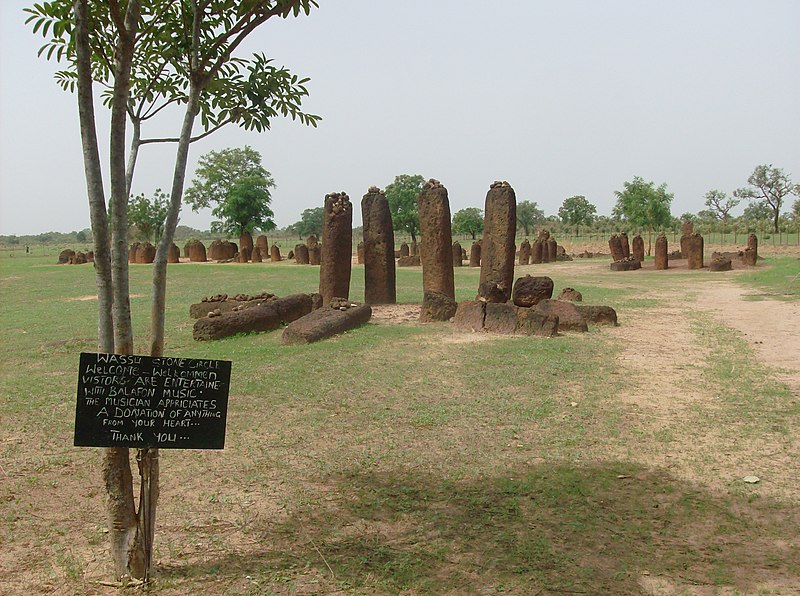
Senegambian stone circles
concentration of megalithic stone circles in Senegal and the Gambia
Adrar Plateau
mountain range
talking drum
hourglass-shaped drum from West Africa
Takrur
Takrur, Tekrur or Tekrour ( 500 – c. 1456) was a state based in the Senegal River in modern-day Senegal which was at its height in the 11th and 12th centuries, roughly parallel to the Ghana Empire. It lasted in some form into the 18th century.

Baol
Baol or Bawol was a kingdom in what is now central Senegal. Founded in the 11th century, it was a vassal of the Jolof Empire before becoming independent in the mid-16th century. The ruler bore the title of Teigne (or Teeň) and reigned from the capital in Lambaye. The kingdom encompassed a strip of land extending east from the ocean and included the towns of Touba, Diourbel, and Mbacke. It was directly south of the Kingdom of Cayor and north of the Kingdom of Sine.

Saloum
The Kingdom of Saloum (Serer: Saluum or Saalum) was a Serer kingdom in present-day Senegal and parts of Gambia. The precolonial capital was the city of Kahone. Re-established in 2017, Saloum is now a non-sovereign traditional monarchy within Senegal. Its history, geography and culture is intricately linked with the sister state, the Kingdom of Sine, and it is common to refer to them as the Sine-Saloum or the Serer Kingdoms.

Khasso
Khasso or Xaaso is a region and former West African kingdom of the 17th to 19th centuries, occupying territory in what is today the Kayes Region of Mali. From the 17th to 19th centuries, its capital was at Medina until its fall.
Battle of Logandème
uprising led by Maad a Sinig Kumba Ndoffene Famak Joof, king of Sine, against the French Empire
Cekeen Tumulus
tumuli site