Category
page 1Seven deadly sins
%20MET%20DP854052.jpg)
anger
thumb|upright=1.4|right|From Left to right: Wrath and Rage (emotion)|Rage, Wrath and [[Fear, Wrath and Despair]]

envy
thumb|305x305px|Portrait of a demented woman or The Monomaniac of Envy, by Théodore Géricault,
Seven deadly sins
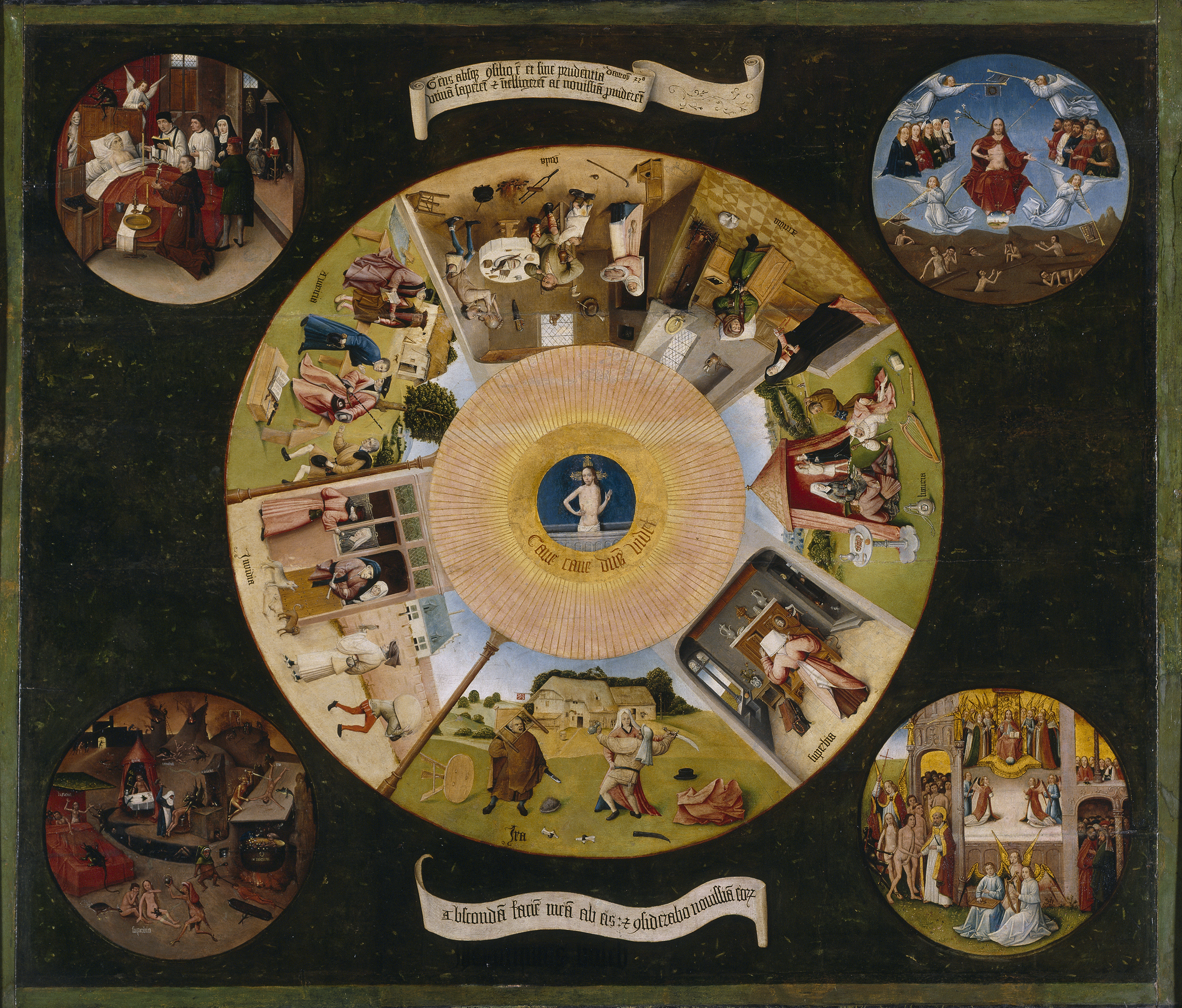
The seven deadly sins function as a grouping of major vices within the teachings of Christianity. They are not explicitly listed in the Bible but developed within early Christian theological tradition, drawing on various biblical passages. In the standard list, the seven deadly sins according to the Catholic Church are pride, envy, wrath, gluttony, lust, sloth, and greed.
.jpg)
lust
thumb|262px|Detail: Luxuria (Lust), in The Seven Deadly Sins and the Four Last Things, by [[Hieronymus Bosch]]

vanity
thumb|Vanitas (Latin for vanity) by Léon Bazille Perrault, 1886

hubris
thumb|Illustration for John Milton's [[Paradise Lost by Gustave Doré (1866). The spiritual descent of Lucifer into Satan is one of the most famous examples of hubris.]]

gluttony
thumb|Der Völler by Georg Emanuel Opiz|Georg Emmanuel Opiz
thumb|A woodcut representing gluttony
Gluttony (, derived from the Latin gluttire meaning 'to gulp down or swallow') means over-indulgence and over-consumption of anything to the point of waste.

greed
thumb|1909 painting The Worship of Mammon, the New Testament representation and personification of material greed, by [[Evelyn De Morgan|268x268px]]

acedia
thumb|Acedia, engraving by Hieronymus Wierix, 16th century
sloth
laziness and apathy as a sin
Q3091027
thumb|Envy (Invidia) (circa 1670) by Josse de Corte
In Latin, invidia is the sense of envy, a "looking upon" associated with the evil eye, from invidere, "to look against, to look in a hostile manner." Invidia ("Envy") is one of the Seven Deadly Sins in Christian belief.