Category
page 1Sexual selection

natural selection
differential survival and reproduction of individuals in nature due to differences in phenotype; a key mechanism of evolution
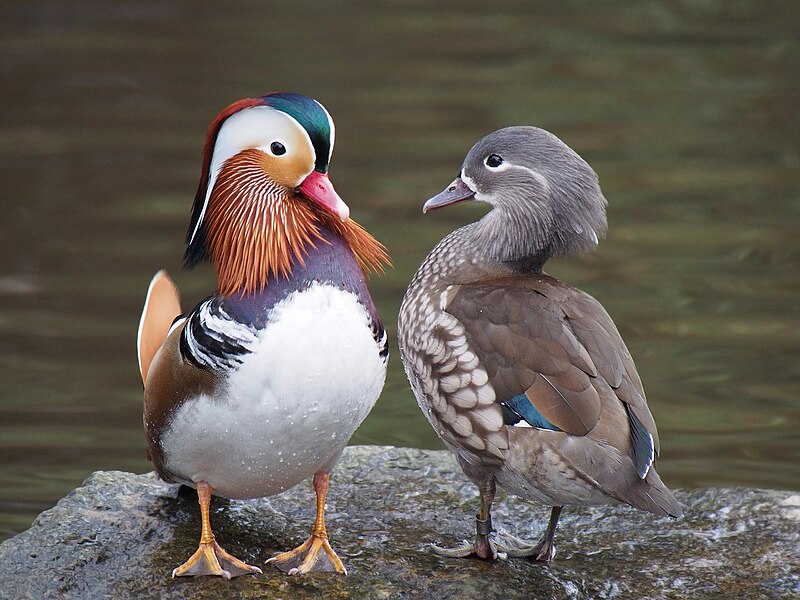
sexual dimorphism
condition where the two sexes of the same species exhibit different characteristics beyond the differences in their sexual organs

horn
permanent pointed projection on the head of various animals
.jpg)
speciation
Speciation is the evolutionary process by which populations evolve to become distinct species. The biologist Orator F. Cook coined the term in 1906 for cladogenesis, the splitting of lineages, as opposed to anagenesis, phyletic evolution within lineages. Charles Darwin was the first to describe the role of natural selection in speciation in his 1859 book On the Origin of Species. He also identified sexual selection as a likely mechanism, but found it problematic.
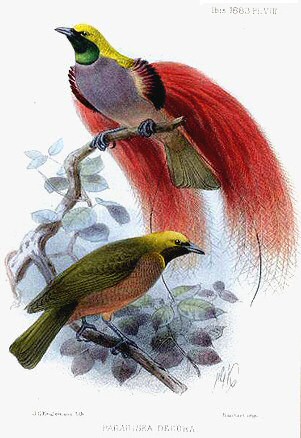
sexual selection
mode of natural selection

Hardy–Weinberg principle
principle that allele and genotype frequencies in a population will remain constant over generations in the absence of other evolutionary influences

fitness
quantitative representation of natural and sexual selection within evolutionary biology

hypergamy
thumb|upright=1.2|Esther is crowned in this 1860 [[woodcut by Julius Schnorr von Karolsfeld.]]
Hypergamy (colloquially referred to as "dating up" or "marrying up") is a term used in social science for the act or practice of a person dating or marrying a spouse of higher mating value than themselves.
secondary sex characteristic
features that occur in an organism at sexual maturity
The Descent of Man, and Selection in Relation to Sex
1871 book by Charles Darwin
assortative mating
mating pattern in which individuals with similar phenotypes (e.g. size, colour) mate with one another more often
parental investment
parental expenditure (e.g. time, energy, resources) that benefits offspring
sexual capital
social value from sexual attractiveness
handicap principle
hypothesis in evolutionary biology

roar
A roar /rɔːr/ is a type of animal vocalization that is loud, deep and resonating. Many mammals have evolved to produce roars and other roar-like vocals for purposes such as long-distance communication and intimidation. These include various species of big cats, bears, pinnipeds, deer, bovids, elephants, and simians.
evolution of sexual reproduction
how sexually reproducing multicellular organisms could have evolved from a common ancestor species
display
set of ritualized behaviours that enable an animal to communicate to other animals about specific stimuli

microchimerism
right|thumb|220px|During pregnancy, a two-way traffic of immune cells may occur through the placenta. Exchanged cells can multiply and establish long-lasting cell lines that are immunologically active even decades after giving birth.
Microchimerism is the presence of a small number of cells in an individual that have originated from another individual and are therefore genetically distinct. This phenomenon may be related to certain types of autoimmune diseases although the responsible mechanisms are unclear. The term comes from the prefix "micro" + "chimerism" based on the hybrid Chimera of G
signalling theory
body of theoretical work examining communication between individuals
love dart
darts that some snails shoot into each other during mating
mate choice
process of selection a romantic or sexual partner
reproductive success
passing of genes on to the next generation in a way that they too can pass on those genes
sexual conflict
term in evolutionary biology
Fisherian runaway
Sexual selection mechanism
mating system
system of sexual reproduction in a population
sperm competition
any process that contributes to the success of sperm fertilization in multiply-mated females.
koinophilia
thumb|300px|This Leucism|leucistic Indian peacock, Pavo cristatus, is unlikely to find a mate and reproduce in a natural setting due to its unusual coloration. However, its striking colour is appreciated by humans, and may be included in artificial [[selective breeding to produce more individuals with the leucistic phenotype.]]
sexual selection in human evolution
evolutionary effects of sexual selection on humans
sexy son hypothesis
postulate in biology

Concealed ovulation
lack of visible changes in ovulating females
female intrasexual competition
competition between women over a potential mate
gynomorph
thumb|230px|A gynomorphic sculpture of Bacchus, Roman Imperial (2nd century CE), at the [[Musée du Louvre.]]
Gynomorph is a word used to describe an organism with female physical characteristics.
Neumania papillator
species of arachnid
Operational sex ratio
A quantitative ratio of sexually active population