Category
page 1Shaivism

Shiva
Shiva (; , , , ), also known as Mahadeva (; , , [mɐɦaːd̪eːʋɐh], ) and Hara (, ), is one of the principal deities of Hinduism. He is the Supreme Being in Shaivism, one of the major traditions within Hinduism.

Tantra
Tantra (; ) is an esoteric yogic tradition that developed in the Indian subcontinent, beginning in the middle of the 1st millennium CE, initially within Shaivism and Shaktism, and subsequently in Mahayana Buddhism and Vaishnavism. Tantra presents complex cosmologies, viewing the body as divine and typically reflecting the union of Shiva and Shakti. Tantric goals include Siddhi (supernatural accomplishment), bhoga, and Kundalini ascent; while also addressing states of possession (āveśa) and exorcism.

Shaivism
Shaivism (; ) is an umbrella-term for a number of Hindu religious traditions, which worship Shiva as the supreme being. The followers of Shaivism are called Shaivas or Shaivites, numbering about 385 million people, across South Asia predominantly in India, Sri Lanka, and Nepal.

Ujjain
Ujjain (, , ), also known as Ujjayini, is a city in Ujjain district of the Indian state of Madhya Pradesh. It is the fifth-largest city in Madhya Pradesh by population and is the administrative as well as religious centre of Ujjain district and Ujjain division. It is one of the Hindu pilgrimage centres of Sapta Puri famous for the Kumbh Mela (Simhastha) held there every 12 years. The ancient and world famous temple of Mahakaleshwar Jyotirlinga is located in the center of the city. The city has been one of the most prominent trade and political centres of the Indian subcontinent from the time o

Haridwar
Haridwar (; ; formerly Mayapuri) is a city and municipal corporation in the Haridwar district of Uttarakhand, India. With a population of 228,832 according to 2011 census, it is the second-largest city in the state and the largest in the district. Haridwar is located at the south western part of the state.

Kartikeya
Kartikeya (), also known as Skanda, Subrahmanya, Shanmukha or Muruga(n), is the Hindu god of war. He is generally described as the son of the deities Shiva and Parvati and the brother of Ganesha.

linga
thumb|right|A lingam with tripundra, projected on a [[yoni base]]

Maha Shivaratri
Hindu festival for contemplation of self and Shiva

Kedarnath

Nandi
Ideological creature in Hinduism and Indic religions, usually depicted as a Bull
Kashi Vishwanath Temple
Hindu temple in Varanasi, Uttar Pradesh, India
Haridwar district
district of Uttarakhand, India
Omkareshwar Temple
Hindu temple in India

Mahākāla
Mahākāla (, ) is a deity common to Hinduism and Buddhism.
Om Namah Shivaya
Hindu mantra
Kedarnath Temple
temple

Aihole
Aihole (ಐಹೊಳೆ), also referred to as Aivalli, Ahivolal or Aryapura, is a historic site of ancient and medieval era Buddhist, Hindu and Jain monuments in Karnataka, India that dates from the sixth century through the twelfth century CE. Most of the surviving monuments at the site date from the 7th to 10th centuries. Located around an eponymous small village surrounded by farmlands and sandstone hills, Aihole is a major archaeological site, featuring over 120 stone and cave temples spread along the Malaprabha river valley, in Bagalakote district.
thumb|Relief of sleeping Vishnu, now in Mumbai

Tandava
thumb|A Shiva Nataraja idol in Tamil Nadu, India
Ramanathaswamy Temple
Hindu temple in Rameswaram island in the state of Tamil Nadu, India

Pashupati
thumb|The Pashupati seal, showing a figure surrounded by animals who is thought to be Shiva; circa 2350-2000 BCE. It is preserved in [[National Museum, New Delhi]]
Mahakaleshwar Jyotirlinga
temple in India
Bhimashankar Temple
Shiva ( Jyotirlinga) temple in Maharashtra, India
Trimbakeshwar Shiva Temple
Shiva ( Jyotirlinga) temple in Maharashtra, India
Nageshvara Jyotirlinga
Hindu temple, One of the twelve Jyotirlingas
Vaidyanath Jyotirlinga
temple
Grishneshwar temple
shrine dedicated to Lord Shiva

Tattva
{| cellpadding=2 style="float:right" |
|
|}
%20-%20Virupa%2016%20century%20Private%20coll..jpg)
Sirddha
thumb|280px|The mahasiddha Virūpa, 16th century
Siddha (Sanskrit: ''; "perfected one") is a term that is used widely in Indian religions and culture. It means "one who is accomplished." It refers to perfected masters who have achieved a high degree of perfection of the intellect as well as liberation or enlightenment. In Jainism, the term is used to refer to the liberated souls. Siddha'' may also refer to one who has attained a siddhi, paranormal capabilities.
Dadhichi
Dadhichi (), also rendered Dadhyanga and Dadhyancha, is a sage in Hinduism. He is best known for his sacrifice in the Puranas, where he gives up his life so that his bones could be used to manufacture the Vajra, the diamond-like celestial thunderbolt of the deity Indra, in order to slay Vritra.
Kanwar Yatra
Tradition or Holy Custom of Hindu religion

Halahala
thumb|Shiva drinks the kalakuta poison
Halāhala (Sanskrit हलाहल) or Kālakūṭa (Sanskrit कालकूट, ) is the name of a poison in Hindu mythology. It was created from the Ocean of Milk when the devas and the asuras churned it (see Samudra Manthana) in order to obtain amrita, the nectar of immortality.
Mallikarjuna Temple
Hindu temple
Shaktipat
Shaktipata () or Shaktipat refers in Hinduism to the transmission (or conferring) of spiritual energy upon one person by another or directly from the deity. Shaktipata can be transmitted with a sacred word or mantra, or by a look, thought or touch – the last usually to the ajna chakra or agya chakra or third eye of the recipient.
.jpg)
Jalandhara
Jalandhara (Sanskrit: जलन्धर, lit. he who holds water), also known as Chalantarana (Sanskrit: चलन्तरण, lit. he who walks and swims) is an asura in Hinduism. He was born when Shiva opened his third eye in his fury when Indra struck him with his thunderbolt. However, Indra was saved, and the energy emitted from the eye was sent into the ocean. The energy developed into a boy and was raised by Varuna, and eventually, by Shukra. When he grew up, he conquered the three worlds - Svarga (heaven), Bhuloka (earth), and Patala (underworld). He married Vrinda, the daughter of Kalanemi. He was slain by hi

tripundra
thumb|A Yakshagana dancer with tripundra on her forehead
Tripundra ( tripuṇḍra "three marks") is a Hindu Shaivite tilaka, worn by Shaivas as an indication of their affiliation with Shiva. It is also one of the tilakas worn by Smarta Hindus. It consists of three horizontal lines (and sometimes a dot) on the forehead, usually made with sacred ash, and has spiritual meanings in the Shaivite traditions of Hinduism. The Vaishnava counterpart of this tilaka, consisting of vertical lines, is called the Urdhva Pundra.

Vijñana Bhairava Tantra
text in Kashmir Shaivism
Karthika Deepam
festival of lights
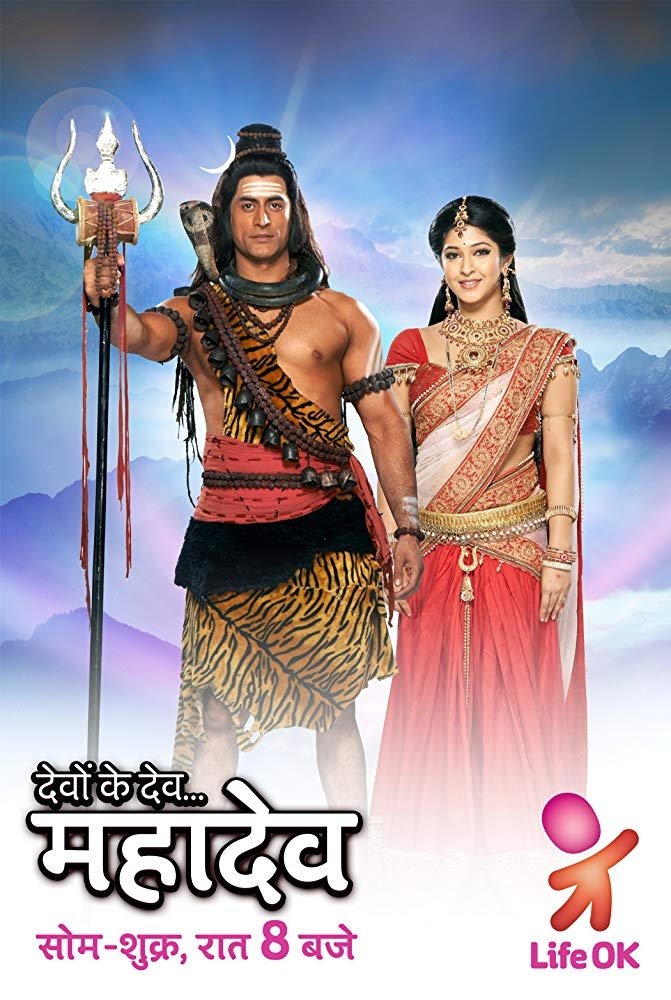
Devon Ke Dev...Mahadev
Indian mythological television series
Jangam
thumb|A group of Jangam, moving in street of Mohali city near [[Chandigarh, 17 th May 2022 ]]
The Jangam or Jangamuru or veerashaiva Jangam a Shaiva order of religious monks. They are the priests (Gurus) of the Veerashaiva or Lingayatism, and are disciples of Shiva as mentioned in Basava Puranas. Jangamas were originally Vedic Shaiva Brahmins, from the same background as Basavanna, who is also identified as a Shaiva Brahmin. In the 12th century, these Brahmins became priests of the emerging Lingayat faith, and over time this Brahmins become known as Jangamas.
Masroor Temples
8th-century rock cut stone temple and ruins in Masrur–Lahalpur Himachal Pradesh
Kalamukha
The Kalamukha were a medieval Shaivite sect of the Deccan Plateau who were among the first professional monks of India. Their earliest monasteries were built in Mysore.
Shiva mahimna stotram
hindu hymn
Rudrani
Rudrani () is the consort of Rudra, a Vedic deity regarded to be a form of Shiva in contemporary Hinduism. Rudrani is an epithet of Parvati, the consort of Shiva.
Baijnath Temple, Himachal Pradesh
early 13th century Shiva temple
Pancharama Kshetras
ancient Indian Hindu temples
Mukhalinga
thumb|A Gupta era one-faced mukhalinga, [[Bhumara]]
thumb|A four-faced mukhalinga, 10th century, Asian Art Museum of San Francisco|Asian Art Museum
Shiva Sahasranama
1008 names of God in Shaivism
Kubjika
thumb|Kubjikā Mātā
Shiva Advaita
12th-century school of Hindu philosophy
Navnath
Nine Hindu saints of the Navnath lineage
Daksha yajna
mythological event in which the god Daksha arranges for his daughter Sati to immolate herself
Tiruvacakam
Thiruvasagam () is a volume of Tamil hymns composed by the 3rd century Shaivite bhakti poet Manikkavasagar. It contains 51 compositions and constitutes the eighth volume of the Tirumurai, the sacred anthology of the Tamil Shaiva Siddhanta.
Parashiva
thumb|Upper part (oval stone) of Lingam|Shiva lingam represents Parashiva
Shri Vaijnath Temple
temple in India