Category
page 1Shia Muslims

Ferdowsi
thumb|Statue of Ferdowsi in Tus by Abolhassan Sadighi
Abolqasem Mansour bin Hassan Tusi (940–1025), better known by his pen name Ferdowsi, was a Persian poet and the author of Shahnameh ("Book of Kings"), which is one of the world's longest epic poems created by a single poet, and the greatest epic of Persian-speaking countries. Ferdowsi is celebrated as one of the most influential figures of Persian literature and one of the greatest in the history of literature.

Farabi
thumbnail|200px|Postage stamp of the USSR, issued on the 1100th anniversary of the birth of Al-Farabi (1975)
Abu Nasr Muhammad al-Farabi (; – 14 December 950–12 January 951), known in the Latin West as Alpharabius, was an early Islamic philosopher and music theorist. He has been designated as "Father of Islamic Neoplatonism", and the "Founder of Islamic Political Philosophy".

Jabir ibn Hayyan
8th-century Islamic alchemist and author

Tahmasp I
Safavid Shah of Iran from 1524 to 1576
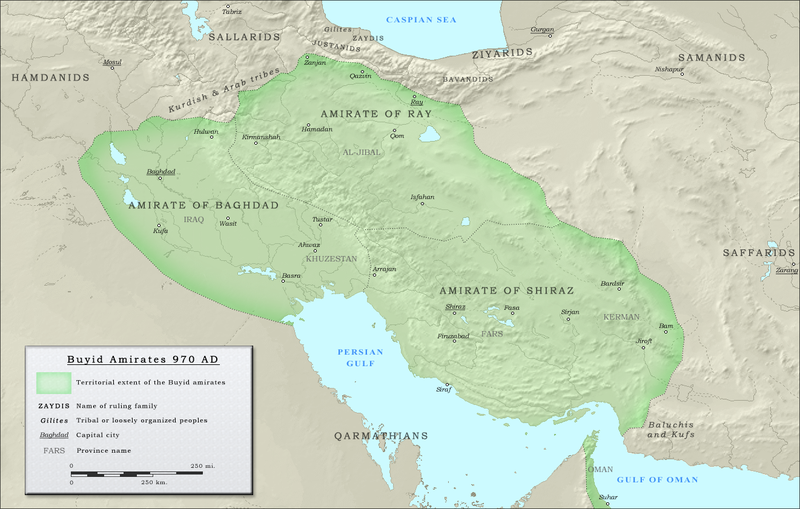
Buyid dynasty
Iranian dynasty ruling of central and western Iran (934–1062)
Hamdanid dynasty
Shia Islamic state in northern Mesopotamia and Syria from 890 to 1004

Bahāʾ al-dīn al-ʿĀmilī
Iranian Shia Islamic scholar, philosopher, architect, mathematician, astronomer and poet
Hisham ibn al-Kalbi
Arab historian (737–819)
Muhammad Quli Qutb Shah
6th ruler of the kingdom of Golconda in southern India
Uqaylid dynasty
Arab dynasty from 990 to 1096
Abu Mikhnaf
Muslim historian
Muslim ibn Aqil
Son of Aqil ibn Abi Talib and cousin of Husain ibn Ali (died 680)
Quli Qutb Shah
first ruler of the Qutb Shahi sultanate
Mir Damad
Iranian philosopher and inventor
Hujr ibn Adi
Islamic figure and companion of Muhammad
Mirza Mehdi Khan Astarabadi
Historian, ambassador and confidant to the King
Habib ibn Muzahir
Companion of Ali

Narjis
Narjis () is believed by the Twelvers to have been the mother of their Hidden Imam, Muhammad al-Mahdi. His birth is said to have been providentially concealed by his father, Hasan al-Askari, out of fear of Abbasid persecution as they sought to eliminate an expected child of the eleventh Imam, whom persistent rumors described as a savior. After the death of his father in 260 AH (873-874 CE), al-Mahdi is believed by the Twelvers to have entered a state of occultation which continues until his rise in the end of time to establish peace and justice on earth. The origin of Narjis is recorded as the

Banu Mazyad
Islamic Caliphate in Iraq

Maytham Al-Tammar
Early Islamic scholar (d. 680)
Numayrid dynasty
Arab dynasty circa 990-1081
Muslim ibn Awsaja
companion of the Islamic prophet Muhammad

Abd al-Adhim al-Hasani
Shia muhaddith
Abul Qasim Husayn ibn Ruh al-Nawbakhti
the third of the four Deputies of the Hiden Imam in Twelver Shi’ism
Ali al-Uraidhi ibn Ja'far al-Sadiq
Muslim scholar
Hisham ibn Hakam
Shiite scholar, 8th C.
Banu'l-Furat
The '''Banu'l-Furat () were a Shia family of civil functionaries of the Abbasid Caliphate in the late 9th and early 10th centuries, several of whom held the office of vizier. In the sources, the members of the family are often simply designated as Ibn al-Furat'''. Along with their rivals, the Banu'l-Jarrah, they controlled the Caliphate's central government in the early decades of the 10th century.
Muḥammad ibn as-Sāʾib al-Kalbī