Category
page 1Shinbutsu shūgō

Inari
Japanese kami of foxes, of fertility, rice, tea and Sake, of agriculture and industry etc

Hachiman
thumb|300px|The Shinto deity Hachiman (Kamakura period 1326) at [[Tokyo National Museum (Lent by Akana Hachimangū), Important Cultural Property]]
, formerly known in Shinto as Yahata, is the syncretic divinity of archery and war, incorporating elements from both Shinto and Japanese Buddhism.

Benzaiten
or simply Benten is an East Asian Buddhist goddess who originated from the Hindu Saraswati, the patroness of speech, the arts, and learning.
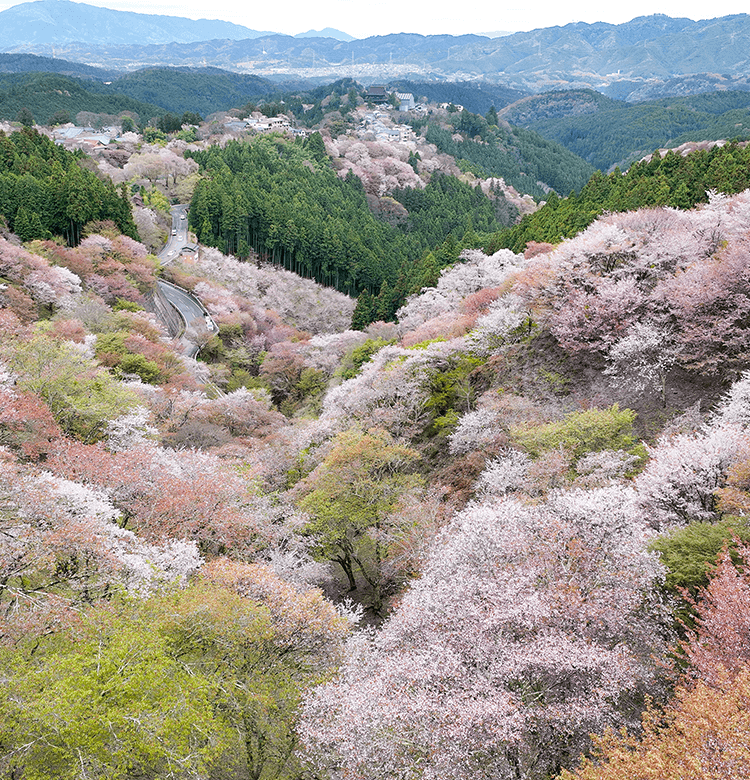
Yoshino
town in Yoshino district, Nara prefecture, Japan
Mount Yoshino
mountain in Nara Prefecture, Japan

shinbutsu-shūgō
thumb|Kitsune|Foxes sacred to Shinto kami Inari, a [[torii, a Buddhist stone pagoda, and Buddhist figures together at Jōgyō-ji, Kamakura]]
Shinbutsu-shūgō (, "syncretism of kami and buddhas"), a.k.a. the Shinbutsu-konkō (, "jumbling up" or "contamination of kami and buddhas"), is the syncretism of Shinto and Buddhism that was Japan's main organized religion up until the Meiji period. Beginning in 1868, the new Meiji government approved a series of laws that separated Japanese native kami worship, on one side, from Buddhism which had assimilated it, on the other.

Suwa taisha
, historically also known as Suwa Shrine (諏訪神社 Suwa-jinja) or , is a group of Shinto shrines in Nagano Prefecture, Japan. The shrine complex is the ichinomiya of former Shinano Province and is considered to be one of the oldest shrines in existence, being implied by the Nihon Shoki to already stand in the late 7th century.
Iwashimizu Hachimangū
Shinto shrine in Kyoto Prefecture, Japan

Shugendō
thumb| practitioners (Shugenja) in the mountains of Kumano, Mie ([[Kōshō Tateishi)]]
thumb|upright|Statue of En no Gyōja, the founder of . [[Kamakura period, c. 1300–1375, Kimbell Art Museum.]]
thumb|upright|Stairs on the way to Ōminesan-ji, the holy site of ''
thumb|upright|Acala|Fudō Myōō silk scroll from [[Daigo-ji (Kyoto), a major Shingon temple and site]]
thumb|upright|Zaō Gongen'', a key deity in , in Kinpusen-ji Temple
Usa Jingū
Shinto shrines in Ōita Prefecture, Japan
haibutsu kishaku
anti-Buddhist movement during the Meiji period in Japan
Seiganto-ji Temple
, Temple of Crossing the Blue Shore, is a Tendai Buddhist temple in Wakayama Prefecture, Japan. It was designated a UNESCO World Heritage Site in 2004 as part of Sacred Sites and Pilgrimage Routes in the Kii Mountain Range. According to a legend, it was founded by Ragyō Shōnin, a monk from India. The temple was purposely built near Nachi Falls, where it may have previously been a site of nature worship. Seiganto-ji, part of the Kumano Sanzan shrine complex, is one of the few remaining jingū-ji or shrine temples following the forcible separation of Shinto and Buddhism during the Meiji restorati
.jpg)
Dōsojin
thumb|Dōsojin represented as a human couple.
thumb|250x250px|The Dōsojin is on the left
Dōsojin (道祖神) are a class of protective Shinto deities (kami) commonly venerated in eastern Japan, particularly in the Kantō, Chūbu, and Tōhoku regions. They are associated with liminal spaces such as village boundaries, crossroads, and mountain passes, and are believed to ward off evil spirits, epidemics, and other harmful influences that threaten individuals or communities during transitional stages of life.2 The worship of Dōsojin reflects a blend of ancient animistic beliefs, local folk customs, and ele
shinbutsu bunri
policy of separating Shinto and Buddhism pursued by the Meiji government of Japan

gongen
thumb|250px|Nikkō Tōshō-gū enshrines [[Tokugawa Ieyasu under the posthumous name of Tōshō Daigongen.]]
honji suijaku
Japanese Buddhist theory incorporating kami into the Buddhist pantheon
Kunisaki Peninsula
peninsula in Ōita Prefecture, Japan
Mujū
Mujū Dōkyō (; 1 January 1227 – 9 November 1312), birth name Ichien Dōkyō, was a Buddhist monk of the Japanese Kamakura period. He is superficially considered a Rinzai monk by some due to his compilation of the Shasekishū and similar books of koans, but there is good evidence that he was also an eager student of the Tendai, Pure Land, and Hosso sects, and he is occasionally placed in the Shingon and Ritsu sects as well.
Atago Gongen
a Japanese kami believed to be the local avatar (Gongen) of Buddhist bodhisattva Kṣitigarbha. The cult originated in Shugendō practices on Mount Atago in Kyoto
Shasekishū
The , also read as Sasekishū, translated into English as Collection of Stone and Sand, is a five-volume collection of Buddhist parables written by the Japanese monk Mujū in 1283 during the Kamakura period.
Shintōshū
The is a Japanese setsuwa collection in ten volumes, believed to date from the Nanboku-chō period (1336–1392). It illustrates with tales about various shrines the Buddhist honji suijaku theory, according to which Japanese kami were simply local manifestations of the Indian gods of Buddhism. This theory, created and developed mostly by Tendai monks, was never systematized but was nonetheless very pervasive and influential. The book had thereafter great influence over literature and the arts.
Ugajin
thumb|Ugajin (宇賀神), masculine form.
Shinto mirror
sacred mirrors used in Shinto
jingū-ji
thumb|300 px|Tsurugaoka Hachimangū-ji in an old drawing. In the foreground the shrine-temple's Buddhist structures (not extant), among them a pagoda, a belltower and a [[niōmon. The shrine (extant) is above.]]
Until the Meiji period (1868–1912), the were places of worship composed of a Buddhist temple and a Shinto shrine, both dedicated to a local kami. These complexes were born when a temple was erected next to a shrine to help its kami with its karmic problems. At the time, kami were thought to be also subjected to karma, and therefore in need of a salvation only Buddhism could provide. Havi
mountain worship
Faiths which regard mountains as objects of worship
Gozu Tennō
Japanese plague deity, historically conflated with Susanoo
Zeniarai Benzaiten Ugafuku Shrine
Shinto shrine in Kanagawa Prefecture, Japan
myōjin
Myōjin (明神 'shining deity', 'illuminating deity', or 'apparent deity') or Daimyōjin (大明神 'great shining/apparent deity') was a title historically applied to kami ('Japanese deities') and, by metonymy, their shrines.
Ryūkyū Shintō-ki
five-volume treatise of c. 1605/6 by Taichū Ryōtei (袋中良定, 1552–1639) about religions in Ryukyu
Kompira
water deity
Chiba Shrine
Shinto shrine in Chiba Prefecture, Japan