Category
page 1Shorebirds

Gallinago gallinago
species of bird

Common Redshank
species of bird

Wood Sandpiper
species of bird

Bar-tailed Godwit
species of bird

Ruddy Turnstone
species of bird

Grey Plover
species of bird

Kentish Plover
species of bird

Little Stint
species of bird
.jpg)
Haematopus
thumb|American oystercatchers with chick
thumb|right|Juvenile

Jacanidae
The jacanas (sometimes referred to as Jesus birds or lily trotters) are a group of tropical waders in the family Jacanidae. They are found in the tropical regions around the world. They are noted for their elongated toes and toenails that allow them to spread out their weight while foraging on floating or semi-emergent aquatic vegetation. They are also among the somewhat rare groups of birds in which females are larger, and several species maintain harems of males in the breeding season with males solely responsible for incubating eggs and taking care of the chicks.

Long-billed Dowitcher
species of bird

Asian Dowitcher
species of bird

wading birds
thumb|245px|A flock of Dunlin and [[Red knot in Sweden]]
Waders or shorebirds are birds of the order Charadriiformes commonly found wading along shorelines and mudflats in order to forage for food crawling or burrowing in the mud and sand, usually small arthropods such as aquatic insects or crustaceans. The term "wader" is used in Europe, while "shorebird" is used in North America, where "wader" may be used instead to refer to long-legged wading birds such as storks and herons.

Swinhoe's Snipe
species of bird

Short-billed Dowitcher
species of bird
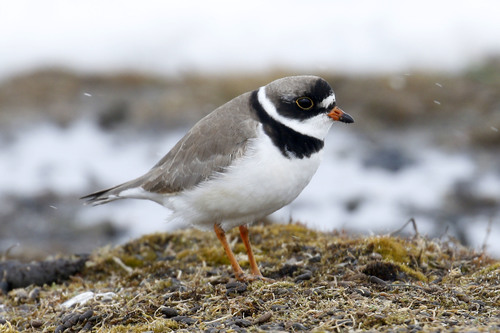
Semipalmated Plover
species of bird

Marbled Godwit
species of bird

Grey-tailed Tattler
species of bird

Piping Plover
species of bird

Willet
The willet (Tringa semipalmata) is a large shorebird in the family Scolopacidae. It is a relatively large and robust sandpiper and is the largest of the species called "shanks" in the genus Tringa. Its closest relative is the lesser yellowlegs, a much smaller bird with a very different appearance apart from the fine, clear, and dense pattern of the neck, which both species show in breeding plumage. It breeds in North America and the West Indies and winters in southern North America, Central America, the West Indies and South America.

Latham’s Snipe
species of bird

Black Oystercatcher
species of bird

Wilson's Plover
species of bird

Subantarctic Snipe
species of bird

Snowy Plover
species of bird
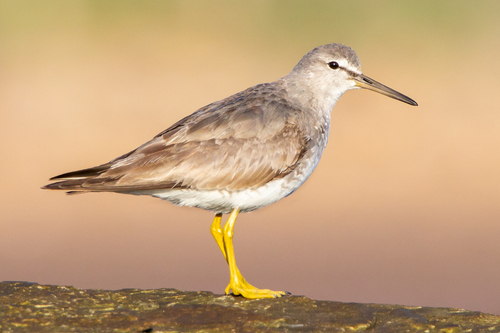
Tattler
genus of birds