Category
page 1Silurian extinctions
Naraoia
Naraoia is a genus of small-to-average-size (about long) marine arthropods within the family Naraoiidae, that lived from the early Cambrian to the late Silurian period. The species are characterized by a large alimentary system and sideways oriented antennas.

Asaphida
Asaphida is a large, morphologically diverse order of trilobites found in marine strata dated from the Middle Cambrian until their extinction during the Silurian. Asaphida contains six superfamilies (Anomocaroidea, Asaphoidea, Cyclopygoidea, Dikelocephaloidea, Remopleuridoidea and Trinucleioidea), but no suborders. Asaphids comprise some 20% of described fossil trilobites.
Paracrinoid
Paracrinoidea is an extinct class of blastozoan echinoderms. They lived in shallow seas during the Early Ordovician through the Early Silurian. While blastozoans are usually characterized by types of respiratory structures present, it is not clear what types of respiratory structures paracrinoids likely had. Despite the taxon's name, the paracrinoids are not closely related to crinoids.
Eocrinoidea
The Eocrinoidea were an extinct class of echinoderms that lived between the Early Cambrian and Late Silurian periods. They are the earliest known group of stalked, brachiole-bearing echinoderms, and were the most common echinoderms during the Cambrian.

Halysites
thumb|right|Thin-section view of Halysites corallum

Slimonia
Slimonia is a genus of eurypterid, an extinct group of aquatic arthropods. Fossils of Slimonia have been discovered in deposits of Silurian age in South America and Europe. Classified as part of the family Slimonidae alongside the related Salteropterus, the genus contains three valid species, S. acuminata from Lesmahagow, Scotland, S. boliviana from Cochabamba, Bolivia and S. dubia from the Pentland Hills of Scotland and one dubious species, S. stylops, from Herefordshire, England. The generic name is derived from and honors Robert Slimon, a fossil collector and surgeon from Lesmahagow.
Ampyx
genus of arthropods (fossil)
Platystrophia
Platystrophia is an extinct genus of brachiopods that lived from the Ordovician to the Silurian in Asia, Europe, North America, and South America. It has a prominent sulcus and fold. It usually lived in marine lime mud and sands.
Nektaspida
Nektaspida (also called Naraoiida, Nektaspia and Nectaspida) is an extinct order of non-mineralised artiopodan arthropods. They are known from the lower-Cambrian to the upper Silurian. Originally classified as trilobites, which they superficially resemble, they are now placed as close relatives as members of the Trilobitomorpha within Artiopoda. The order is divided into three major families; Emucarididae, Liwiidae, and Naraoiidae.
Vauxia
Vauxia is an extinct genus of demosponge that had a distinctive branching mode of growth. Each branch consisted of a network of strands. Vauxia also had a skeleton of spongin (flexible organic material) common to modern day sponges. Much like Choia and other sponges, Vauxia fed by extracting nutrients from the water.
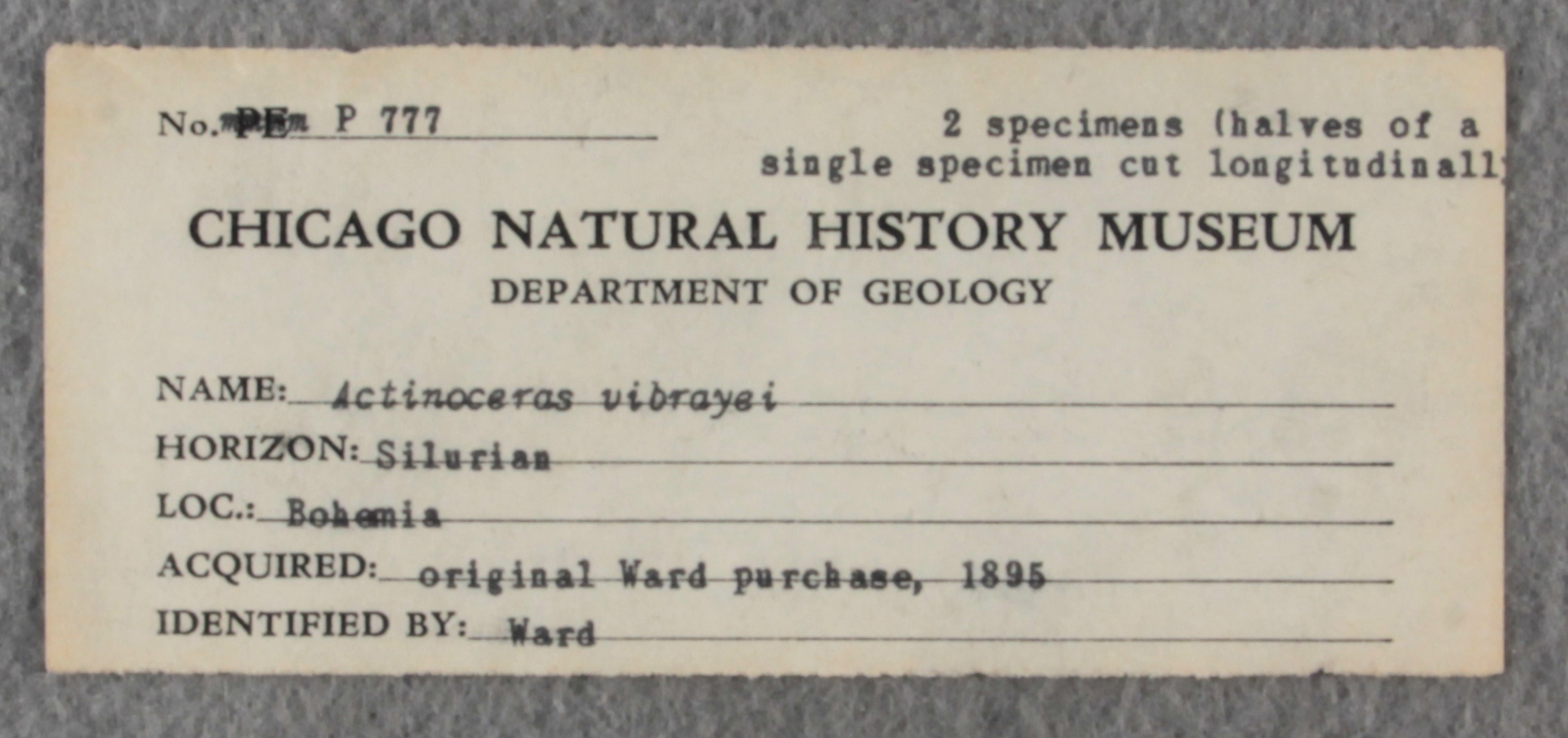
Actinoceratidae
The Actinoceriatidae are a family of actinocerids named by Saemann in 1853 for those that grew to have large shells with blunt apices and large siphuncles with widely expanded segments and a generally arcuate endosiphucular canal system. Their range is from the upper Middle Ordovician to the Lower Silurian. Actinocerids are generally straight-shelled nautiloid cephalopods with a siphuncle composed of expanded segments, typically with thin connecting rings, in which the internal deposits are penetrated by a system of canals.
Proetus
genus of trilobites
Ascocerida
The Ascocerida are comparatively small, bizarre Orthoceratoids known only from Ordovician and Silurian sediments in Europe and North America, uniquely characterized by a deciduous conch consisting of a longer juvenile portion and an inflated short adult portion that separate sometime in maturity.
Sphaerexochus
Sphaerexochus is a genus of trilobites from the Middle Ordovician to Late Silurian (468.1 to 418.7 Ma) of Asia, Australia, Europe, and North America.
Palaeoscolecida
The palaeoscolecids are a group of extinct ecdysozoan worms resembling armoured priapulids. They are known from the Lower Cambrian to the lower Ludfordian (late Silurian); they are mainly found as disarticulated sclerites, but are also preserved in many of the Cambrian lagerstätten. They take their name from the typifying genus Palaeoscolex.
Other genera include Cricocosmia from the Lower Cambrian Chengjiang biota. Their taxonomic affinities within Ecdysozoa have been the subject of debate.
Trinucleoidea
Trinucleioidea is a superfamily of trilobites. Traditionally placed within the Asaphida, it is now sometimes considered its own order, Trinucleida.
thumb|Damghanampyx ghobadipour fossil from Lashkark Formation, Ordovician, Damghan, Iran
Halysitidae
Halysitidae is an extinct family of tabulate corals.
Naraoiidae
Naraoiidae is a family, of extinct, soft-shelled trilobite-like arthropods, that belongs to the order Nektaspida. Species included in the Naraoiidae are known from the second half of the Lower Cambrian to the end of the Upper Silurian. The total number of collection sites is limited and distributed over a vast period of time: Maotianshan Shale and Balang Formation (China), Burgess Shale and Bertie Formation (Canada), the Šárka Formation (Czech Republic), Emu Bay Shale (Australia), Idaho and Utah (USA). This is probably due to the rare occurrence of the right circumstances for soft tissue prese
Thelodontiformes
Thelodontiformes is an extinct order of jawless fish of the Silurian.
Kokomopteridae
The Kokomopteridae are a family of eurypterids, an extinct group of chelicerate arthropods commonly known as "sea scorpions". The family is one of two families contained in the superfamily Kokomopteroidea (along with Hardieopteridae), which in turn is one of four superfamilies classified as part of the suborder Stylonurina.
Stenaster
Stenaster is an extinct genus of brittle stars that lived from the Ordovician to the Silurian.
Parastylonuridae
REDIRECT Parastylonurus
Category:Stylonuroidea
Category:Silurian first appearances
Category:Silurian extinctions
Category:Prehistoric arthropod families
Bumastus
thumb|upright|Bumastus barriensis, from the [[Silurian Wenlock series, found at Dudley, Worcestershire.]]
Ramphoprionidae
Ramphoprionidae is a family of polychaete worms known from the Ordovician and Silurian periods.