Category
page 1Sirenidae
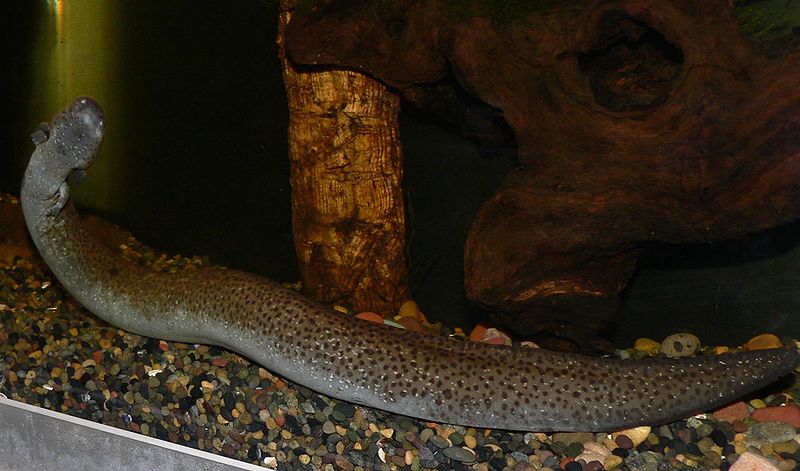
Sirenidae
Sirenidae, the sirens, are a family of neotenic aquatic salamanders. Family members have very small fore limbs, and lack hind limbs altogether. In one species, the skeleton in their fore limbs is made of only cartilage. In contrast to most other salamanders, they have external gills bunched together on the neck in both larval and adult states. Sirens are found only in the Southeastern United States and northern Mexico.

Siren
genus of amphibians
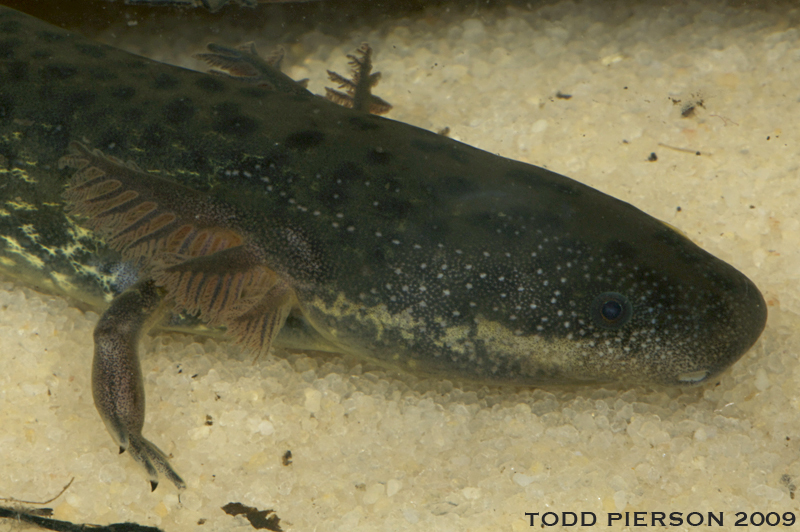
Siren lacertina
species of amphibian

Siren intermedia
species of amphibian

dwarf siren
salamander genus

Northern dwarf siren
species of amphibian

Southern dwarf siren
species of amphibian

Siren reticulata
species of salamander
Habrosaurus
Habrosaurus, meaning "graceful lizard", is an extinct genus of prehistoric salamanders, and the oldest and largest known member of the family Sirenidae. Two species are known, H. prodilatus from the middle Campanian Dinosaur Park Formation of Alberta, and H. dilatus from the late Maastrichtian and Paleocene of western North America. It is relatively common in the Lance Formation of Wyoming, and less common in the Hell Creek Formation of Montana.
left|thumb|Artists reconstruction of Habrosaurus dilatus swimming by a cypress tree