Category
page 1Sites along the Silk Road
%20is%20seen%20at%20the%20lower%20part.jpg)
Euphrates
The Euphrates ( ; see below) is the longest and one of the most historically important rivers of West Asia. Together with the Tigris, it is one of the two defining rivers of Mesopotamia (). Originating in Turkey, the Euphrates flows through Syria and Iraq to join the Tigris in the Shatt al-Arab in Iraq, which empties into the Persian Gulf.

Gobi Desert
desert in China and Mongolia

Hindu Kush
mountain range in Afghanistan and Pakistan

Karakoram
The Karakoram (, ) is a mountain range in Asia located primarily in the Kashmir region. The range spans the borders of Pakistan, China, and India, with the north-western extremities of the range extending into Afghanistan and Tajikistan. The Karakoram contains four of the fourteen eight-thousanders, the highest of which is K2, the second highest mountain on Earth.

Tianshan Mountains
Asian mountain range separating northwest China from Central Asia and Russia

Syr Darya
river in Kyrgyzstan, Uzbekistan, Tajikistan, Kazakhstan

Kashgar
Kashgar or Qeshqer () or Kashi () is a city in the Tarim Basin region of southern Xinjiang, China. It is one of the westernmost cities of China, located near the country's border with Kyrgyzstan and Tajikistan. For over 2,000 years, Kashgar has been a strategically important oasis on the Silk Road linking China with Central Asia, the Middle East, and Europe. It is one of the oldest continuously inhabited cities in the world and has a population of 711,300 people (). Kashgar's urban area covers , although its administrative area extends over .
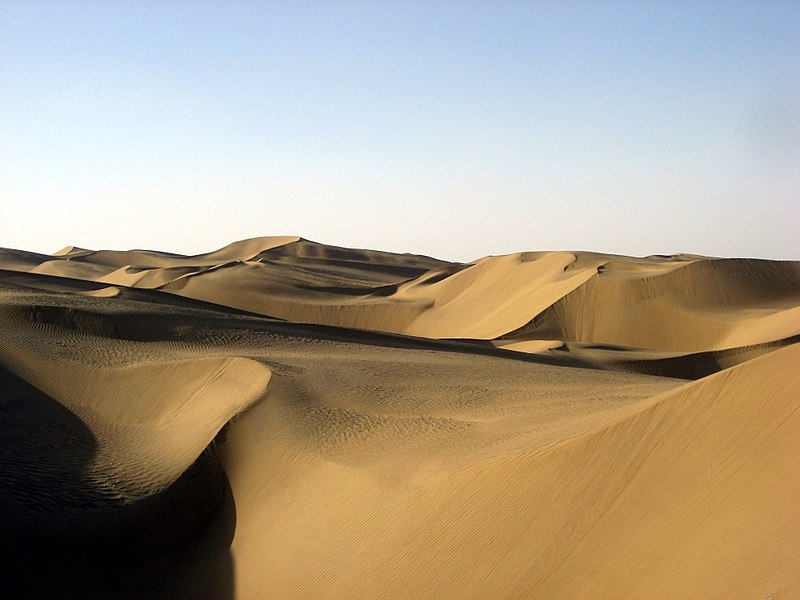
Taklamakan
desert in Xinjiang Uyghur Autonomous Region, China

Issyk-Kul
Issyk-Kul () or Ysyk-Köl ( ; ) is an endorheic saline lake in the western Tian Shan mountains in eastern Kyrgyzstan—just south of a dividing range separating Kyrgyzstan from Kazakhstan. It is the eighth-deepest lake in the world, the eleventh-largest lake in the world by volume, and the second-largest saline lake. It is located at an elevation of , making it the deepest lake whose deepest point is above sea level at . Despite the elevation and low temperatures during winter, it rarely freezes due to its high salinity.

Bamyan Province
province of Afghanistan

Kunlun Mountains
mountain range in China
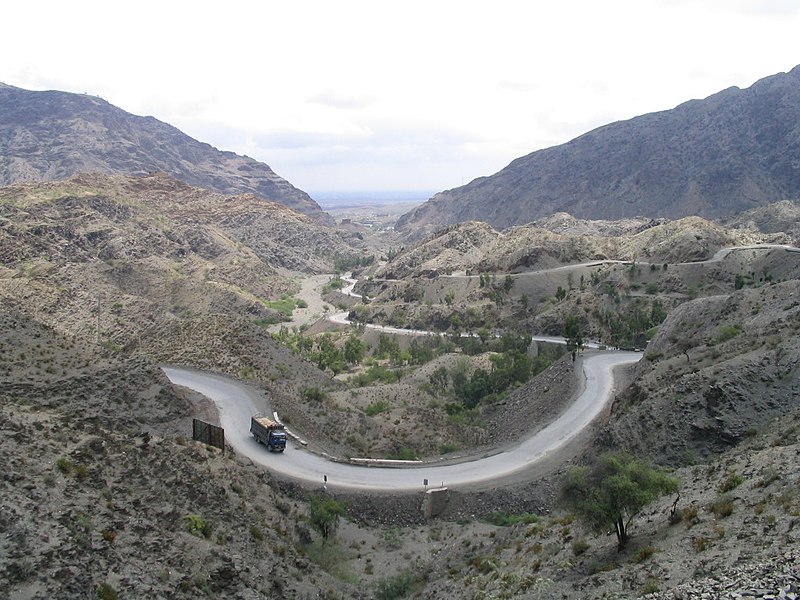
Khyber Pass
mountain pass connecting Afghanistan and Pakistan
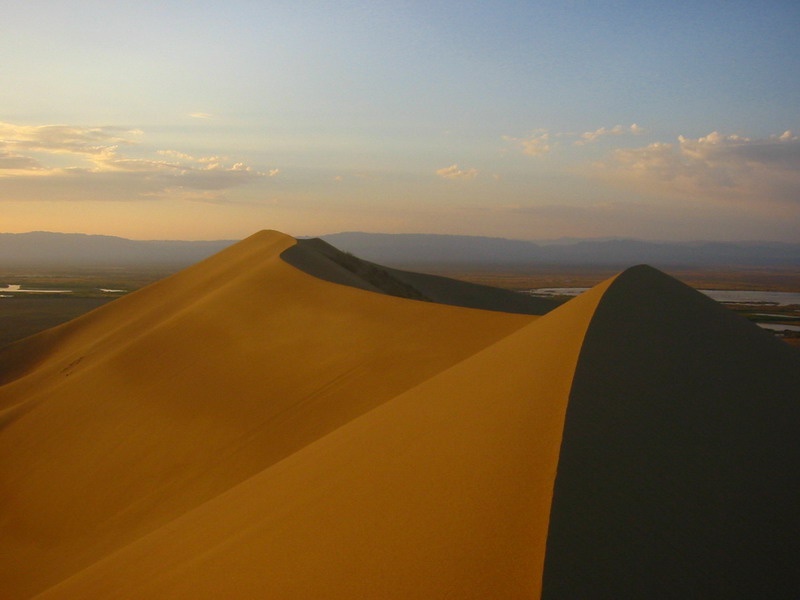
Ili River
river in Kazakhstan and China

Mogao Caves
caves in Dunhuang City, Gansu, China

Tarim Basin
geographical area in Central Asia

Karakorum
thumb|Stupas around Erdene Zuu Monastery in Karakorum
Tarim River
river in the People's Republic of China

Karakoram Highway
international highway running through Pakistan, China

Wakhan Corridor
region in Badakhshan province in northeastern Afghanistan

Lop Nur
former salt lake in Bayingolin Prefecture, Xinjiang, China

Dzungaria
Dzungaria, also known as Northern Xinjiang or Beijiang, is a geographical subregion in Northwest China, consisting of the northern half of Xinjiang. Bound by the Altai Mountains to the north and the Tian Shan mountain range to the south, Dzungaria covers approximately , and borders Kazakhstan to the west and Mongolia to the east. In contexts prior to the mid-18th century Dzungar genocide, the term "Dzungaria" could cover a wider area, coterminous with the Oirat-led Dzungar Khanate.
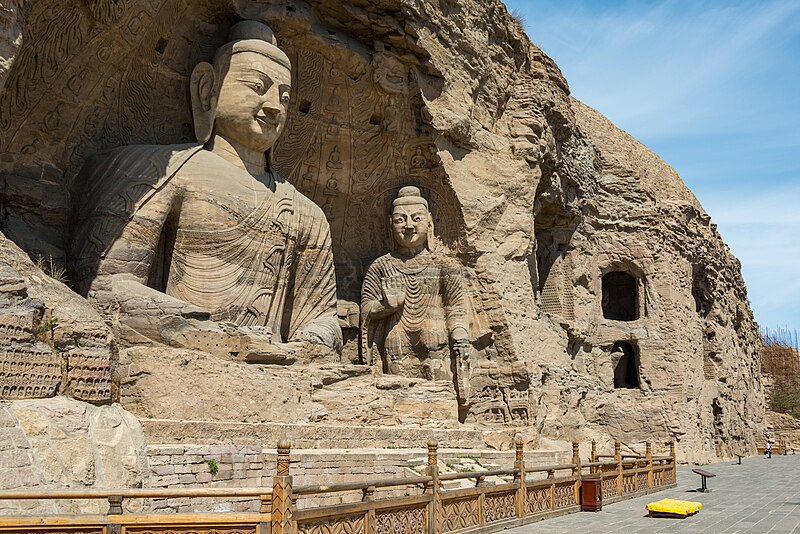
Yungang Grottoes
ancient Chinese Buddhist temple grottoes in Shanxi

Chang'an
thumb|right|300px|que (tower)|Que towers along the walls of Tang-era Chang'an, as depicted in this mural from [[Li Chongrun's tomb at the Qianling Mausoleum in Shaanxi]]
Bosten Lake
lake
Yarkand River
river in the People's Republic of China
Kingdom of Khotan
Iranian Saka Buddhist kingdom (56–1006)
Khunjerab Pass
mountain pass in Pakistan and China
Hotan River
river in the People's Republic of China
Hexi Corridor
narrow stretch of traversable and relatively arable plain west of the Yellow River's Ordos Loop between the Mongolian and Tibetan Plateaus (western China)
Qilian Mountains
mountain range
Torugart Pass
mountain pass
Jiayuguan
mountain pass in China
Bezeklik Thousand Buddha Caves
cave in People's Republic of China
Kizil Caves
cave in People's Republic of China

Dayuan
thumb|320px|The Dayuan (in Ferghana) was one of the three advanced civilizations of [[Central Asia around 130 BCE, together with Parthia and Greco-Bactria, according to the Chinese historical work Book of Han.]]

Khara-Khoto
Khara-Khoto, also known as Heicheng, is an abandoned city near the Juyan Lake in the sum of Bayan Toroi, about 25 km south of the seat of Ejin Banner in Alxa League at the western end of Inner Mongolia, China. Built in 1032, the city thrived under the rule of the Tangut-led Western Xia dynasty. It has been identified as the city of Etzina, which appears in The Travels of Marco Polo, and hence today's Ejin Banner is named after this city.
Wakhjir Pass
mountain pass in Afghanistan and China
Aksu River
river in China and Kyrgyzstan

Erkeshtam
Erkeshtam, called Irkeshtam in Chinese and Dungan, or Erkech-Tam in Uyghur and Kyrgyz, is a border crossing between Kyrgyzstan and Xinjiang, China, named after a village on the Kyrgyz side of the border in southern Osh Region. The border crossing is also called Simuhana (斯姆哈纳), after the first settlement on the Chinese side of the border, but Erkeshtam is now the more common name used in both countries.
Yumen Pass
mountain pass
Flaming Mountains
mountain range in Xinjiang
Barkol Kazakh Autonomous County
autonomous county
Karakash River
river in People's Republic of China
Niya
archaeological site
Lop Desert
desert in China
Hunza State
princely state of the British Raj
Yurungkax He
river in People's Republic of China

Characene
Characene (Ancient Greek: Χαρακηνή), also known as Mesene (Μεσσήνη) or Meshan, was a kingdom founded by the Iranian Hyspaosines located at the head of the Persian Gulf mostly within modern day Iraq. Its capital, Charax Spasinou (Χάραξ Σπασινού), was an important port for trade between Mesopotamia and India, and also provided port facilities for the city of Susa further up the Karun River. The kingdom was frequently a vassal of the Parthian Empire. Characene was mainly populated by Arabs, who spoke Aramaic as their cultural language. All rulers of the principality had Iranian names. Members of
Kumtag Desert
desert in Gansu and Xinjiang, China
%20Corridor.jpg)
Wakhan
Wakhan (Dari; Pashto: ), also spelt as Vakhan and known as Vakhon (Tajik: Вахон}, is a rugged, mountainous part of the Pamir Mountains, Hindu Kush and Karakoram regions of Afghanistan and Tajikistan. It covers mainly the Wakhan District of Badakshan Province in northeastern Afghanistan.
Kaidu River
river in the People's Republic of China
Hoxud County
county
Miran
archaeological site
Kilik Pass
border pass between Pakistan and China
Taxkorgan He
river in People's Republic of China
Turpan karez system
protected area
Yangguan
Western Han dynasty pass and watch tower near Dunhuang, Gansu province, China
Iron Gate Pass
mountain pass
Kumtura Thousand Buddha Caves
cave in People's Republic of China
Astana Cemetery
cemetery in Turpan, China