Category
page 1Slavic history
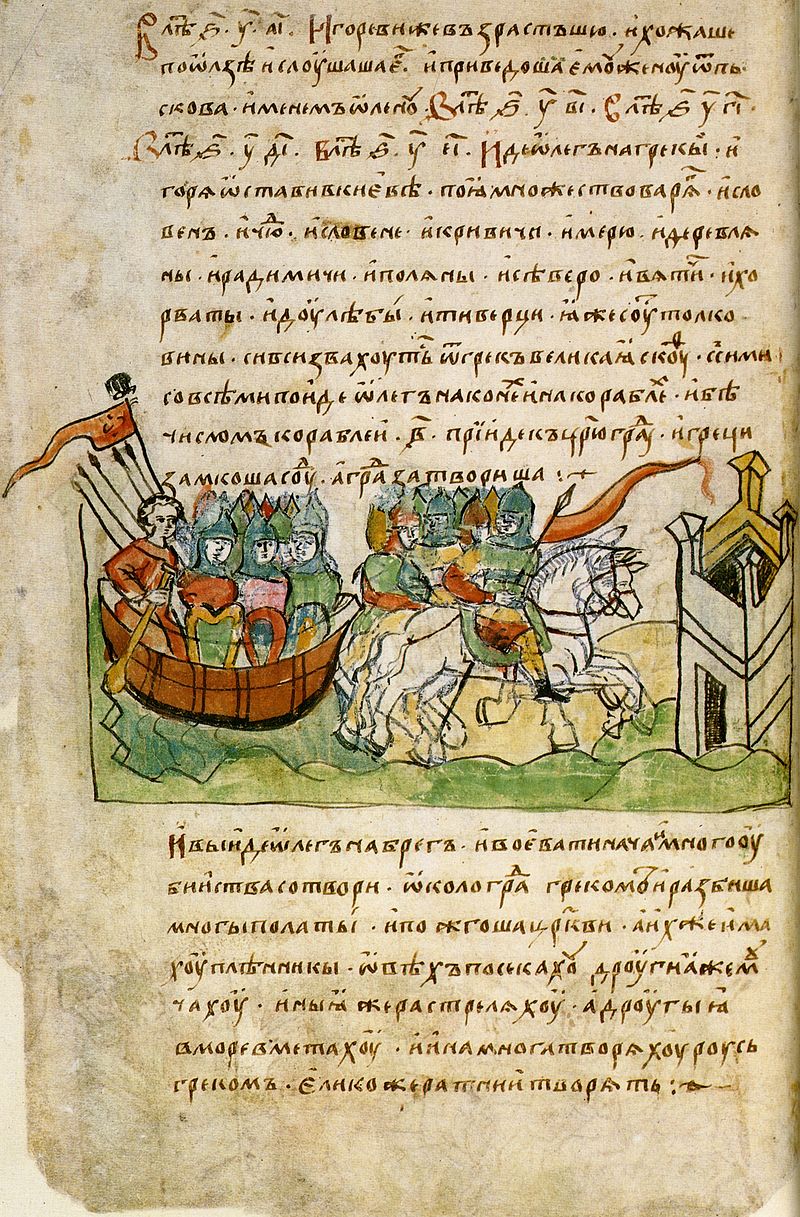
Primary Chronicle
literary work of 12th century
Bavarian Geographer
medieval manuscript listing the tribes of central and eastern Europe
.jpg)
Saqaliba
thumb|upright=1.3|The Rus trading slaves with the Khazars: Trade in the East Slavs|East Slavic Camp by Sergei Ivanov (1913). Many saqaliba slaves came from Europe to the Abbasid Caliphate by the Volga trade route from Eastern Europe via the Khazars and the Caspian Sea.
thumb|Slavic and Black slaves in Córdoba; illustration from the Cantigas de Santa Maria
thumb|Iron restraints, 11th or 12th century, from Neu Niekohr
thumb|Hoard of Islamic silver coins (circa 820CE) discovered at [[Anklam, West Pomerania]]
thumb|Slav, , Kraków.
thumb|Grody czerwienskie (Czerwień Cities or Cherven Gords) szlaki
Kyivan Chronicle
chronicle of Kievan Rus'

župa
A župa, or zhupa, is a historical type of administrative division in Southeast Europe and Central Europe, that originated in medieval South Slavic culture, commonly translated as "county" or "parish". It was mentioned for the first time in the eighth century and was initially used by the South and West Slavs, denoting various territorial units of which the leader was the župan.
Matica
A Matica or Matice or Matitsa or Matka is a Slavic concept of a foundation which promotes national culture and gained prominence during the 19th-century romantic nationalism.

Christianization of the Slavs
aspect of European history

gord
Slavic fortified settlement
King of the Slavs
Baltic Slavic piracy
Sporoi
Sporoi () or Spori was according to Eastern Roman scholar Procopius (500–560) the old name of the Antes and Sclaveni, two Early Slavic branches. Procopius stated that the Sclaveni and Antes spoke the same language, but he did not trace their common origin back to the Veneti (as per Jordanes) but to a people he called "Sporoi". He derived the name from Greek ("to sow"), because "they populated the land with scattered settlements".