Category
page 1Socialism

communism
socialism
Socialism is an economic and political philosophy encompassing diverse economic and social systems characterised by social ownership of the means of production, as opposed to private ownership. It describes the economic, political, and social theories and movements associated with the implementation of such systems. Social ownership can take various forms, including public, community, collective, cooperative, or employee. As one of the main ideologies on the political spectrum, socialism is the standard left-wing ideology in most countries. Types of socialism vary based on the role of markets
.jpg)
Marxism
alt=Black-and-white head shot of Marx|upright=1.05|thumb|Karl Marx, after whom Marxism is named

International Workers' Day
celebration in the international labour movement on May Day

proletariat
thumb|The Fourth Estate (painting)|The Fourth Estate (1901) by [[Giuseppe Pellizza da Volpedo]]

social democracy
political ideology

class struggle
concept in political and social science

Workers of the world, unite!
political slogan that is the rallying cry of communism

planned economy
type of economic system
Mensheviks
The Mensheviks () were a faction of the Marxist Russian Social Democratic Labour Party (RSDLP) which split with Vladimir Lenin's Bolshevik faction at the Second Party Congress in 1903. Mensheviks held more moderate and reformist views as compared to the Bolsheviks, and were led by figures including Julius Martov and Pavel Axelrod.
democratic socialism
political ideology
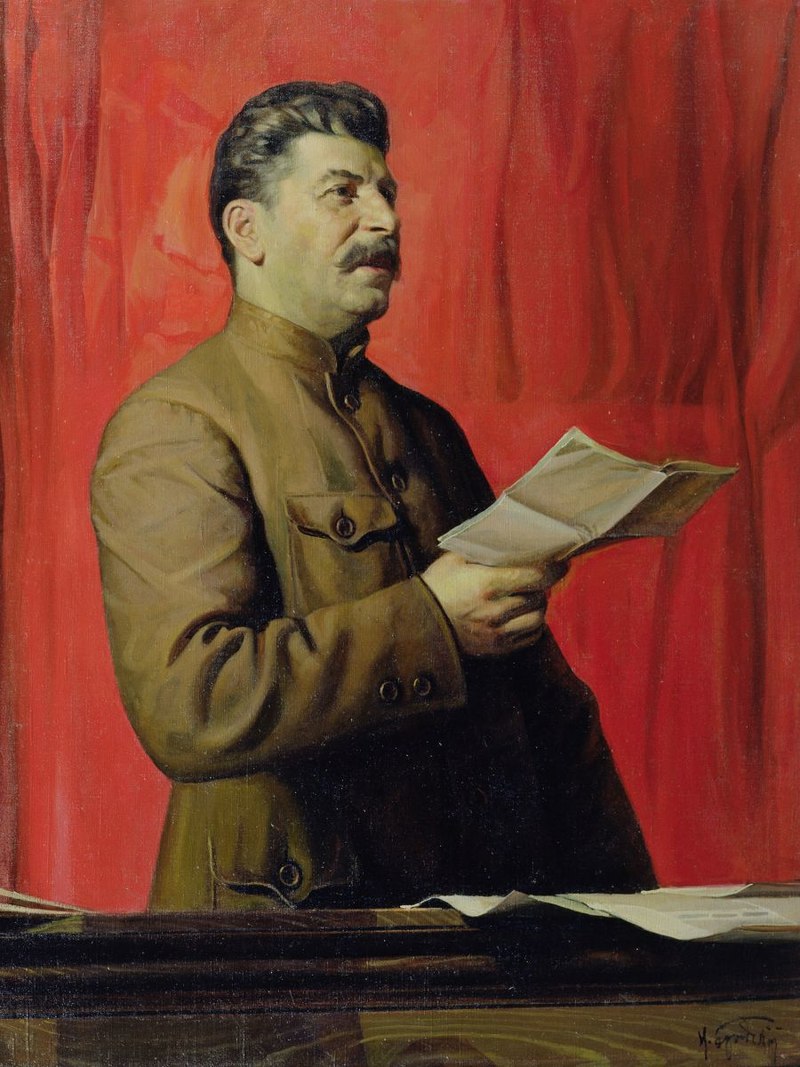
socialist realism
Art style depicting communist values
mixed economy
economic system combining public and private production

internationalism
movement which advocates a greater economic and political cooperation among nations

means of production
reference to physical, non-human inputs used in production to produce wealth
socialist state
sovereign state constitutionally dedicated to the establishment of socialism

utopian socialism
political theory concerned with imagined socialist societies

Bavarian Soviet Republic
short-lived unrecognised socialist state in Bavaria during the German Revolution of 1918–19

comrade
thumb|World War I [[American Red Cross poster by Harrison Fisher, 1918]]
In political contexts, comrade means a fellow party member. The political use was inspired by the French Revolution, after which it grew into a form of address between socialists and workers. Since the Russian Revolution, popular culture in the West has often associated it with communism. As such, it can also be used as a reference to leftists, akin to "". In particular, the Russian word () may be used as a reference to communists.

anti-capitalism
thumb|right|The "Pyramid of Capitalist System" cartoon made by the [[Industrial Workers of the World (1911) is an example of a socialist critique of capitalism and of social stratification.]]

communist state
state that is administered and governed by a single communist party
wage labor
relationship where a worker sells labour to an employer

axis of evil
group of countries identified collectively as enemies by U.S. President George W. Bush during the 2000s
reformism
Reformism is a political tendency advocating the reform of an existing system or institution—often a political or religious establishment—as opposed to its abolition and replacement via revolution.

libertarian socialism
Anti-authoritarian political philosophy
socialist feminism
ideology that seeks liberation from economic and cultural sources of women's oppression
%20(51052073462).jpg)
eco-socialism
thumb|300px|Socialist Alternative (Australia)|Socialist Alternative banner at the Global Climate Strike 2021 in [[Melbourne, Australia]]
Situationist International
international organization of social revolutionaries

antimilitarism
alt=|thumb|It Shoots Further Than He Dreams. Antimilitarist cartoon by John F. Knott. First published in March 1918.
Antimilitarism (also spelt anti-militarism) is a doctrine that opposes war, relying heavily on a critical theory of imperialism and was an explicit goal of the First and Second International. Whereas pacifism is the doctrine that disputes (especially between countries) should be settled without recourse to violence, Paul B. Miller defines anti-militarism as "ideology and activities...aimed at reducing the civil power of the military and ultimately, preventing international war".
market socialism
economic system aiming to create socialism through supply and demand
workers' self-management
form of organizational management based on self-directed work processes on the part of an organization's workforce
left-wing nationalism
form of nationalism based upon social equality, popular sovereignty, and national self-determination
wage slavery
dependence on wages or salary
Arab socialism
political ideology based on pan-Arabism and socialism
cultural hegemony
marxist notion of cultural dominance
participatory economics
type of economic system
liberal socialism
political philosophy which incorporates liberal principles into socialism
collectivist anarchism
form of anarchism

associationism
Associationism is the idea that mental processes operate by the association of one mental state with its successor states. It holds that all mental processes are made up of discrete psychological elements and their combinations, which are believed to be made up of sensations or simple feelings. In philosophy, this idea is viewed as the outcome of empiricism and sensationism. The concept encompasses a psychological theory as well as comprehensive philosophical foundation and scientific methodology.
left-wing populism
political ideology and movement that combines left-wing political positions with populist rhetoric emphasizing opposition to elites and advocacy for social and economic equality
accelerationism
Accelerationism is a range of ideologies that call for the use of capitalism and associated processes to create radical social transformations. Broadly, accelerationism engages with antihumanism, as well as posthumanism, and seeks to accelerate desired tendencies within capitalism at the expense of negative ones, though variants differ greatly on which tendencies and if this will lead beyond capitalism or further into it.
communist society
type of society and economic system
people's democracy (theoretical concept within Marxism–Leninism)
multi-party, popular front-influenced rule by the people for the transition to socialism

left-libertarianism
Left-libertarianism, also known as left-wing libertarianism, is a political philosophy and type of libertarianism that stresses both individual freedom and social equality. Left-libertarianism represents several related yet distinct approaches to political and social theory. Its classical usage refers to anti-authoritarian varieties of left-wing politics such as anarchism, especially social anarchism.
mutual aid
voluntary exchange of resources and services for mutual benefit
soviet republic
system of government in which state power belongs to soviets (workers' councils)
Socialist market economy
Chinese economic philosophy
Enragés
The Enragés (; ), commonly known as the Ultra-radicals (), were a small number of firebrands known for defending the lower class and expressing the demands of the radical sans-culottes during the French Revolution. They played an active role in the 31 May – 2 June 1793 Paris uprisings that forced the expulsion of the Girondins from the National Convention, allowing the Montagnards to assume full control. The Enragés gained their name for their angry rhetoric appealing to the National Convention to take more measures that would benefit the poor. Jacques Roux, Jean-François Varlet, Jean Théophil
Goulash Communism
form of communism in the Hungarian People's Republic from the 1960s until the Central European collapse of communism in 1989
state property
type of property
real socialism
Soviet-type economic planning enforced by the ruling communist parties
worker cooperative
cooperative that is owned and self-managed by its workers
workers' council
governing political and economic council of temporary and instantly revocable delegates elected in a region's workplaces
socialist sef-management
economic or business model practiced in Yugoslavia
proletarian revolution
social revolution in which the working class attempts to overthrow the bourgeoisie
socialization
citizen-based control of means of production, allowing for a collectivization of wealth
socialist fraternal kiss
greeting between socialist leaders
criticism of capitalism
arguments against the economic system of capitalism
economic calculation problem
critique of central economic planning proposed by Ludwig von Mises
guild socialism
political labor movement