Category
page 1Soil improvers

Fabaceae
Fabaceae or Leguminosae, commonly known as the legume, pea, or bean family, is a large and agriculturally important family of flowering plants. It includes trees, shrubs, and perennial or annual herbaceous plants, which are easily recognized by their fruit (legume) and their compound, stipulate leaves. The family is widely distributed, and is the third-largest land plant family in number of species, behind only the Orchidaceae and Asteraceae, with about 765 genera and nearly 20,000 known species.
.jpg)
peat
thumb|A lump of peat
thumb|Peat stacks in Südmoslesfehn (Oldenburg (district)|district of Oldenburg, Germany) in 2013
thumb|Peat gatherers at Westhay, [[Somerset Levels in 1905]]
thumb|Peat extraction in East Frisia, Germany in 1987

urea
Urea, also called carbamide (because it is a diamide of carbonic acid), is an organic compound with chemical formula . This amide has two amino groups (−) joined by a carbonyl functional group (−C(=O)−). It is thus the simplest amide of carbamic acid.

manure
thumb|Animal manure is often a mixture of animal feces and bedding straw, as in this example from a [[stable.]]

charcoal
thumb|Charcoal
thumb|alt=workers packing charcoal in paper bags | Packaging of charcoal for export in Namibia

humus
thumb|Humus has a characteristic black or dark brown color and is an accumulation of Soil carbon|organic carbon. Besides the three major [[soil horizons of (A) surface/topsoil, (B) subsoil, and (C) substratum, most soils have an organic horizon (O) on the very surface. Hard bedrock (R) is not in a strict sense soil.]]

compost
thumb|upright=1.3|Community-level composting in a rural area in Germany

ammonium nitrate
chemical compound

vermiculite
Vermiculite is a hydrous phyllosilicate mineral which undergoes significant expansion when heated. Exfoliation occurs when the mineral is heated sufficiently; commercial furnaces can routinely produce this effect. Vermiculite forms by the weathering or hydrothermal alteration of biotite or phlogopite.
Large commercial vermiculite mines exist in the United States, Russia, South Africa, China, and Brazil.

mulch
thumb|right|Bark chips applied as mulch
A mulch is a layer of material applied to the surface of soil. Reasons for applying mulch include conservation of soil moisture, improving fertility and health of the soil, reducing weed growth, and enhancing the visual appeal of the area.

soil fertility
the ability of a soil to sustain agricultural plant growth
green manure
crop specifically produced to be incorporated into the soil while still green

perlite
thumb|upright=1.3|Expanded horticultural perlite
Perlite is an amorphous volcanic glass that has a relatively high water content, typically formed by the hydration of obsidian. It occurs naturally and has the unusual property of greatly expanding when heated sufficiently. It is an industrial mineral, suitable "as ceramic flux to lower the sintering temperature", and a commercial product useful for its low density after processing. It is also used as a soil conditioner in horticulture.
diatomaceous earth
soft diatomite variety

biochar
alt=A large pile of biochar|thumb|A pile of biochar
thumb|alt=Biochar mixture ready for soil application|Biochar mixture ready for soil application
Biochar is a form of charcoal, sometimes modified, that is intended for organic use, as in soil. It is the lightweight black remnants remaining after the pyrolysis of biomass, consisting of carbon and ashes. Despite its name, biochar is sterile immediately after production and only gains biological life following assisted or incidental exposure to biota. Biochar is defined by the International Biochar Initiative as the "solid material obtained from
plant litter
dead plant material that has fallen to the ground

woodchips
thumb|Woodchips, with hand for scale
Woodchips are small- to medium-sized pieces of wood formed by cutting or chipping larger pieces of wood such as trees, branches, logging residues, stumps, roots, and wood waste.
bone meal
Ground mixture of bone and slaughterhouse waste products used as a fertilizer, and other uses
liquid manure
animal waste thinned with water and used as fertilizer
soil conservation
preservation of soil nutrients
blood meal
powder made from blood used as fertilizer and animal feed

topsoil
thumb|Surface runoff of topsoil from a field in Iowa during a rainstorm
potting soil
medium in which to grow plants
soil solarization
natural occurence
meat and bone meal
type of animal product
soil organic matter
horticulture

Hügelkultur
[[File:Bakhátas magaságyás 2.png|thumb|A schematic image of a Hügelkultur mound.
Bokashi
fermentation process for food waste and similar organic matter
soil conditioner
soil additive
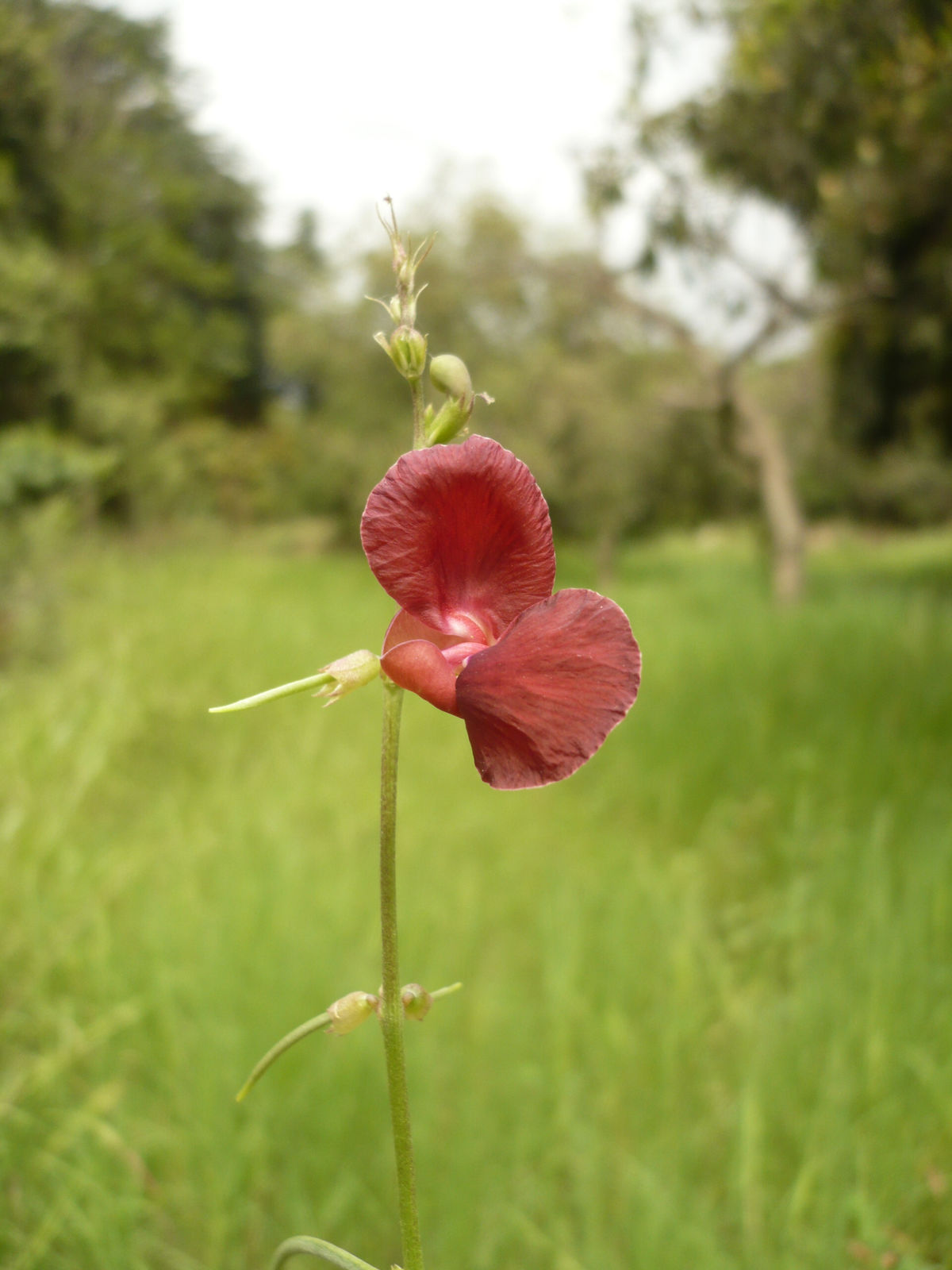
Macroptilium lathyroides
species of plant
bioeffector
A bioeffector is a viable microorganism or active natural compound which directly or indirectly affects plant performance (biofertilizer), and thus has the potential to reduce fertilizer and pesticide use in crop production.

Macroptilium atropurpureum
species of plant
rock flour
fine-grained, silt-sized particles of rock
feather meal
poultry feather product
microbial inoculant
agricultural amendment
Leonardite
right|thumb|Leonardite, naturally Redox|oxidized [[lignite, rich in humic acid]]
digestate
right|thumbnail|300px|Acidogenic digestate produced from mixed municipal waste
Digestate is the material remaining after the anaerobic digestion (decomposition under low oxygen conditions) of a biodegradable feedstock. Anaerobic digestion produces two main products: digestate and biogas. Digestate is produced both by acidogenesis and methanogenesis and each has different characteristics. These characteristics stem from the original feedstock source as well as the processes themselves.
Slash-and-char
Slash-and-char is an alternative to slash-and-burn that has a lesser effect on the environment. It is the practice of charring the biomass resulting from the slashing instead of burning it. Due to incomplete combustion (pyrolysis) the resulting residue matter charcoal can be utilized as biochar to improve the soil fertility.
urea ammonium nitrate
UAN is a solution of urea and ammonium nitrate in water used as a fertilizer. The combination of urea and ammonium nitrate has an extremely low critical relative humidity (18% at 30 °C) and can therefore only be used in liquid fertilizers. The most commonly used grade of these fertilizer solutions is UAN 32.0.0 (32%N) known as UN32 or UN-32, which consists of 45% ammonium nitrate, 35% urea and only 20% water. Other grades are UAN 28, UAN 30 and UAN 18.
The solutions are quite corrosive towards mild steel (up to per year on C1010 steel) and are therefore generally equipped with a corrosion inhi
sheet mulching
agricultural and gardening practice
bark chips
thumb|right|Barkdust being used as mulch.
In agriculture, gardening, and landscaping, barkdust (also bark dust, bark chips, bark mulch, beauty bark, tanbark, tan bark, or simply bark) is a form of mulch produced out of chipped or shredded tree bark. Coarser forms of barkdust may be known as bark nuggets. Trees typically used in the production of barkdust include the Douglas fir and the western hemlock.
agricultural lime
soil additive containing calcium carbonate and other ingredients
isobutylidenediurea
Isobutylidenediurea (abbreviated IBDU) is an organic compound with the formula (CH3)2CHCH{NHC(O)NH2}2. It is a derivative of urea (OC(NH2)2), which itself is highly soluble in water, but IBDU is not. It functions as a controlled-release fertiliser owing to its low solubility, which limits the rate of its hydrolysis to urea, which is a fast-acting fertiliser.
N-butylphosphorothioic triamide
chemical compound
Spent mushroom compost
food industry waste material