Category
page 2Solar System

Nemesis
hypothetical star orbiting the Sun, responsible of extinction events

plutino
In astronomy, the plutinos are a dynamical group of trans-Neptunian objects that orbit in 2:3 mean-motion resonance with Neptune. This means that for every two orbits a plutino makes, Neptune orbits three times. The dwarf planet Pluto is the largest member as well as the namesake of this group. The next largest members are , Achlys, and . Plutinos are named after mythological creatures associated with the underworld.
Vulcan
hypothetical planet between the Sun and Mercury
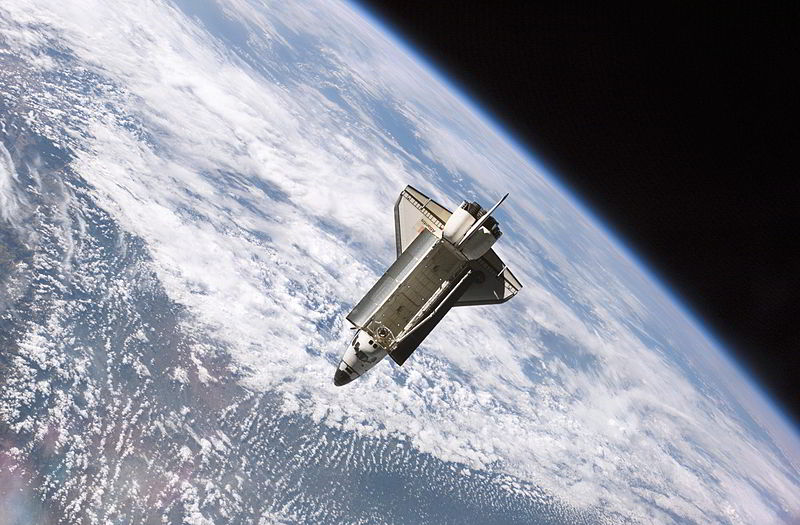
human spaceflight
space travel with humans aboard spacecraft
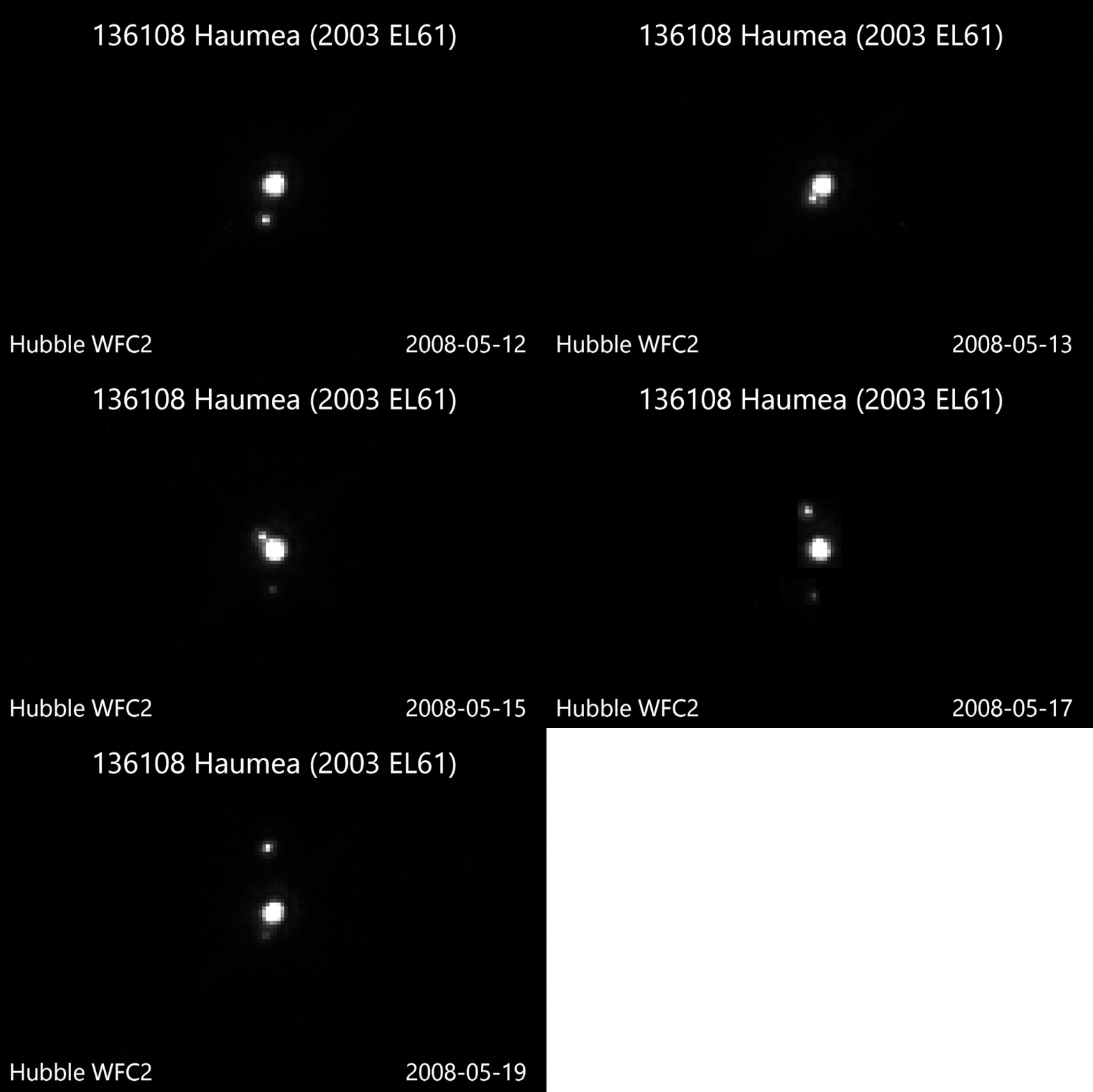
moon of Haumea
natural satellite orbiting the dwarf planet Haumea
near-Earth object
Solar System object whose orbit brings it into proximity with Earth
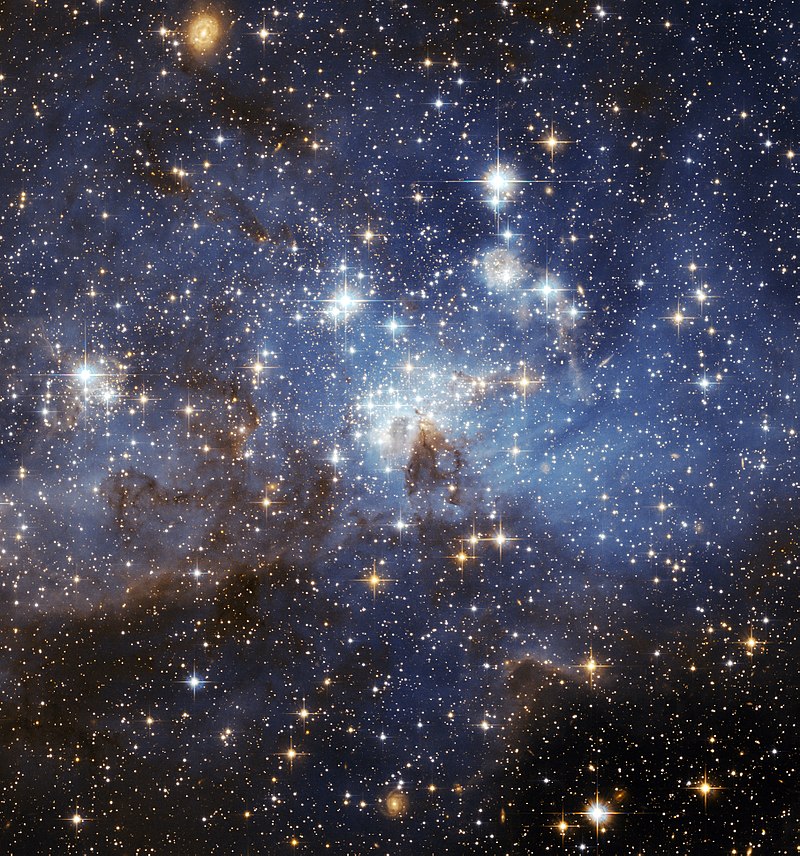
nebular hypothesis
astronomical theory that the Solar System formed from nebulous material

interplanetary medium
material which fills the Solar System

minor planet moon
natural satellite of a minor planet
atmosphere of Venus
atmosphere of planet Venus
giant planet
planet much larger than the Earth

Vulcanoid asteroid
right|thumb|270px|The zone, represented by the orange region, in which vulcanoids may exist, compared with the orbits of Mercury (planet)|Mercury, [[Venus and Earth]]
The vulcanoids are a hypothetical population of asteroids that orbit the Sun in a dynamically stable zone inside the orbit of the planet Mercury. They are named after the hypothetical planet Vulcan, which was proposed on the basis of irregularities in Mercury's orbit that were later found to be explained by general relativity. So far, no vulcanoids have been discovered, and it is not yet clear whether any exist.
Tyche
Öpik–Oort Comet Cloud hypothetical planet
list of planets of the Solar System
Wikimedia list article
Portal:Solar System
Wikimedia portal
list of Solar System objects by size
Wikimedia list article
space weather
branch of space physics concerned with conditions in the Solar System
Phaeton
hypothetical former Solar System planet
solar irradiance
power per unit area received from the Sun in the form of electromagnetic radiation
Hills cloud
location in the extreme Solar System
timeline of discovery of Solar System planets and their moons
Wikimedia list article
active asteroid
bodies orbiting within the main asteroid belt which have shown cometary activity during part of their orbit
Saturn's hexagon
persistent hexagonal cloud pattern around the north pole of the planet Saturn

Sednoid
thumb|upright=1.5|The orbits of the four known sednoids (colored pink). Their orbits are so distant that they never cross the Kuiper belt (shown in red).
thumb|The apparent magnitudes of three of four known sednoids.
thumb|Discovery image of Sedna (dwarf planet)|Sedna, the eponymous and first known sednoid
asteroid mining
mining on asteroids
detached object
minor planet objects in the outer reaches of the Solar System
potentially hazardous object
asteroid or comet with an orbit such that it has the potential to make close approaches to the Earth
list of Solar System objects
Wikimedia list article
claimed moons of Earth
claims that Earth may have other natural satellites
IAU definition of planet
definition of a planet as a body orbiting the Sun, in hydrostatic equilibrium, having cleared the neighborhood around its orbit; ratified by the IAU in August 2006, thereby reclassifying Pluto as a dwarf planet instead
Earth trojan
asteroid sharing the orbit of the Earth
rings of Rhea
proposed system of three narrow dust rings orbiting the moon Rhea
resonant trans-Neptunian object
trans-Neptunian object
interplanetary dust cloud
cosmic dust in the space between the planets of the solar system

micrometeorite
A micrometeorite is a micrometeoroid that has survived entry through the Earth's atmosphere. Usually found on Earth's surface, micrometeorites differ from meteorites in that they are smaller in size, more abundant, and different in composition. The IAU officially defines meteoroids as 30 micrometers to 1 meter; micrometeorites are the small end of the range (~submillimeter). They are a subset of cosmic dust, which also includes the smaller interplanetary dust particles (IDPs).
timeline of Solar System exploration
Wikimedia timeline
uncrewed spacecraft
spacecraft without people on board, used for robotic spaceflight
clearing the neighbourhood
criterion for a celestial body to be considered a planet
interplanetary magnetic field
component of the Sun's magnetic field which fills the Solar System
minimum orbit intersection distance
measure in astronomy
list of Saturn-crossing minor planets
Wikimedia list article
list of possible dwarf planets
Wikimedia list article
list of hypothetical Solar System objects
Wikimedia list article
grand tack hypothesis
in the early days of the Solar System, Jupiter moved inward then reversed course ("tacked") to its current orbit
discovery and exploration of the Solar System
overview about the discovery and exploration of the Solar System
list of tallest mountains in the Solar System
Wikimedia list article
Planet V
scientific proposal in 2002 for a destroyed fifth planet
rings of Chariklo
ring system around the minor planet Chariklo

list of largest craters in the Solar System
Wikimedia list article
panguite
Panguite is a type of titanium oxide mineral first discovered as an inclusion within the Allende meteorite, and first described in 2012.
rings of Earth
hypothetical former ring system around Earth first formally proposed in September of 2024
ring system
cosmic dust and debris orbiting an astronomical body
history of Solar System formation and evolution hypotheses
aspect of history
deep space exploration
branch of astronomy, astronautics and space technology
solar observation
study of the Sun's behavior
CNEOS 2014-01-08
purported first known interstellar object, meteor that hit Earth on January 8, 2014
Memphis Facula
facula on Ganymede
extreme trans-Neptunian object
trans-Neptunian object whose orbit’s semimajor axis is at least 150 AU
list of crewed spacecraft
Wikimedia list article
five-planet Nice model
numerical model of the early Solar System