Category
page 1Sources of knowledge
.jpg)
thought
thumb|The Thinker by [[Auguste Rodin (1840–1917) in the garden of the Musée Rodin, Paris]]
In their most common sense, thought and thinking refer to cognitive processes that occur independently of direct sensory stimulation. Core forms include judging, reasoning, concept formation, problem solving, and deliberation. Other processes, such as entertaining an idea, memory, or imagination, are also frequently considered types of thought. Unlike perception, these activities can occur without immediate input from the sensory organs. In a broader sense, any mental event—including perception and uncon

memory
thumb|Overview of the forms and functions of memoryMemory is the faculty of the mind by which data or information is encoded, stored, and retrieved when needed. It is the retention of information over time for the purpose of influencing future action. If past events could not be remembered, it would be impossible for language, relationships, or personal identity to develop. Memory loss is usually described as forgetfulness or amnesia.

reason
Reason is the capacity to consciously apply logic by drawing valid conclusions from new or existing information, with the aim of seeking truth. It is associated with activities considered characteristic of humans, including philosophy, religion, science, language, and mathematics, and is generally considered a distinguishing ability possessed by humans. The term "reason" is sometimes used to refer to rationality, although the latter is more about its application.

mathematical proof
rigorous demonstration that a mathematical statement follows from its premises

perception
thumb|The Necker cube and [[Rubin vase can be perceived in more than one way.]]
thumb|Humans are able to make a very good guess on the underlying 3D shape category/identity/geometry given a silhouette of that shape. Computer vision researchers have been able to build computational models for perception that exhibit a similar behavior and are capable of generating and reconstructing 3D shapes from single or multi-view depth maps or silhouettes.
intuition
Intuition is the ability to acquire knowledge without recourse to conscious reasoning or needing an explanation. Different fields use the word "intuition" in very different ways, including but not limited to: direct access to unconscious knowledge; unconscious cognition; gut feelings; inner sensing; inner insight to unconscious pattern-recognition; and the ability to understand something instinctively, without any need for conscious reasoning. Intuitive knowledge tends to be approximate or heuristic.

observation
thumbnail|Observing the air traffic in Rõuge, [[Estonia]]
inference
Inferences are steps in logical reasoning, moving from premises to logical consequences; etymologically, the word infer means to "carry forward". Inference is theoretically traditionally divided into deduction and induction, a distinction that dates at least to Aristotle (300s BC). Deduction is inference deriving logical conclusions from premises known or assumed to be true, with the laws of valid inference being studied in logic. Induction is inference from particular evidence to a universal conclusion. A third type of inference is sometimes distinguished, notably by Charles Sanders Peirce, c
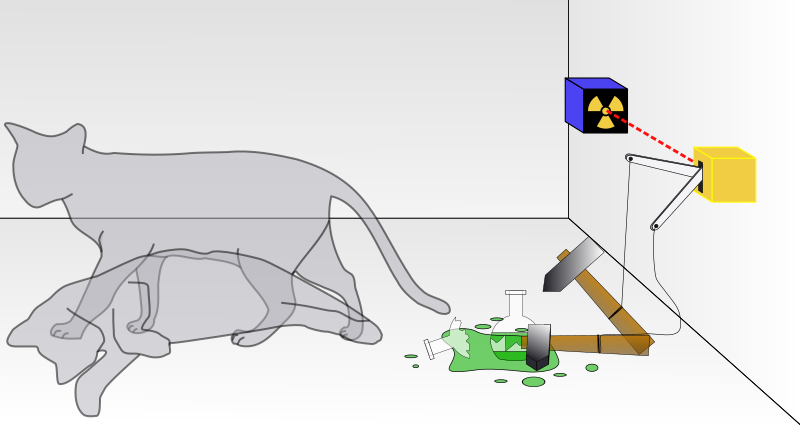
thought experiment
considering hypothesis, theory, or principle for the purpose of thinking through its consequences
introspection
Introspection is the examination of one's own conscious thoughts and feelings. In psychology, the process of introspection relies on the observation of one's mental state, while in a spiritual context it may refer to the examination of one's soul. Introspection is closely related to human self-reflection and self-discovery and is contrasted with external observation.

intellect
thumb|right|300px|The intellect comprises the rational and the [[logical aspects of the human mind.]]
.jpg)
insight
Insight is the understanding of a specific cause and effect within a particular context. The term insight can have several related meanings:
a piece of information
the act or result of understanding the inner nature of things or of seeing intuitively (called in Greek)
an introspection
the power of acute observation and deduction, discernment, and perception, called intellection or
an understanding of cause and effect based on the identification of relationships and behaviors within a model, system, context, or scenario (see artificial intelligence)

testimony
Testimony is a solemn attestation as to the truth of a situation.
scientific evidence
evidence which either supports or counters a scientific hypothesis
Eureka effect
human experience of suddenly understanding a previously incomprehensible problem or concept
Pramāṇa
Pramana (; IAST: Pramāṇam) literally means "proof" and "means of knowledge". One of the core concepts in Indian epistemology, pramanas are one or more reliable and valid means by which human beings gain accurate, true knowledge. The focus of pramana is how correct knowledge can be acquired, how one knows, how one does not know, and to what extent knowledge pertinent about someone or something can be acquired.
grok
Grok () is a neologism coined by the American writer Robert A. Heinlein in his 1961 science fiction novel Stranger in a Strange Land. The Oxford English Dictionary summarizes the meaning of grok as "to understand intuitively or by empathy, to establish rapport with", and "to empathize or communicate sympathetically (with); also, to experience enjoyment". However, Heinlein's original concept, of a human who comes to Earth in early adulthood after being born on the planet Mars, is far more nuanced.
self-evidence
In epistemology (theory of knowledge), a self-evident proposition is a proposition that is known to be true by understanding its meaning without proof, and/or by ordinary human reason.