Category
page 1Soviet rock music groups

Kino
Soviet rock band
Aria
Russian heavy metal band
DDT
Russian musical group; rock band
Brainstorm
Latvian band
Aquarium
Soviet Russian musical group; rock band

Lyube
Lyube () is a Russian rock band from Lyubertsy, a city in Moscow Oblast. Lyube's music is a mixture of several genres, with influences from both Russian folk music, rock, Russian chanson, and Soviet military songs. The band was founded in 1989, and since then have released sixteen albums. Lyube's producer and main songwriter is Igor Matviyenko.
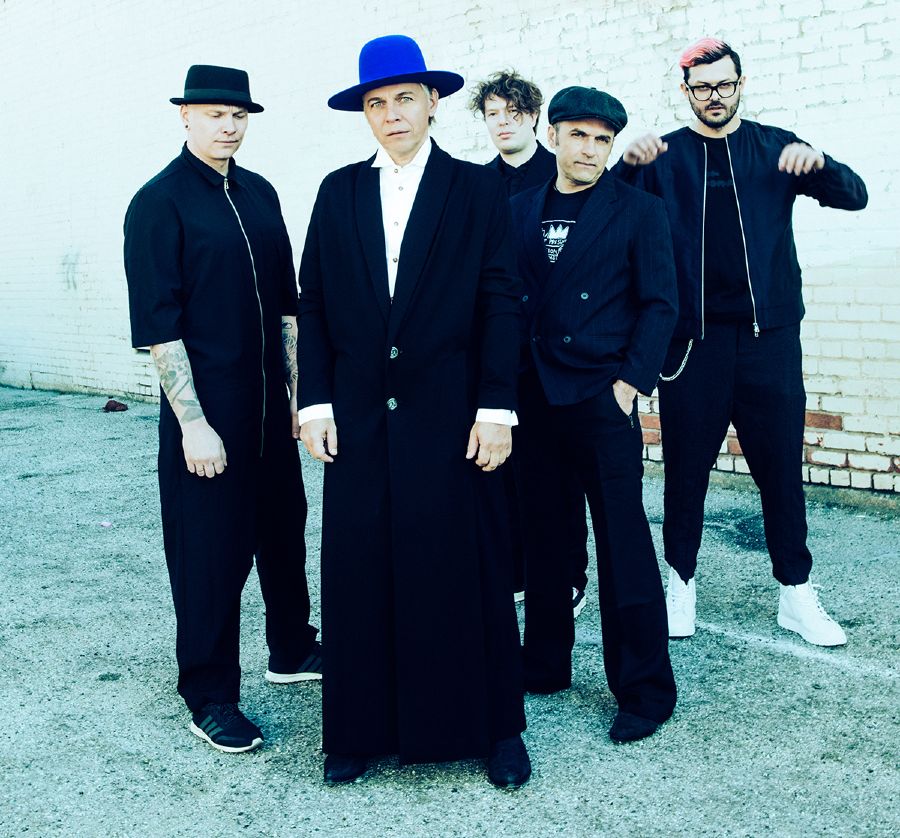
Mumiy Troll
Russian rock group
Agatha Christie
Russian punk/synth rock band
Nautilus Pompilius
Soviet, and later Russian, rock band
Mashina Vremeni
Russian rock band

TNMK
TNMK or Tanok na Maidani Kongo ( ; "Dance at the Congo Square") is a Ukrainian hip-hop group. Considered one of the most successful hip-hop groups of Ukraine, they are known for clever, yet often tongue-in-cheek, lyrics; mixing hip-hop with rock, funk and jazz music and playing real instruments on their albums and live shows without using samples and drum machines. TNMK performed at many festivals as: Sziget Fest, Zakhid, Tavria Games, Chervona Ruta, Faine Misto and Bandershtat.
Gorky Park
Russian band
Pesnyary
Pesniary (also spelled Pesnyary, , ) was a popular Soviet Belarusian folk rock VIA. It was founded in 1969 by guitarist Vladimir Mulyavin. Before 1970, the band was known under the name Liavony (Лявоны).

Bi-2
Bi-2 is a Belarusian pop-rock band, formed in 1988 in Babruysk, Belarusian SSR. During their career, Bi-2 achieved international success in Eastern Europe.
Vopli Vidopliassova
Ukrainian musical group; rock band
Alisa
Russian hard rock band
Piknik
Russian musical group
Skryabin
Ukrainian band
Zodiac
Latvian musical group

Krematorij
Krematorij () is a Russian rock band. The band is considered one of the best concert performing teams in Russia, known for its masterly rock-n-roll. Formed in Moscow in 1983, Krematorij gained quick recognition, achieved the status of a legend of Russian Rock-n-Roll and after 30 years on stage continues to delight its audiences throughout the former Soviet Union, the Netherlands, Germany, Israel and the United States. The group's frontman (and main songwriter) is Armen Grigoryan.

N.R.M.
N.R.M. (, , "Independent Republic of Dreams" in English) are a rock band from Minsk, Belarus, founded in 1981 as Mroja (). They are considered to be the most popular rock band in the country. They perform in the Belarusian language, and are a rallying point for political opposition to the Belarusian government, despite being the target of a performance ban from 2006 to 2009.
Plach Yeremiyi
Ukrainian rock band
Auktyon
Auktyon (, . Auktsyon) is a Russian alternative rock band from Saint Petersburg.
Līvi
Latvian rock band
Braty Hadyukiny
Ukrainian musical ensemble
Pērkons
Latvian musical group; rock band
Vesyolye Rebyata
VIA band from Moscow, Russia
Zemlyane
Zemlyane () is a Soviet and later Russian rock band, formed in Leningrad in 1978. Most of their lyrics deal with risk, courage, and masculinity.
The Telnyuk Sisters
Ukrainian singers
Komu Vnyz
Ukrainian rock band founded in 1988
Mertvy Piven
Ukrainian music band
Bravo
Russian rock and roll band

Antis
Lithuanian musical group
Zvuki Mu
Russian rock band
Eney
Eney () was a Ukrainian rock (big-beat) band active in 1968–1977. Named after the famous character, Aeneas, from one of the literary works of Ivan Kotlyarevsky, Eney was the first Ukrainian band to perform its own repertoire.
Poyushchiye Gitary
Soviet and Russian vocal and instrumental ensemble, organized in 1966
Smyslovye Gallyutsinatsii
Russian rock band
Nogu Svelo!
Russian rock band
Bambir
Strannye Igry
Soviet/Russian rock group
Alyans
Soviet Union music group
Zoopark
Russian rock band
Verasy
thumb|260px|Former Verasy members Alexander Tikhanovich and [[Yadviga Poplavskaya in 2009]]
Verasy () was a musical band created in Belarus (then Belarusian SSR, Soviet Union) in 1971. It was created under the Belarusian State Philarmony, Minsk, director and composer Vasily Rainchik. Verasy is Belarusian for heather (see Calluna).
Chimera
Russian rock band
Dzeltenie Pastnieki
Latvian band
Autograph
Soviet and Russian rock band
Dos Mukasan
kazakh rock band formed in 1967
Secret
Soviet Russian rock and roll band
Egor i Opizdenevshie
psychedelic side project by Yegor Letov
Chaif
Chaif (Чайф) is a Russian rock band formed in 1984 in Sverdlovsk (now Yekaterinburg), Russia, by Vladimir Shakhrin and Vladimir Begunov. Their name is derived from the word chai, meaning tea, and kaif (slang word), meaning pleasure. The band became known in 1992 with songs such as Ne Speshi (''Don't Hurry) and 17''. By 1997, the popularity of rock music had declined and they were playing smaller venue.
They have released several albums. Their musical styles range from rock and roll to Blues and some songs which feature a strong reggae influence. The band in 2008 was still touring and releasing
Tsvety
Tsvety () is a Soviet and Russian rock band that, according to Itogi magazine, "started all Russian alternative culture". It was one of the first bands to introduce rock music to the Soviet show business.
Neschastny Sluchai
Russian musical group; rock band
Kontora Kooka
Russian rock music group
Rondo (group)
Kalinov Most
Russian folk rock band
Televizor
Televizor (, "Television set") is a Soviet/Russian gothic rock/industrial group formed in 1984 in Saint-Petersburg. is the lead singer and founder of group. They began to perform at the Leningrad Rock Club. They are noted for their strong views against authoritarianism in Russian politics, and have repeatedly denounced the actions of Vladimir Putin in their lyrics. At the time the group first formed, it was one of comparatively few political rock bands in Soviet Union.
N.O.M.
N.O.M. (also, NOM: Neformálnoye objedinénie molodiózhi, The Informal Youth Association) is a Soviet/Russian experimental rock band, formed in 1987 in Saint Petersburg (then Leningrad), known for its mix of art rock, ska, folklore, classical influences (including occasional bouts of operatic singing) and eccentric theatrical stage shows. N.O.M.'s national breakthrough came in the late 1980s when LenTV started playing the band's controversial videos. Short-time heroes of post-Perestroika alternative culture, N.O.M. have never been accepted neither by the massive pop/rock audiences, nor by the ma
Neuro Dubel
Soviet and Belarusian musical group; rock band
Bix
Lithuanian punk rock band
Instruktsiya po Vyzhivaniyu
Soviet Siberian punk rock band