Category
page 1Space program of France

Guiana Space Centre
French and European spaceport near Kourou in French Guiana

CNES
CNES () is the French national space agency. Headquartered in central Paris, the agency is overseen by the ministries of the Armed Forces, Economy and Finance and Higher Education, Research and Innovation.
Ariane
European rocket family
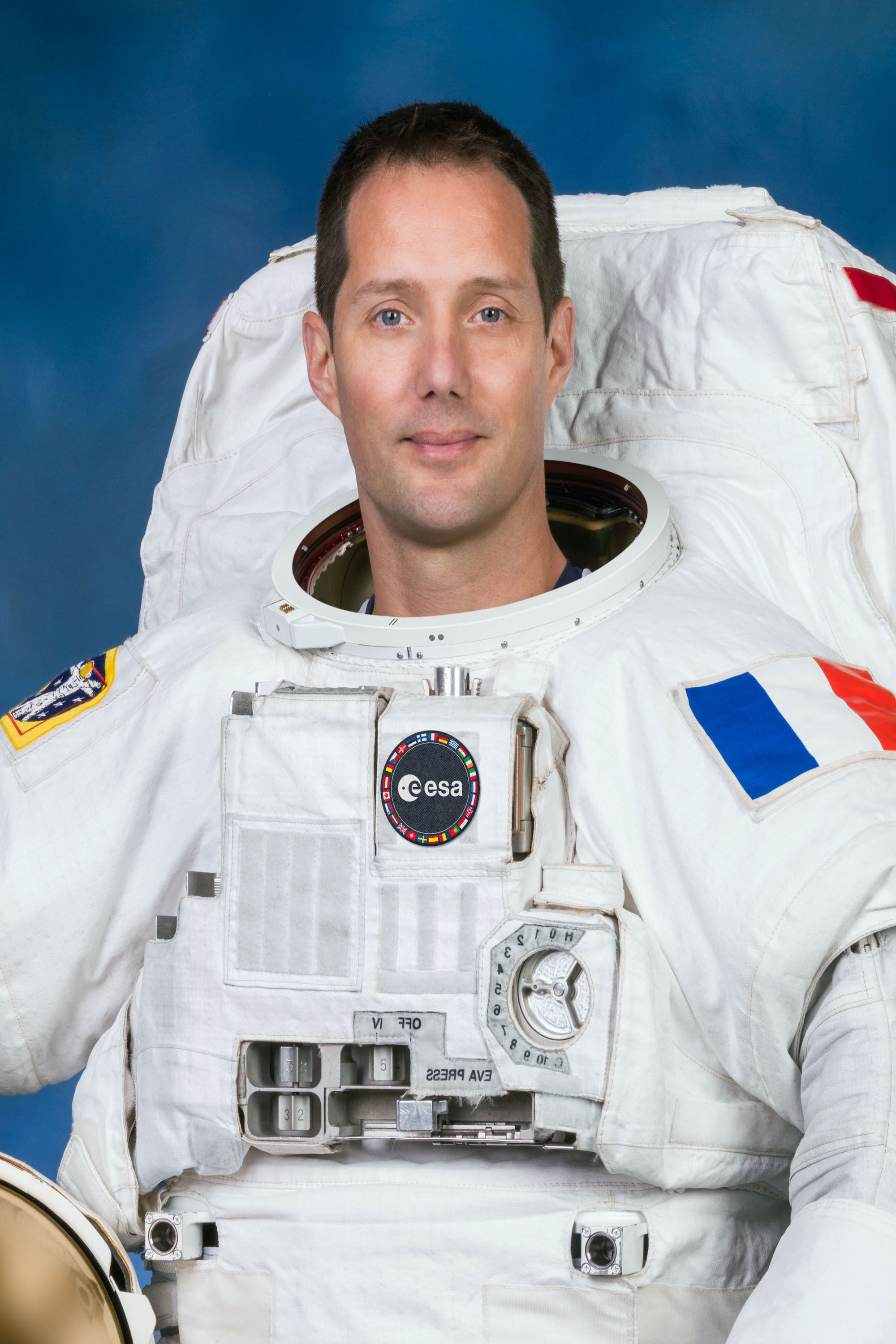
Thomas Pesquet
French astronaut
Thales Alenia Space
European aerospace manufacturer
Félicette
Félicette () was a Parisian cat that became the first feline launched into space on 18October 1963 as part of the French space program. She was one of 14 female cats trained for spaceflight. The cats had electrodes implanted into their skulls to monitor their neurological activity throughout the flight. During the flight, electrical impulses were applied to the brain and a leg to stimulate responses. The capsule was recovered 13 minutes after the rocket was ignited. Most of the data from the mission was of good quality, and Félicette survived the flight but was euthanised two months later
Hermes
proposed spaceplane by the European Space Agency

Diamant
thumb|Military space program ' (fr.: gemstones) that included the five prototypes Agate (rocket)|Agathe, Topaze, Emeraude, Rubis and Saphir.
The Diamant''' rocket (French for 'diamond') was the first exclusively French expendable launch system and at the same time the first satellite launcher not built by either the United States or USSR. As such, it has been referred to as being a key predecessor for all subsequent European launcher projects. The head of the project, Charley Attali, received the Legion of Honour in 1965 for the Diamant.
Jean-François Clervoy
French astronaut

Office National d'Études et de Recherches Aérospatiales
The '''Office National d'Études et de Recherches Aérospatiales (English: National Office for Aerospace Studies and Research) or ONERA', dubbed The French Aerospace Lab in English, is the French national aerospace research center. Originally founded as the Office National d'Études et de Recherches Aéronautiques'' (National Office for Aeronautical Studies and Research) in 1946, it was relabeled in 1963.
Géo André
French high jumper, hurdler and rugby union player (1889–1943)
HM7B
The HM7B was a European cryogenic upper stage rocket engine used on the vehicles in the Ariane rocket family. It was replaced by Vinci, which acts as the new upper stage engine on Ariane 6. Nearly 300 engines have been produced to date.

Paul-Louis Arslanian
French public servant, civil aviation engineer
Caroline Aigle
Pilot

Jean Bertin
French scientist, engineer and inventor (1917–1975)
Gérard Feldzer
French aviator
Académie de l'air et de l'espace
the French national Air and Space Academy
Vazken Andréassian
Armenian engineer and writer
Georges Abrial
French aerodynamicist (1898–1970)
French space program
French national space program
PEGASE
PEGASE is a design for a space observatory developed by France in the early 2000s. It combined formation flying with infrared telescopes operating as a double-aperture interferometer. Three free-flying satellites would operate together;a beam combiner and two siderostats. The baseline of the interferometer would be adjustable to between 50 and 500 meters. The goal of the mission is the study of Hot Jupiters ("pegasids"), brown dwarfs and the interior of protoplanetary disks. The design was developed by Centre National d'Études Spatiales and was studied for a launch as early as 2010–2012. Howev
Émile Allegret
French pilot and member of the French Resistance during World War II (1907–1990)
GEIPAN
GEIPAN (an acronym in French for , or Unidentified Aerospace Phenomena Research and Information Group) () is a unit of the French space agency CNES based in Toulouse, whose mission is to investigate unidentified aerospace phenomena (UAP) and make its findings available to the public.
Félix Amiot
French industrial (1894–1974)
Michel Bernard
French government official
Société d'étude et de réalisation d'engins balistiques