Category
page 1Spanish Empire
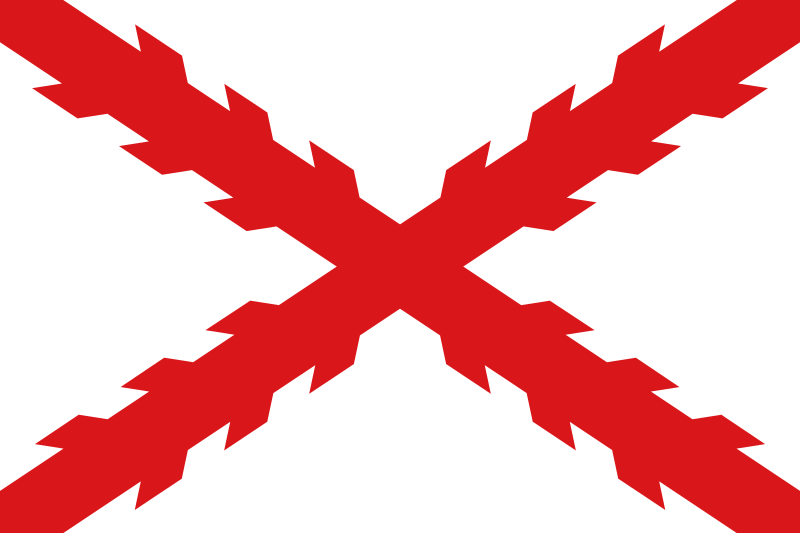
Spanish Empire
colonial empire governed by Spain between 1492 and 1976

conquistador
thumb|right|Hernán Cortés led the [[Spanish conquest of the Aztec Empire and expanded the Spanish Empire in the Americas]]
thumb|right|Afonso de Albuquerque expanded the [[Portuguese Empire across the Indian Ocean]]

Catholic Monarchs
title for Queen Isabella I of Castile and King Ferdinand II of Aragon
spice trade
historic international commerce

tercio
A tercio (, Spanish for '[a] third') was a military administrative unit of the Spanish Army during the reign of the Catholic Monarchs of Spain and Habsburg Spain in the early modern period. They were the elite military units of the Spanish monarchy and essential pieces of the powerful land forces of the Spanish Empire, sometimes also fighting along with the navy. These forces were among the most dominant in the European battlefields for more than a century and a half.
Black Legend
supposed tendency in historical writing demonising Spain and the Spanish Empire

doubloon
thumb|right|Spanish 4-doubloon, or doubloon of 8 escudos, stamped as minted in Mexico city mint in 1798. Obverse: Carlos IV of Spain|Carol.IIII.D.G. Hisp.et Ind.R. Reverse:.in.utroq.felix. .auspice.deo.fm.
The doubloon (from Spanish doblón, or "double", i.e. double escudo) was a two-escudo gold coin worth approximately four Spanish dollars or 32 reales, and weighing 6.766 grams (0.218 troy ounce) of 22-karat gold (or 0.917 fine; hence 6.2 g fine gold). Doubloons were minted in Spain and the viceroyalties of New Spain, Peru, and New Granada (modern-day Colombia, Ecuador, Panama, and Venezuela).

intendant
An intendant (; ; ) was, and sometimes still is, a public official, especially in France, Spain, Portugal, and Latin America. The intendancy system was a centralizing administrative system developed in France. In the War of the Spanish Succession of 1701 to 1714 the French royal House of Bourbon secured its hold on the throne of Spain; it extended a French-style intendancy system to Spain and Portugal - and subsequently worldwide through the Spanish Empire and Portuguese Empire. Regions were divided into districts, each administered by an intendant.
The title continues in use in Spain and in p
the empire on which the sun never sets
phrase describing a large empire
corregimiento
Corregimiento (; , ) is a Spanish term used for country subdivisions for royal administrative purposes, ensuring districts were under crown control as opposed to local elites. A corregimiento was usually headed by a corregidor. The name comes from the word corregir, meaning "to correct".
Real Audiencia
court of appeals in Spain and its empire replaced by territorial audiences by decree of January 26, 1834
Consulate of the Sea
maritime law organization
Royalist
Latin American and European supporters of the various governing bodies of the Spanish Monarchy, during the Spanish American wars of independence (1808 to 1833)
Spanish America
Spanish America encompasses all American Spanish possessions, when had during its imperial era between 15th and 19th centuries
Cazaza
thumb|right|250px|Tomb of Sidi Mesaud and the hill of Cazaza.
Cazaza was a Spanish enclave on the western coast of Cape Three Forks, in what is today Morocco, around 18 km from Melilla. It was here that the exiled Boabdil, last Emir of Granada, landed when he left the Iberian Peninsula in 1492.
Patronato real
arrangement between the Vatican and the Kingdom of Spain
polysynodal regime
form of government of the Spain of the Austrias
list of countries that have gained independence from Spain
Wikimedia list article
Africanist
term for people who encouraged a strong involvement of the Kingdom of Spain in Colonial Africa