Category
page 1Special effects

special effects
illusions or tricks to change appearance

pyrotechnics
thumb|upright=1.1|Pyrotechnic Gerb (pyrotechnic)|gerbs used in the entertainment industry

stop-motion
animation technique to make a physically manipulated object appear to move on its own

computer-generated imagery
application of computer graphics to create or contribute to images

body painting
form of art
visual effects
various processes by which imagery is created
sound effect
artificially created or enhanced sounds, or sound processes used to emphasize artistic or other content of films, television shows, live performance, animation, video games, music, or other media
body double
profession

morphing
thumb|upright|Morphing animation between two faces

stunt
thumb|right|200px|Pyrotechnics stunt exhibition by "Giant Auto Rodéo", [[Ciney, Belgium]]
A stunt is an unusual, difficult, dramatic physical feat that may require a special skill, performed for artistic purposes usually for a public audience, as on television or in theaters or cinema. Stunts are a feature of many action films. Before computer-generated imagery special effects, these depictions were limited to the use of models, false perspective and other in-camera effects, unless the creator could find someone willing to carry them out, even such dangerous acts as jumping from car to car in
Perlin noise
type of gradient noise in computer graphics
bullet time
visual effect
wind machine
type of musical instrument
dolly zoom
camera effect
forced perspective
optical illusion
optical printer
device with one or more film projectors mechanically linked to a movie camera
fog machine
device that emits a dense vapor that appears similar to fog or smoke
Schüfftan process
cinematic special effect to combine images of live actors and miniature sets
Rear projection effect
in-camera visual effect
MASSIVE
software package for generating crowd-related visual effects for film and television

practical effect
real-world (non-visual) special effect for cinema

Digital Intermediate
motion picture finishing process
motion control photography
photography technique in which the position and motion of the camera are tightly controlled
prosthetic make-up
process of using prosthetic sculpting, molding and casting techniques to create special make-up effects
digital compositing
process of digitally assembling multiple images to make a final still or video image
Face Off
American reality television game show (2011-2018)
greeble
thumb|A visual effects model of a ship from Close Encounters of the Third Kind featuring extensive greebling
Greebles, also called greeblies (singular: greebly) or nurnies, are small relief details used to give visual complexity to a model. The act of decorating a model with greebles is known as greebling. While greebling originated as a technique in filmmaking, it is commonly used in model-making, toy design, and kitbashing.
theatrical blood
substitute for blood in a theatrical or cinematic performance
Lifecasting
thumbnail|right|A Casting from Life, an 1887 painting by Édouard Joseph Dantan.
Lifecasting is the process of creating a three-dimensional copy of a living human body, through the use of molding and casting techniques.
In rare cases lifecasting is also practiced on living animals.
The most common lifecasts are 3D hand casting, casting of torsos, pregnant bellies, faces, and genitalia. It is possible for an experienced lifecasting practitioner to copy any part of the body. Lifecasting is usually limited to a section of the body at a time, but full-body lifecasts are achievable too. Compared w
virtual cinematography
set of cinematographic techniques performed in a computer graphics environment
split screen
filmmaking technique
Reverse motion
cinematography special effect
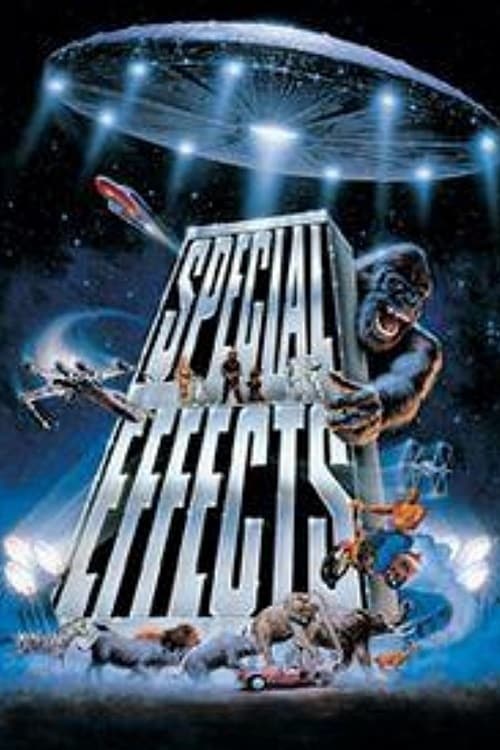
Special Effects: Anything Can Happen
1996 American documentary film by Ben Burtt
Digital cloning
Artificial intelligence technology
miniature effect
special effect created for motion pictures and television programs using scale models