Category
page 1Spiritual teachers

The Buddha
Indian philosopher and the founder of Buddhism (623 or 563 BCE – 543 or 483 BCE)

Rudolf Steiner
Austrian social reformer, occultist and esotericist (1861–1925)

guru
thumb|The guru-smiti relationship. Watercolour, Punjab Hills, India, 1740.
Guru ( ; IAST: guru) is a Sanskrit term for a "mentor, guide, expert, or master" of certain knowledge or field. In pan-Indian traditions, a guru is more than a teacher: traditionally, the guru is a reverential figure to the disciple (or shisya in Sanskrit, literally seeker [of knowledge or truth]) or student, with the guru serving as a "counsellor, who helps mould values, shares experiential knowledge as much as literal knowledge, an exemplar in life, an inspirational source and who helps in the spiritual evolution of a

Eckhart Tolle
German spiritual teacher and author
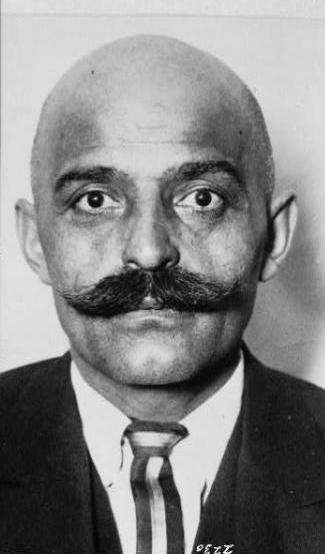
George Gurdjieff
philosopher, mystic, and writer (c. 1866–1877 – 1949)

Anthony de Mello
Indian writer (1931-1987)

Petr Uspensky
Russian esotericist (1878–1947)
Linji Yixuan
Chinese Chan Buddhist monk (?–866)
%2002.jpg)
Gorakhnath
Gorakhnath (also known as Gorakshanath (Sanskrit: Gorakṣanātha) (Devanagari : गोरक्षनाथ / गोरखनाथ), c. early 11th century) was a Hindu yogi, mahasiddha and saint who was the founder of the Nath Hindu monastic movement in India. He is considered one of the two disciples of Matsyendranath. His followers are known as Jogi, Gorakhnathi, Darshani or Kanphata.
Guru Purnima
Spiritual tradition

Renato Corti
Italian cardinal (1936–2020)
Peter Deunov
Christian philosopher, Teacher of Esoteric Christianity (1864–1944)
Samael Aun Weor
Colombian writer (1917–1977)
murshid
Murshid () is Arabic for "guide" or "teacher", derived from the root r-sh-d, with the basic meaning of having integrity, being sensible, mature. Particularly in Sufism it refers to a spiritual guide. The term is frequently used in Sufi orders such as the Naqshbandiyya, Qādiriyya, Chishtiya, Shadhiliya and Suhrawardiyya.
Yehuda Ashlag
Orthodox Jewish Rabbi and Kabbalist
Omraam Mikhaël Aïvanhov
Bulgarian philosopher (1900–1986)

Zeena Schreck
American visual and musical artist
Ramalinga Swamigal
Vallalar history (1823-1874)

Nur Ali Elahi
spiritual thinker, musician, writer, philosopher and jurist (1895–1974)
Sultan Sahak
kurdish religious founder and leader
Maddalena Caterina Morano
Italian religious (1847–1908)
Adi Da
American spiritual teacher
Gadadhara Pandita
Gaudiya roop Of Srimati Radha Rani

Andrew Cohen
American guru
Jörgen Smit
Norwegian, educator, anthroposophist (1916–1991)

Baba Budha Ji
Sikh saint
Hajj Nematollah
Iranian Kurdish scholar

Caterina Cittadini
Amit Ray
Indian author
Tommaso Palamidessi
Italian astrologer, philosopher and writer (1915–1983)
Swami Maheshwarananda
Indian guru
Haridasa Thakur
Indian saint

Regina Betancourt de Liska
Colombian psychic and politician
Jean Klein
French spiritual teacher (1912-1998)
Glenn H. Mullin
tibetologist
Michael J. Roads
English-born Australian author (1937–2024)
Behlül Mahi
Balül, Balool, or Bahlool (kurdish: بەهلول) (who known as Balül y Madi, means Balül of Medes), (Kurdish: Baĺüĺ, Balûl, also Baĺüĺi Madî or Balûli Mahî) was a 9th-century Kurdish poet and religious scholar of the Yarsani faith, who wrote poems in the Gorani and Southern dialects of the Kurdish language. His poems are considered to be one of the earliest examples of Kurdish literature and poetry. Balül and his fellow poet companions, including Baba Najoom, Baba Lura and Baba Rajab, all took a vital role in the revival and "renaissance" of the Yarsani faith.
==References==

Imre Vallyon
New Zealand writer
Mariam Nour
Lebanese religious leader