Category
page 1Spirotrichea
Spirotrichea
The spirotrichs are a large and diverse group of ciliate protozoa. They typically have prominent oral cilia in the form of a series of polykinetids, called the adoral zone of membranelles, beginning anterior to the oral cavity and running down to the left side of the mouth. There may also be one or two paroral membranes on its right side. The body cilia are fused to form polykinetids called cirri in some, and are sparse to absent in others.

Stylonychia
Stylonychia is a genus of ciliates, in the subclass Hypotrichia. Species of Stylonychia are very common in fresh water and soil, and may be found on filamentous algae, surface films, and among particles of sediment. Like other Hypotrichs, Stylonychia has cilia grouped into membranelles alongside the mouth and cirri over the body. It is distinguished partly by long cirri at the posterior, usually a cluster of three. The largest can just be seen at a 25× magnification, and the smallest can just be seen at a 450× magnification.
Halteria
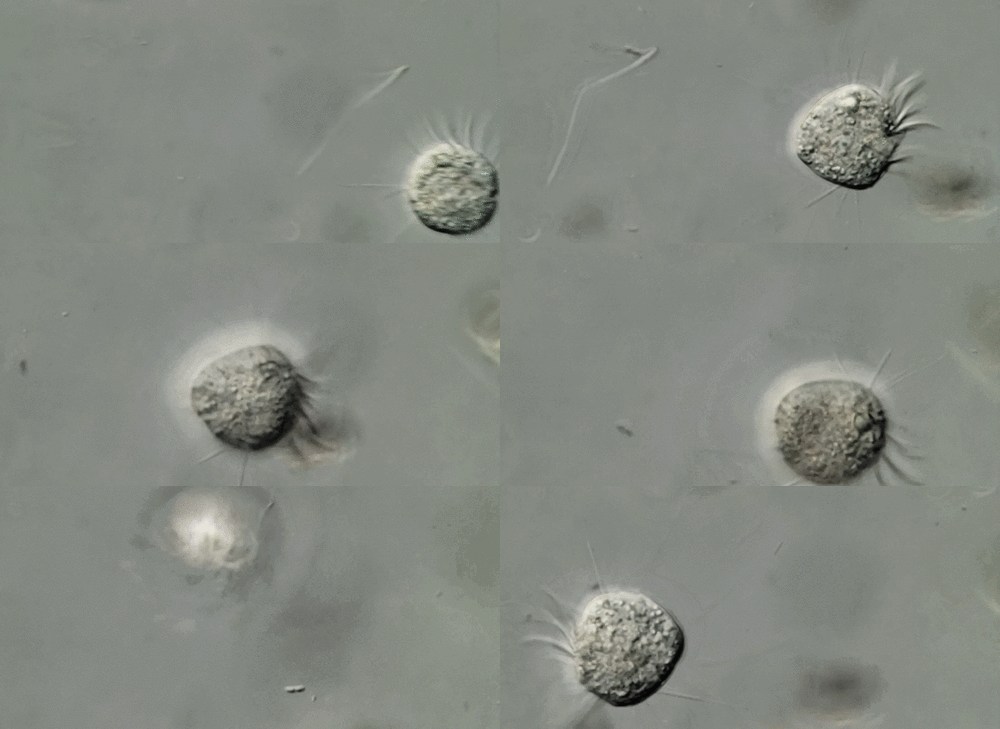
Halteria, sometimes referred to as the jumping oligotrich, is a genus of common planktonic ciliates that are found in many freshwater environments. Halteria are easy to locate due to their abundance and distinctive behaviour with observations of Halteria potentially dating back to the 17th century and the discovery of microorganisms. Over time more has been established about their morphology and behavior, which has led to many changes in terms of classification.
Tintinnida
Tintinnids are ciliates of the choreotrich order Tintinnida, the name deriving from a Latin source meaning a small tinkling bell. They are distinguished by vase-shaped shells called loricae, which are mostly protein but may incorporate minute pieces of minerals.
Oligotrich
The oligotrichs are a group of ciliates, included among the spirotrichs. They have prominent oral cilia, which are arranged as a collar and lapel, in contrast to the choreotrichs where they form a complete circle. The body cilia are reduced to a girdle and ventral cilia. In Halteria and its relatives, they form bristles or cirri; however these forms may be closer relatives of the stichotrichs than of other oligotrichs. These organisms are very common in plankton communities, especially in marine systems. Usually found in concentrations of about 1 per ml, they are the most important herbivores
Hypotrichia
The hypotrichs are a group of ciliated protozoa, common in fresh water, salt water, soil and moss. Hypotrichs possess compound ciliary organelles called "cirri," which are made up of thick tufts of cilia, sparsely distributed on the ventral surface of the cell. The multiple fused cilia which form a cirrus function together as a unit, enabling the organism to crawl along solid substrates such as submerged debris or sediments. Hypotrichs typically possess a large oral aperture, bordered on one side by a wreath or collar of membranelles (small membranous structures made up of fused cilia), formin
Oxytrichidae
Oxytrichidae is a family of ciliates in the order Sporadotrichida. Oxytrichidae are morphologically diverse, ranging in length from 40 micrometres (e.g. Oxytricha setigera) to 400 micrometers (e.g. Coniculostomum monilata). They are generally elliptical in shape with some very flexible while others are rigid. Like other ciliates, Oxytrichidae have two or more nuclei: a large macronucleus that generally stretches across much of the cell body, and one or more smaller micronuclei.
Oxytricha
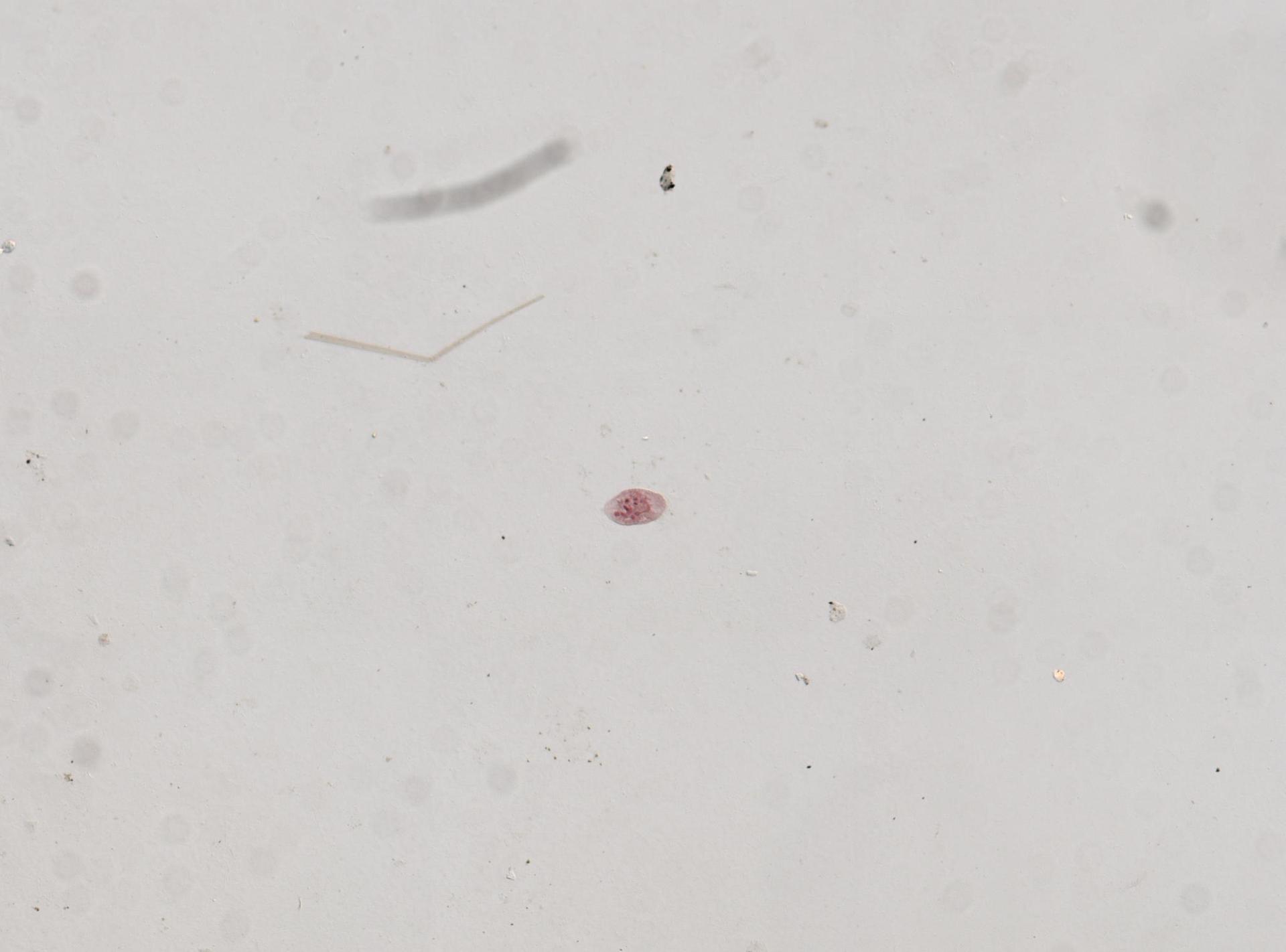
Oxytricha is a genus of ciliates in the family Oxytrichidae.
Halteriidae
Halteriidae is a family of planktonic ciliates.