Category
page 1Stones

Rosetta Stone
ancient Egyptian stele with inscriptions in three writing systems
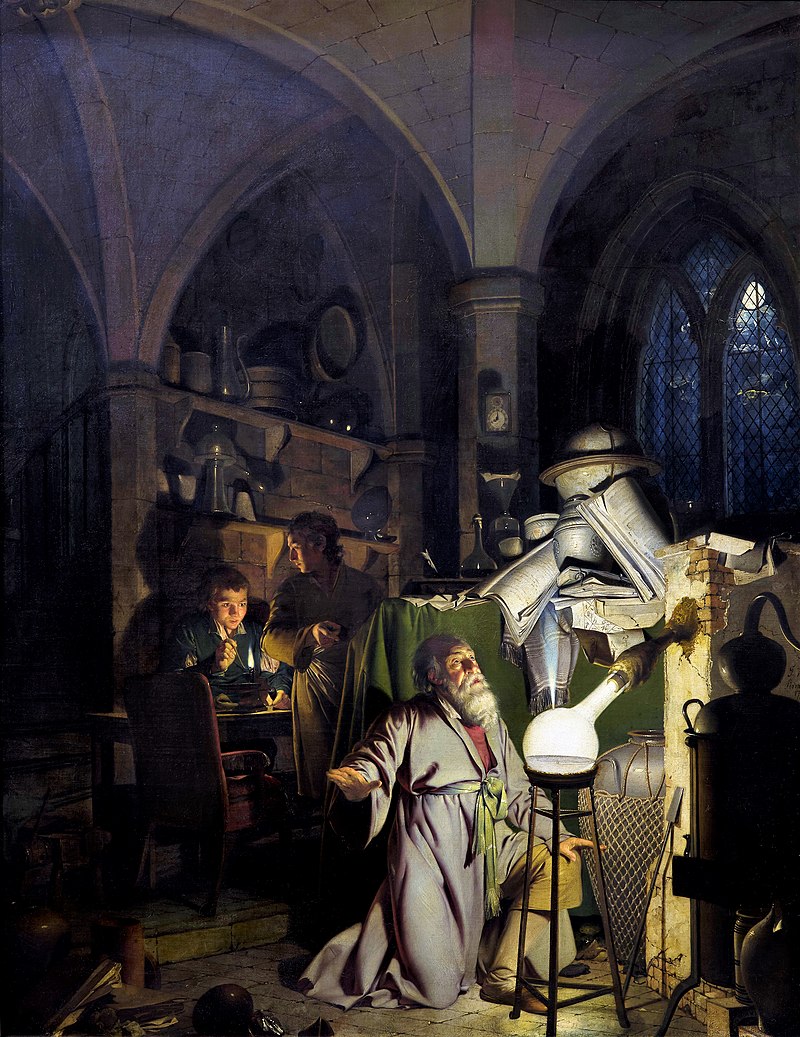
philosopher's stone
legendary alchemical substance

dolmen
thumb|Poulnabrone dolmen, [[the Burren, County Clare, Ireland]]
thumb|Dolmens in Amudalavalasa|Amadalavalasa, [[Andhra Pradesh, India]]

stele
thumb|260px|Stele N from Copán, [[Honduras, depicting King K'ac Yipyaj Chan K'awiil ("Smoke Shell"), as drawn by Frederick Catherwood in 1839]]
thumb|Stele to the French 8th Infantry Regiment. Commons:Category:Battle of Waterloo steles|One of more than half a dozen steles located on the Waterloo battlefield.
A stele ( ) or stela ( ) is a stone or wooden slab, generally taller than it is wide, erected in the ancient world as a monument. The surface of the stele often has text, ornamentation, or both. These may be inscribed, carved in relief, or painted.

Black Stone
rock set into the eastern corner of the Kaaba in Mecca, Saudi Arabia, revered by Muslims

tombstone
thumb|upright=1|Captain Andrew Drake (1684–1743) sandstone gravestone from the Stelton Baptist Church, Edison|Stelton Baptist Church in [[Edison, New Jersey]]
A gravestone or tombstone is a marker, usually stone, that is placed over a grave. A marker set at the head of the grave may be called a headstone. An especially old or elaborate stone slab may be called a funeral stele, stela, or slab. The use of such markers is traditional for Chinese, Jewish, Christian, and Islamic burials, as well as other traditions. In East Asia, the tomb's spirit tablet is the focus for ancestral veneration and ma

khachkar
thumb|upright|Khachkar at Goshavank, carved in 1291 by Poghos

sharpening stone
stone used to sharpen the edges of steel tools and implements through grinding and honing

concretion
thumb|Concretions in Torysh, Western [[Kazakhstan]]
thumb|Concretions with lens shape from island in Vltava river, Prague, Czech Republic
thumb|Marlstone aggregate concretion, [[Sault Ste. Marie, Michigan, United States]]
A concretion is a hard and compact mass formed by the precipitation of mineral cement within the spaces between particles, and is found in sedimentary rock or soil. Concretions are often ovoid or spherical in shape, although irregular shapes also occur. The word concretion is borrowed from Latin , itself derived from concrescere , from con- and crescere .
stone skipping
game of skill

Omphalos
An omphalos is a religious stone artefact. In Ancient Greek, the word () means "navel". Among the Ancient Greeks, it was a widespread belief that Delphi was the center of the world. According to the myths regarding the founding of the Delphic Oracle, Zeus, in his attempt to locate the center of the Earth, launched two eagles from the two ends of the world, and the eagles, starting simultaneously and flying at equal speed, crossed their paths above the area of Delphi, and so that was the place where Zeus placed the stone. The Latin term is umbilicus mundi, 'navel of the world'.
Sailing stones
Geological phenomenon where rocks move and inscribe long tracks along a smooth valley floor without human or animal intervention
Blarney Stone
Carboniferous limestone in Blarney Castle, Ireland, associated with the legend that kissing it endows one with the skill of speaking eloquently

vishap
thumb|200px|right|A vishap
A vishapakar () also known as vishap stones, vishap stelae, "serpent-stones", "dragon stones", are characteristic monoliths found in large numbers in the Armenian Highlands, in natural and artificial ponds, and other sources of water. They are commonly carved from one piece of stone, into cigar-like shapes with fish heads or serpents. Supposedly they are images of vishaps, a water dragon of Armenian folklore.
There are about 150 known extant vishap stelae, of which 90 are found in Armenia.
hunger stone
stone that is normally covered by a body of water but exposed during periods of drought
London Stone
rock
Shabaka Stone
ancient Egyptian stela
%2CNasu%2CTochigi%2CJapan%2020160817.jpg)
Sesshō-seki
thumb|Sessho-seki in 2016
The , or "Killing Stone", is a stone in the volcanic mountains of Nasu, an area of Tochigi Prefecture, Japan, that is famous for sulphurous hot springs. In Japanese mythology, the stone is said to kill anyone who comes into contact with it. In Japan, rocks and large stones in areas where volcanic toxic gases are generated are often named Sessho-seki (殺生石), meaning Killing Stone, and the representative of such stones is this one associated with the legend of Tamamo-no-Mae and the nine-tailed fox.
rocking stone
large precariously balanced stones
statue menhir
type of carved standing stone
lifting stone
heavy natural stone which people are challenged to lift to prove their strength
Stone of Tizoc
Aztec artifact with a disputed original use
weather rock
humorous weather forecasting tool
Yada Tashy
Turkish mythological substance
Eilat stone
type of gemstone

Twelve angle stone
incan archaeological artifact in Peru
portakar
300px|thumb|Portakar, ritual ceremony, Armenia, 19th century
Portakar or navel stones () are traditional ritual stones in Armenia. They are bound up with cult of the fertility goddess, called in ancient Armenia, like the cult of the goddess Anahit.
Swastika Stone
Stone adorned with a design that resembles a swastika
Stone of Tmutarakan
grave orb
Stone ball placed on a tomb
Banalinga
alt=|thumb|A large Banalinga recovered from Saraswati River (Bengal)|Saraswati River at [[Andul in c.1650 AD.]]
A Banalinga is a stone of a type found in the riverbed of parts of the Narmada River in Madhya Pradesh state, India, formed by natural processes of erosion into a shape resembling a lingam, an aniconic form of the Hindu deity Shiva. They are smooth ellipsoid stones that are regarded as manifestations of the deity, based on either the scriptures or cultural traditions among the Hindus, particularly of the Shaivas and Smarta Brahmins.
Dvaravati sila
sacred stone in Hinduism