Category
page 1Strophariaceae
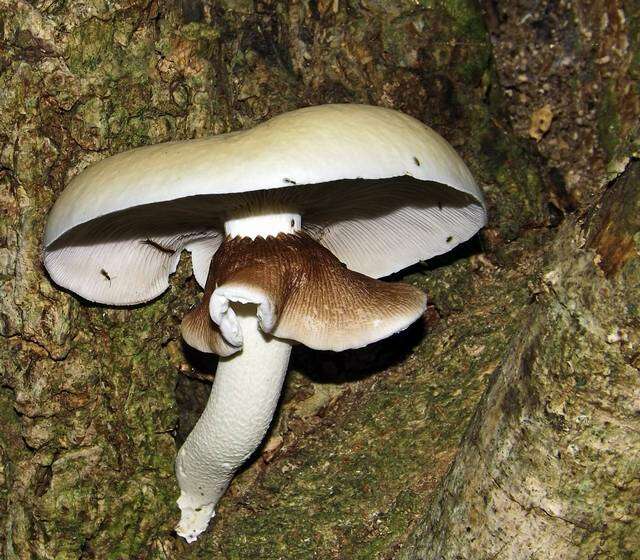
Cyclocybe aegerita
species of fungus

Kuehneromyces mutabilis
species of fungus

Stropharia aeruginosa
species of fungus

Pholiota squarrosa
species of fungus

Strophariaceae
The Strophariaceae are a family of fungi in the order Agaricales. Under an older classification, the family covered 18 genera and 1316 species. The species of Strophariaceae have red-brown to dark brown spore prints, while the spores themselves are smooth and have an apical germ pore. These agarics are also characterized by having a cutis-type pileipellis. Ecologically, all species in this group are saprotrophs, growing on various kinds of decaying organic matter. The family was circumscribed in 1946 by mycologists Rolf Singer and Alexander H. Smith.

Stropharia
The genus Stropharia (sometimes known by the common name roundheads) is a group of medium to large agarics with a distinct membranous ring on the stipe. Well-known members of this genus include the edible Stropharia rugosoannulata and the blue-green verdigris agarics (Stropharia aeruginosa and allies). Stropharia are not generally regarded as good to eat and there are doubts over the edibility of several species. However the species Stropharia rugosoannulata is regarded as prized and delicious when young and is now the premier mushroom for outdoor bed culture by mycophiles in temperate climate

Agrocybe praecox
species of fungus

Pholiota
Pholiota is a genus of small to medium-sized, fleshy mushrooms in the family Strophariaceae. They are saprobes that typically live on wood. The genus has a widespread distribution, especially in temperate regions, and contains about 150 species.

Stropharia rugosoannulata
species of fungus

Agrocybe
Agrocybe is a genus of mushrooms in the family Strophariaceae (previously placed in the Bolbitiaceae). The genus has a widespread distribution, and contains about 100 species.

Protostropharia semiglobata
species of fungus

Pholiota flammans
species of fungus

Pholiota aurivella
species of fungus

Stropharia caerulea
species of fungus

Deconica montana
species of fungus

Agrocybe pediades
species of fungus
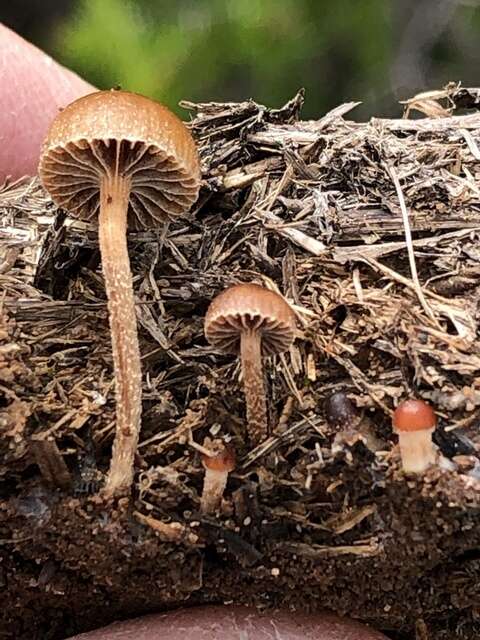
Deconica coprophila
species of fungus

Leratiomyces ceres
species of mushroom

Stropharia coronilla
species of fungus

Pholiota populnea
species of fungus

Stropharia hornemannii
species of fungus
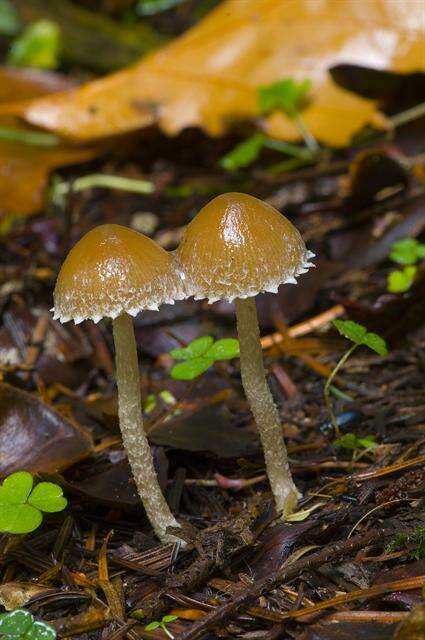
Deconica
Deconica is a genus of mushroom-forming fungi in the family Strophariaceae. It was formerly considered synonymous with Psilocybe until molecular studies showed that genus to be polyphyletic, made of two major clades: one containing bluing, hallucinogenic species, the other non-bluing and non-hallucinogenic species. Deconica contains species formerly classified in the sections Deconica and Coprophila of Psilocybe.

Pholiota gummosa
species of fungus

Leratiomyces squamosus
species of fungus

Cyclocybe erebia
species of fungus

Agrocybe arvalis
species of fungus

Stropharia pseudocyanea
species of fungus

Deconica inquilina
species of fungus

Pholiota adiposa
species of fungus
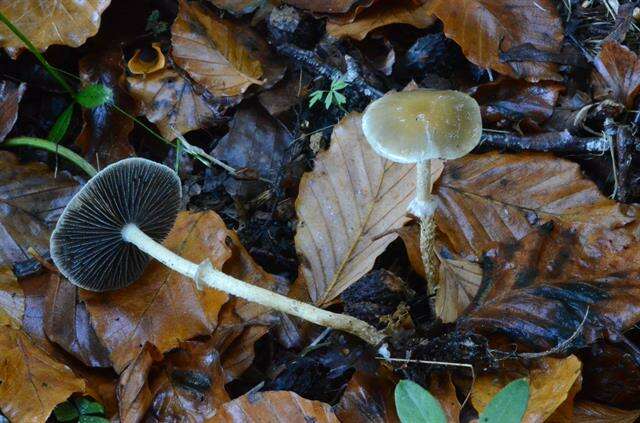
Leratiomyces
Leratiomyces is a genus of mushroom-forming basidiomycetes first proposed three times under invalid names, and finally validated in 2008. It includes several formerly described, variously, from the genera Stropharia, Hypholoma, and Weraroa. It was formerly classified as Stropharia section Stropholoma, though some authorities placed this section in the genus Hypholoma, as these species often have features that are intermediate between the two genera.

Stropharia inuncta
species of fungus
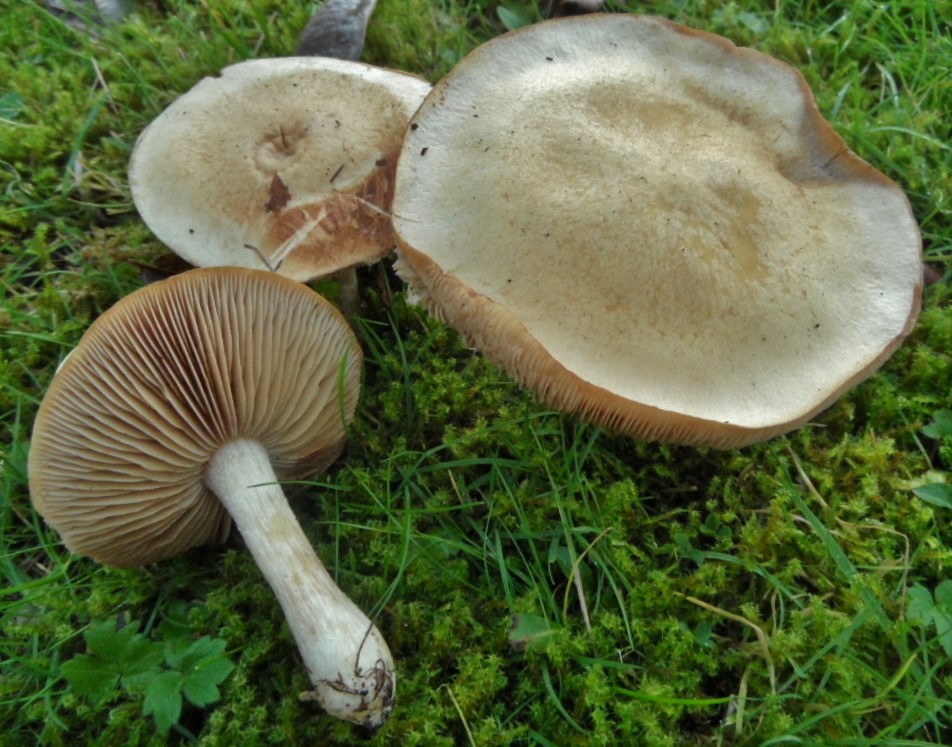
Agrocybe putaminum
species of fungus
Nivatogastrium nubigenum
species of fungus
Pholiota malicola
species of fungus
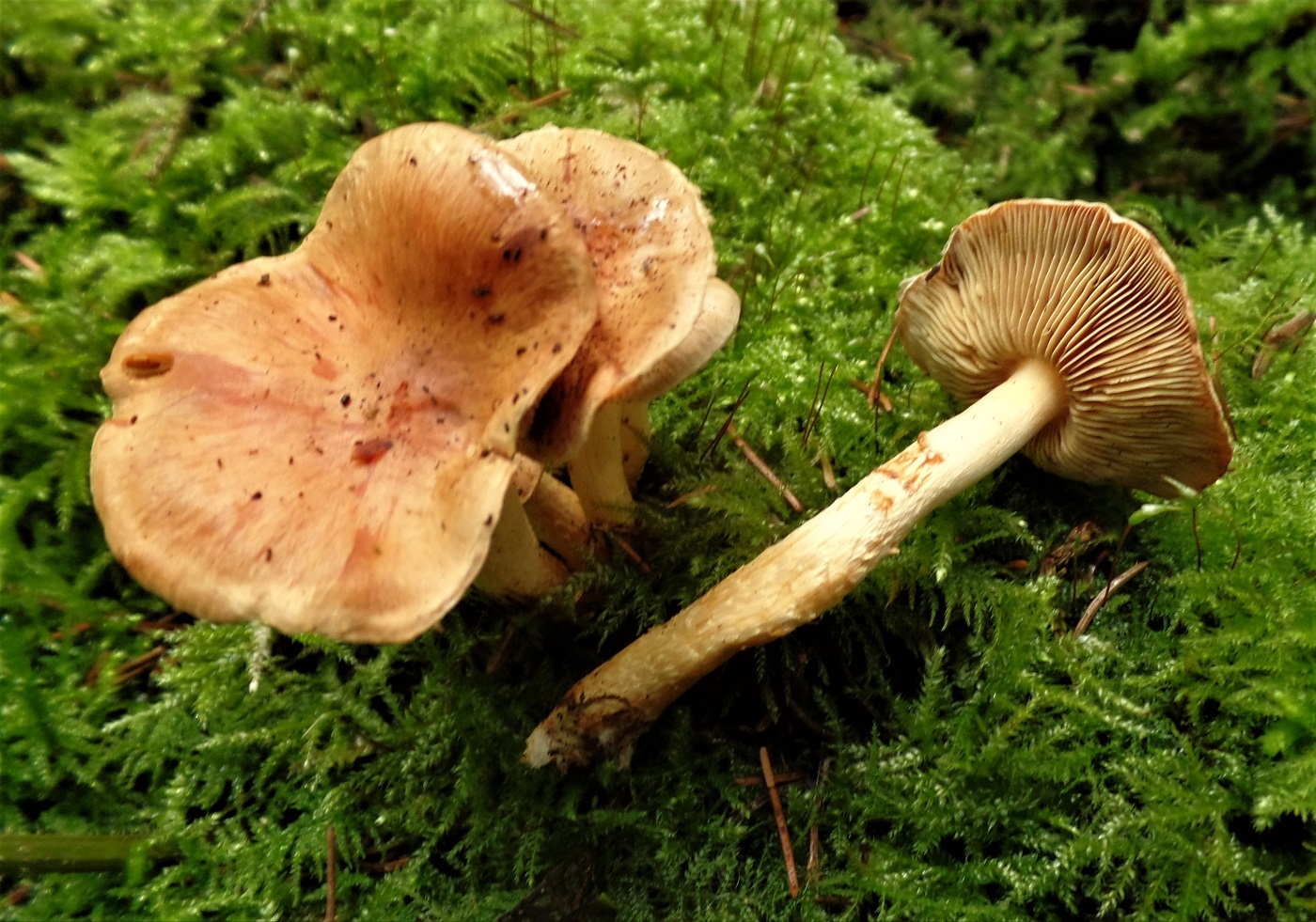
Pholiota astragalina
species of fungus
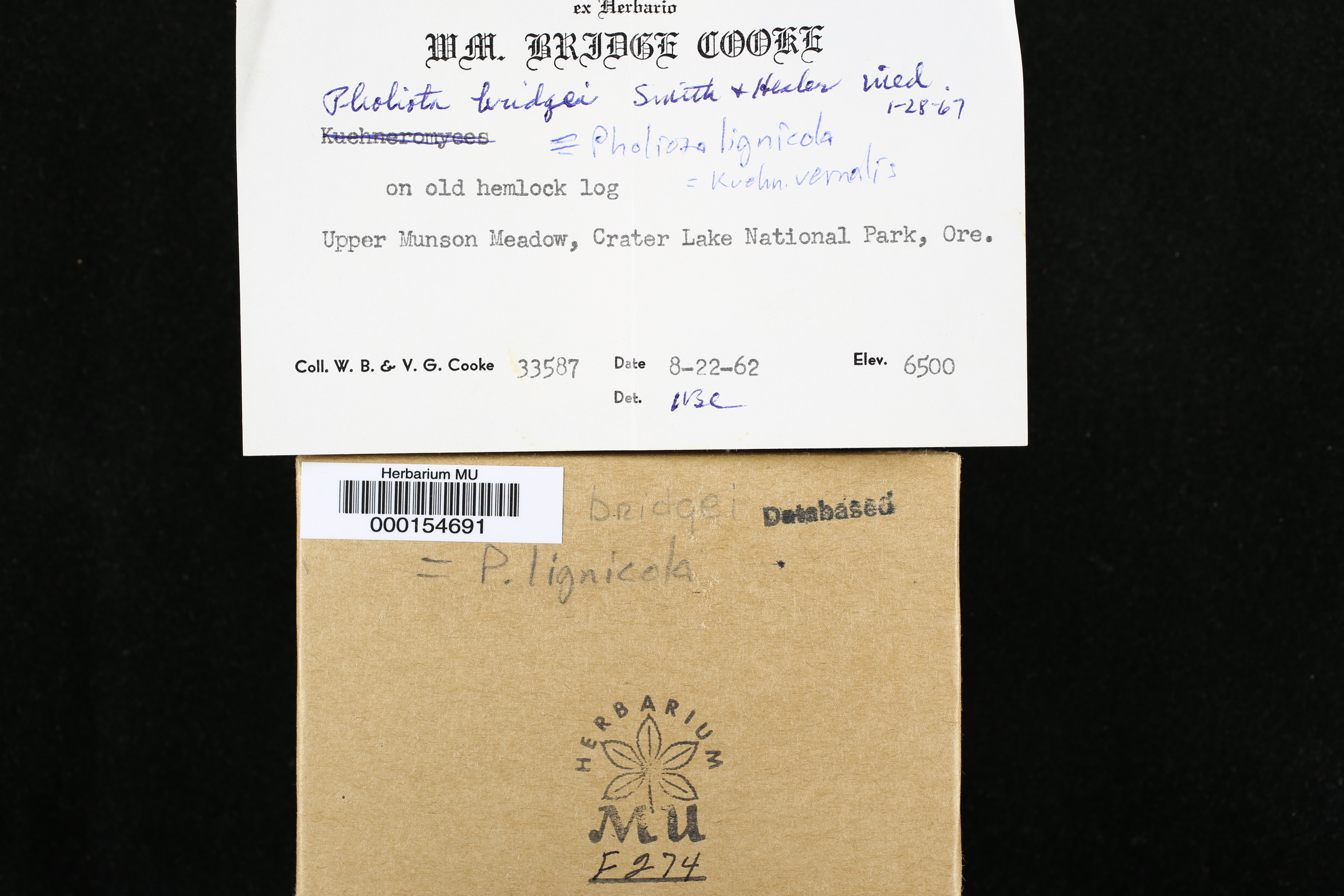
Pholiota lignicola
species of fungus
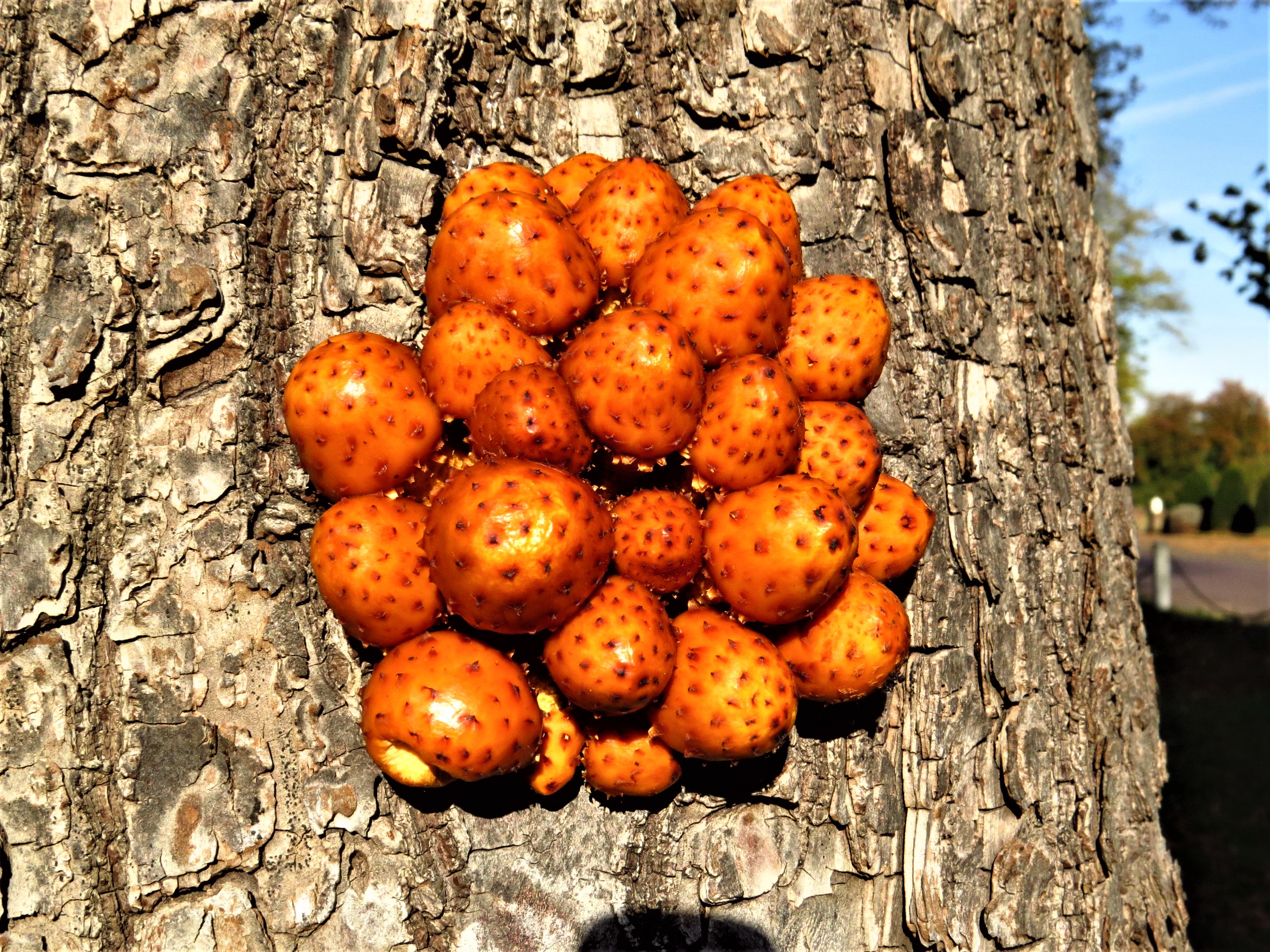
Pholiota limonella
species of fungus
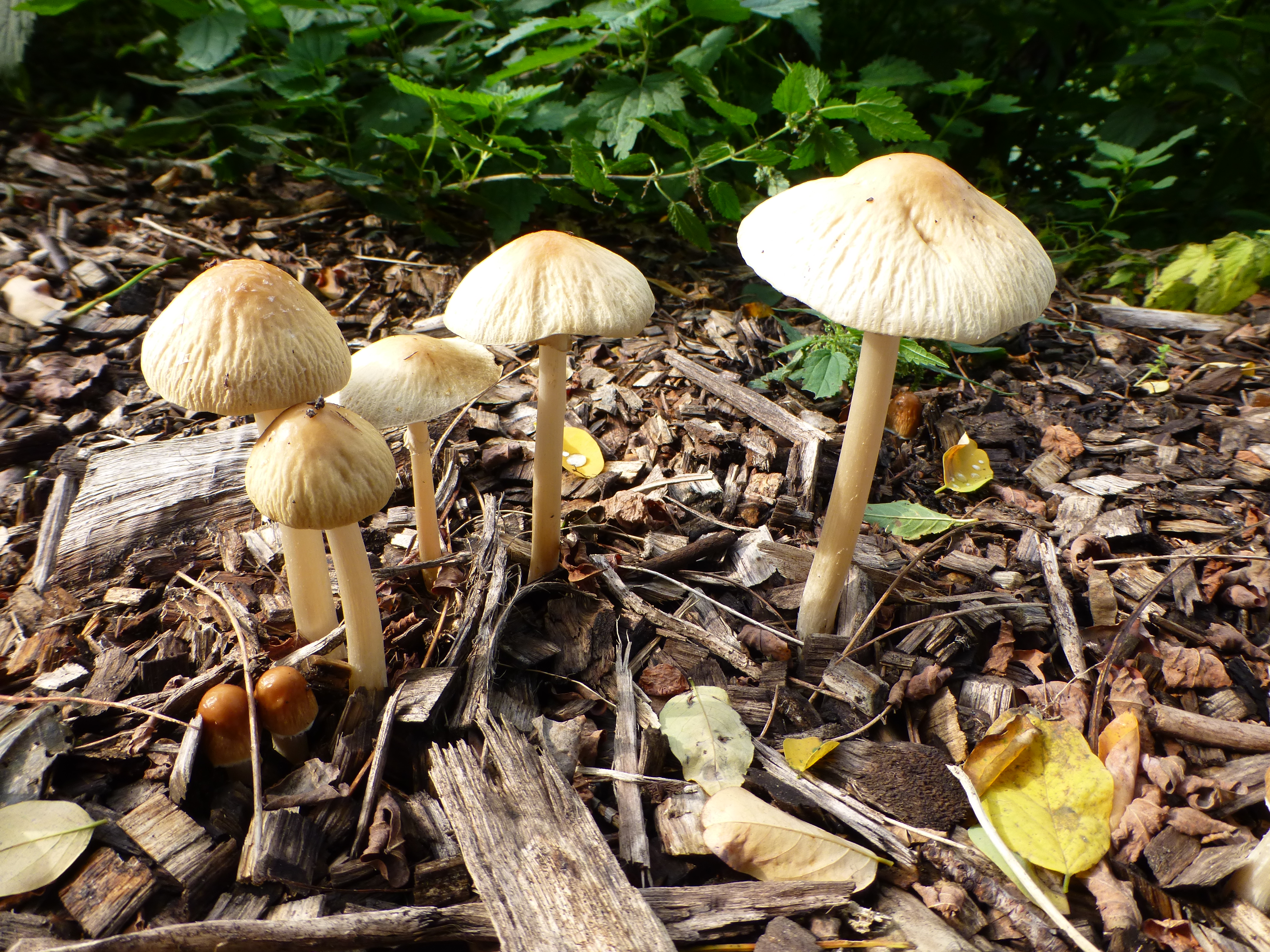
Agrocybe rivulosa
species of fungus

Pholiota spumosa
species of fungus
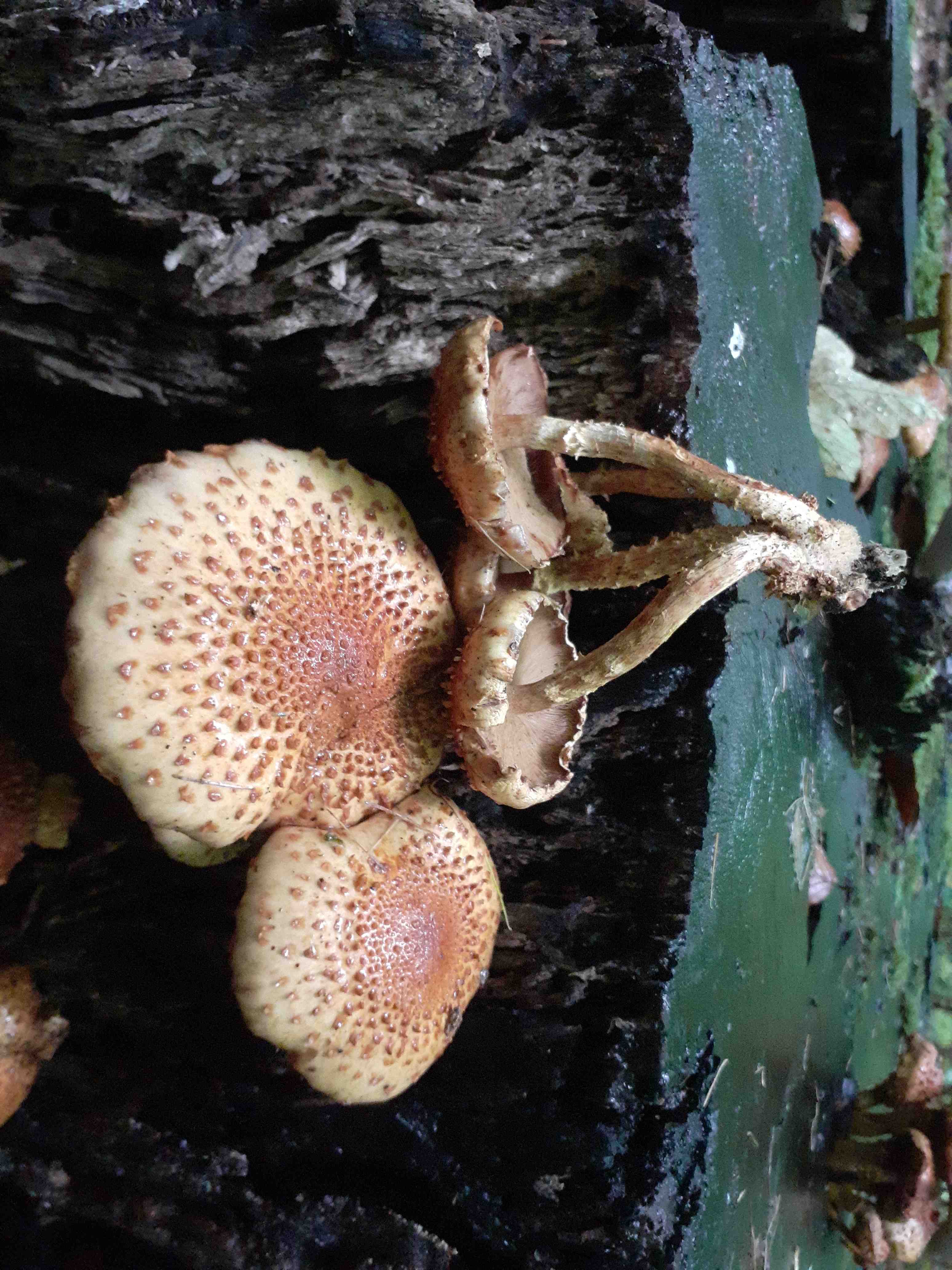
Pholiota squarrosoides
species of fungus
Hemipholiota
Hemipholiota is a genus of agaric fungi in the order Agaricales. It was originally proposed by Rolf Singer in 1962 as a subgenus of Pholiota to contain species with absent or sparse pleurocystidia and absent chrysocystidia. Henri Romagnesi raised it to generic status in 1980, but this naming was invalid as it did not meet the requirements of the International Code of Nomenclature for algae, fungi, and plants. Marcel Bon published the genus validly in 1986.
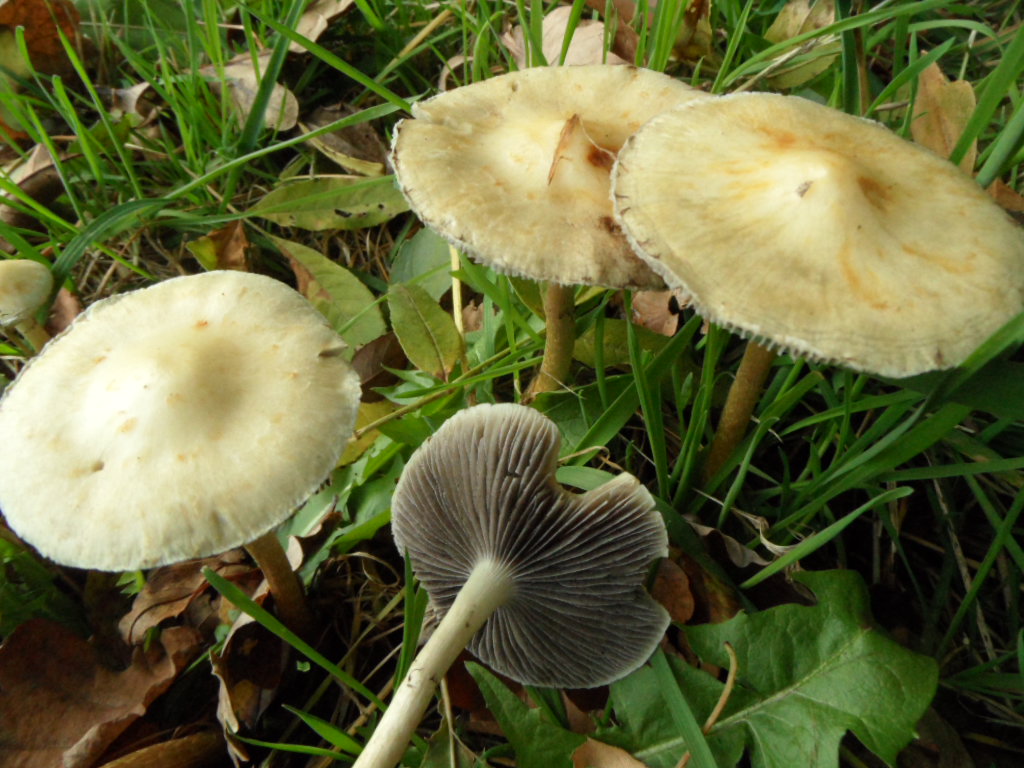
Leratiomyces percevalii
species of fungus
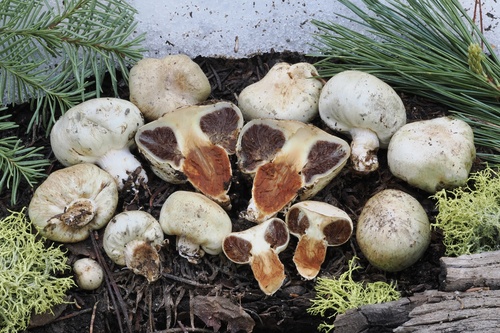
Nivatogastrium
Nivatogastrium is a genus of secotioid fungi in the family Strophariaceae. The genus has contained four species found in North America and New Zealand, but the type species, Nivatogastrium nubigenum, is now considered to be a gasteroid species of Pholiota, and was transferred to that genus in 2014.
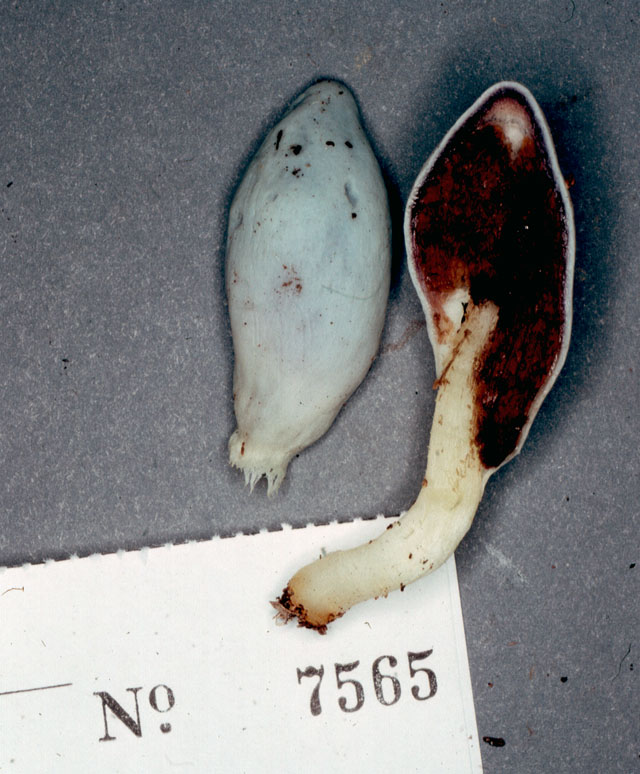
Weraroa
thumb|right|A cross-section of the type species Weraroa novae-zelandiae (Psilocybe weraroa).
Protostropharia
Protostropharia, is a coprophilous agaric fungal genus that produces glutinous, mostly yellowish to yellow brown fruit bodies. Characteristically most form chrysocystidia and rather large, smooth, violaceous basidiospores each with a prominent germ pore (as Stropharia subg. Stercophila). It is differentiated from Stropharia by production of astrocystidia on its mycelium rather than by acanthocytes that Stropharia produces. Phylogenetically, Protostropharia is distinct from Stropharia, Pholiota, and Leratiomyces. Two species, P. luteonitens and P. tuberosa, form pseudosclerotia within the dung

Stropharia albonitens
species of fungus
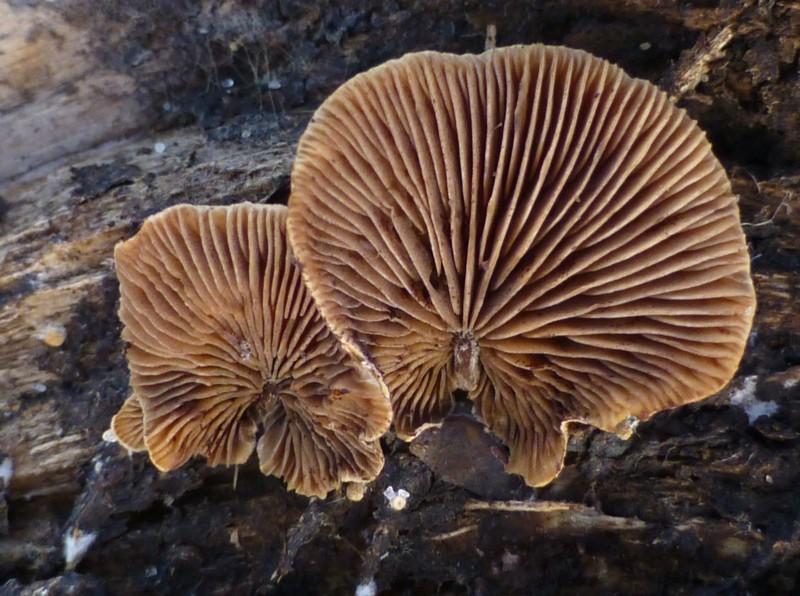
Deconica horizontalis
species of fungus
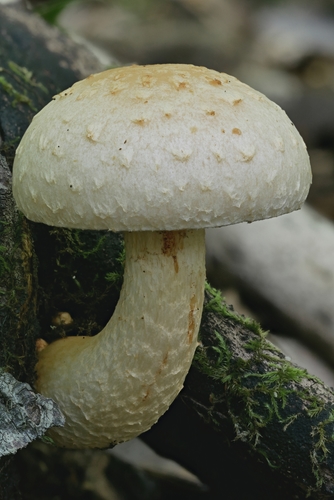
Pholiota heteroclita
species of fungus

Pholiota scamba
species of fungus

Leratiomyces erythrocephalus
species of fungus
Pholiota communis
species of fungus
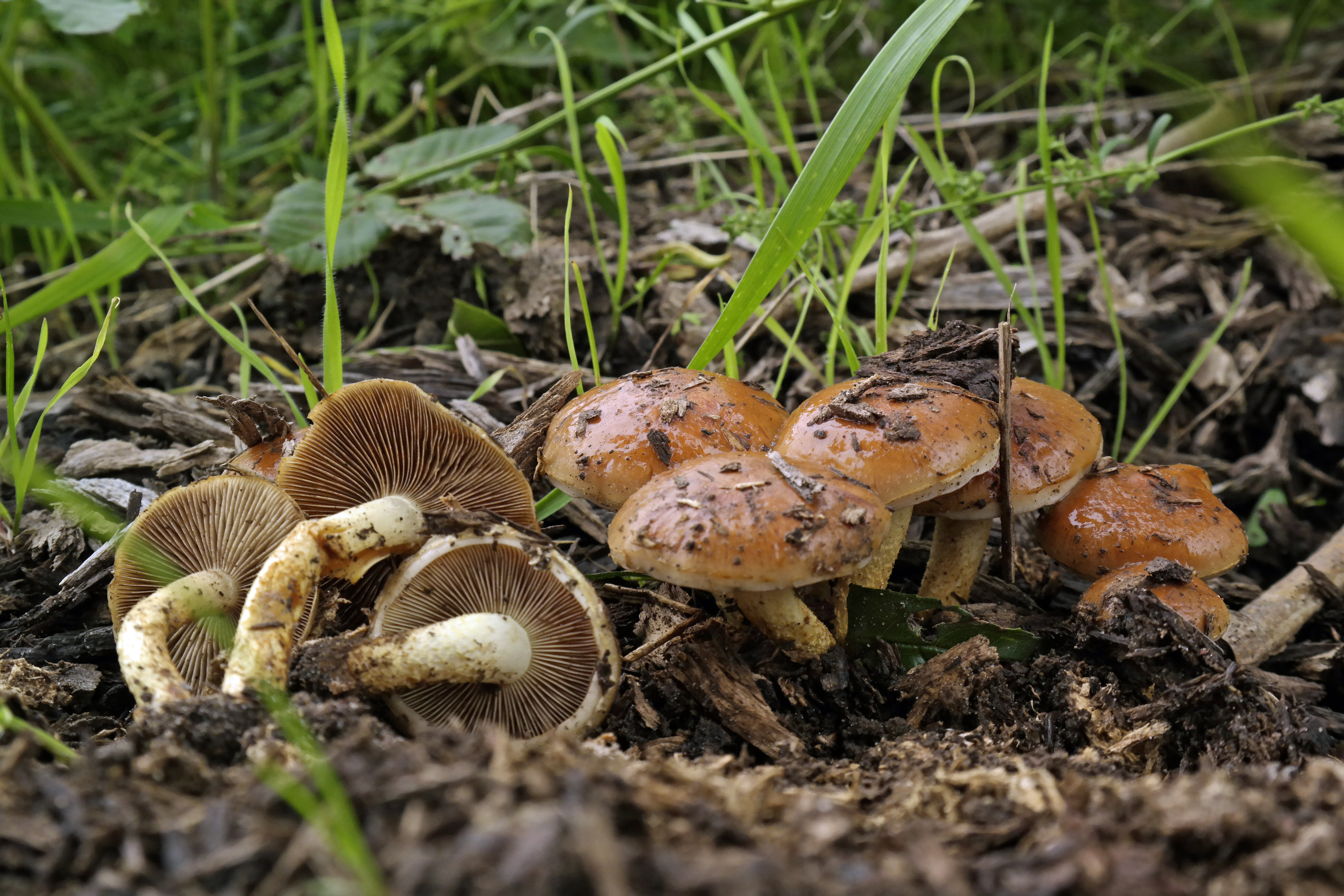
Pholiota brunnescens
species of fungus

Agrocybe sororia
species of fungus
Cyclocybe parasitica
species of fungi
Crassisporium
Crassisporium is a burn-inhabiting agaric fungal genus that colonizes forest fire and campfire sites on ground and charred woody debris in Europe, north Africa and western North America. The small brownish fruitbodies have broadly attached lamellae bordered by cheilocystidia and there is an absence of pleurocystidia and chrysocystidia. Spores are thick-walled, brown, smooth, and have a germ pore. The cap surface (pileipellis) is neither gelatinized nor cellular. Clamp connections are present in the hyphae. The genus is most closely related to the genus Romagnesiella and together both are neare
Brauniella
Brauniella is an agaric fungal genus in the family Strophariaceae. The only species in the genus is Brauniella alba, a species first described as Braunia alba by Brazilian mycologist Johannes Rick in 1934. Braunia is an illegitimate homonym of an earlier name, so Rolf Singer circumscribed Brauniella to contain the fungus in 1955.
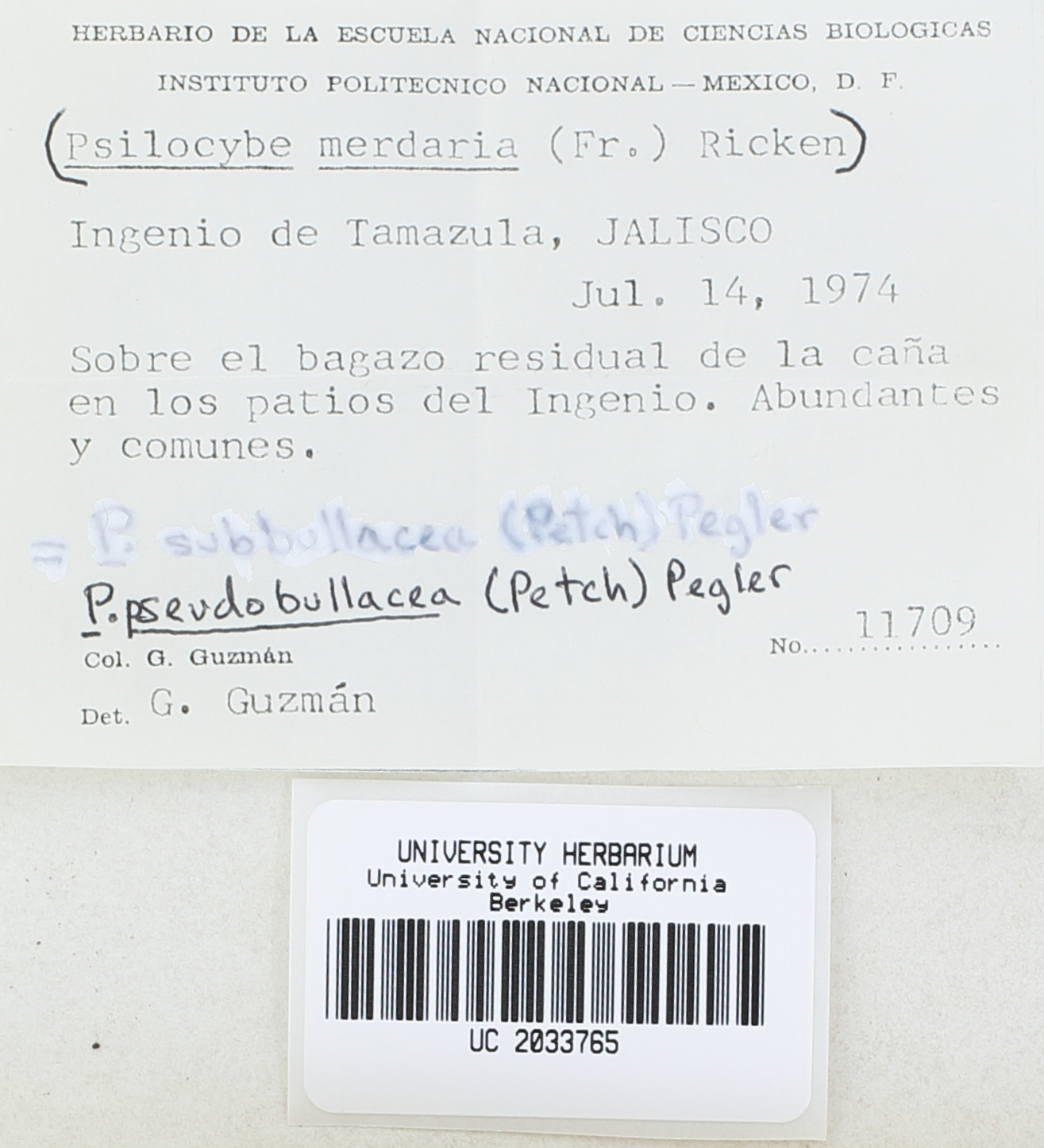
Psilocybe pseudobullacea
species of fungus

Pholiota vernalis
species of fungus
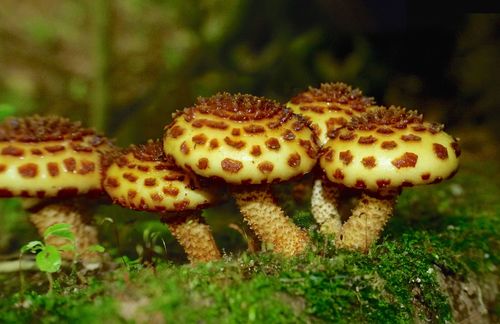
Pholiota glutinosa
species of fungus
Bogbodia
Bogbodia is a bog-inhabiting agaric fungal genus that colonizes peat and Sphagnum and produces tan-colored fruit bodies. The only species in the genus is Bogbodia uda. Characteristically it forms chrysocystidia and rather large, finely roughened, violaceous basidiospores each with a poorly defined germ pore. The genus differs from Hypholoma which has smaller, smooth basidiospores and typically have cespitose fruit bodies and decay wood. Phylogenetically, Bogbodia is distinct from Hypholoma, Pholiota, and Leratiomyces.