Category
page 1Supermassive black holes

Messier 87
galaxy in the Virgo Galactic Cluster

Sagittarius A*
the supermassive black hole at the center of the Milky Way Galaxy
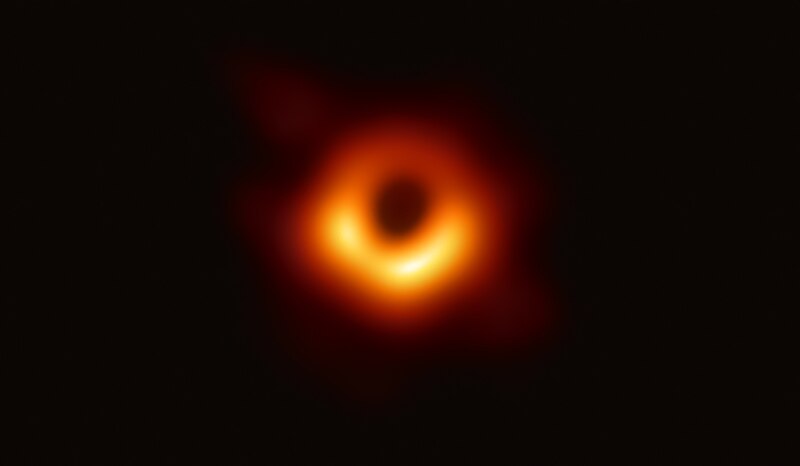
supermassive black hole
black hole with mass above 10⁵ solar masses, usually found at the centers of galaxies
NGC 1277
lenticular galaxy in the constellation Perseus
NGC 4261
galaxy
TON 618
quasar in the constellation Canes Venatici
NGC 3758
galaxy
Phoenix Cluster
Galaxy cluster in the constellation Phoenix
OJ 287
BL Lac object in the constellation Cancer
S5 0014+81
quasar in the constellation Cepheus
3C 75
Black hole system in the constellation Cetus
HE0450-2958
galaxy
ULAS J1342+0928
distant quasar located in the Boötes constellation
SDSS J0100+2802
hyperluminous quasar in the constellation Pisces
brightest cluster galaxy
brightest galaxy within a galaxy cluster
APM 08279+5255
quasar
list of most massive black holes
Wikimedia list article
J0313-1806
astronomical object in the constellation Eridanus
RX J1131
supermassive-black-hole-containing quasar in the constellation Crater
4C +37.11
galaxy
SMSS J215728.21-360215.1
Fast-growing quasar
Q0906+6930
Q0906+6930 was the most distant known blazar (redshift 5.47 / 12.2 billion light years) at the time of its discovery in July, 2004. The engine of the blazar is a supermassive black hole (SMBH) approximately 2 billion times the mass of the Sun (the mass of the Milky Way Galaxy is around 1.5 trillion solar masses). The event horizon volume is on the order of 1,000 times that of the Solar System. It is one of the most massive black holes on record.

M-sigma relation
Relationship between the stellar mass dispersion of a galaxy bulge and the mass of the supermassive black hole at its center
Hypercompact stellar system
cluster of stars around a supermassive black hole
X-shaped radio galaxy
Type of galaxy
1ES 1927+654
Seyfert 1 galaxy in the constellation Draco
CID-42
CID-42 (also known as CXOC J100043.1+020637) is a galaxy quasar about 3.9 billion light years away in the constellation Sextans. It is believed to have a supermassive black hole at its center.
AT 2021lwx
energetic non-quasar transient astronomical event
central massive object
central object of a galaxy

spin-flip
thumb|Schematic diagram of a black hole spin-flip.
Holmberg 15A
elliptical galaxy
Reverberation mapping
astrophysical technique
SDSS J1106+1939
Supermassive black hole
H1821+643
H1821+643 is an extraordinarily luminous, radio-quiet quasar in the constellation of Draco.
PJ352-15
PSO J352.4034–15.3373, or PJ352-15, is a quasar with an astrophysical jet ascribed to a billion-solar-mass supermassive black hole. It is one of the brightest objects so far discovered. Its discovery, using the Chandra X-Ray Observatory, was reported in March 2021. At 12.7 billion light years from Earth, the X-ray jet became an observational distance record at the time of its discovery.
3C 186
Elliptical galaxy and black hole