Category
page 1Sustainable agriculture

sustainability
thumb|Three visual representations of sustainability and its three dimensions. The left image shows sustainability as three intersecting circles. The top right is a nested approach where social and economic sustainability are contained within environmental sustainability. The bottom right shows pillars with the different components holding up sustainability.

permaculture
thumb|upright=1.5|A garden cultivated on permaculture principles
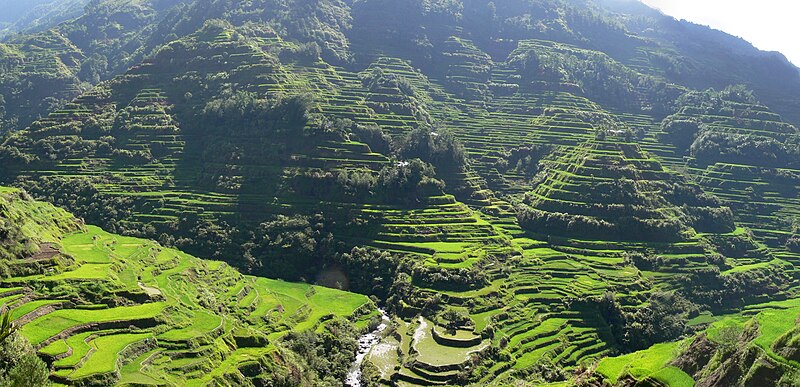
paddy field
flooded parcel of arable land used for growing semiaquatic rice

crop rotation
practice of growing a series of dissimilar or different types of crops in the same area in sequenced seasons
agroecology
Agroecology is an academic discipline that studies ecological processes applied to agricultural production systems. Bringing ecological principles to bear can suggest new management approaches in agroecosystems. The term can refer to a science, a movement, or an agricultural practice. Agroecologists study a variety of agroecosystems. The field of agroecology is not associated with any one particular method of farming, whether it be organic, regenerative, integrated, or industrial, intensive or extensive, although some use the name specifically for alternative agriculture.
sustainable agriculture
farming relying on ecosystem services for maintenance

agroforestry
thumb|upright=1.35|Maize grown under Faidherbia albida and [[Borassus akeassii near Banfora, Burkina Faso ]]
Agroforestry (also known as agro-sylviculture or forest farming) is a land use management system that integrates trees with crops or pasture. It combines agricultural and forestry technologies. As a polyculture system, an agroforestry system can produce timber and wood products, fruits, nuts, other edible plant products, edible mushrooms, medicinal plants, ornamental plants, animals and animal products, and other products from both domesticated and wild species.
vertical farming
practice of growing crops in vertically stacked layers
diatomaceous earth
soft diatomite variety
no-till farming
agricultural method which does not disturb soil through tillage
nectar source
a flowering plant that produces nectar as part of its strategy
land consolidation
planned readjustment and rearrangement of land parcels and their ownership
three-field system
medieval crop rotation

overgrazing
thumb|300px|Overgrazed area in western New South Wales ([[Australia), by loss of native flora, in the upper right corner]]
thumb|Satellite image of the border between Israel and [[Egypt. The Egyptian side, to the left, is overgrazed.]]
thumb|Penned goats in an overgrazed landscape (Norte Chico, Chile)
thumb|Huge herd of migratory wildebeest in Masai Mara during their annual migration shows landscape not overgrazed

agroecosystem
thumb|Agroecosystem in Croton-on-Hudson, New York (state)|New York in [[Westchester County. Intercropped tomatoes, basil, peppers and eggplants.]]
Agroecosystems are the ecosystems supporting the food production systems in farms and gardens. As the name implies, at the core of an agroecosystem lies the human activity of agriculture. As such they are the basic unit of study in Agroecology, and Regenerative Agriculture using ecological approaches.

Intercropping
thumb|upright=1.2|Coconut and Mexican marigold, a multilayer cropping in India

fungiculture
thumb|Variety of mushrooms cultivated for culinary use
Fungiculture is the cultivation of fungi such as mushrooms. Cultivating fungi can yield foods (which include mostly mushrooms), medicine, construction materials and other products. A mushroom farm is involved in the business of growing fungi.
Sustainable Development Goal 2
Zero Hunger
soil conservation
preservation of soil nutrients
list of plants used as medicine
Wikimedia list article
water reclamation
process of converting wastewater into water that can be reused for other purposes
good agricultural practice
set of best practices for on-farm production and post-production processes

silvopasture
thumb|Silvopasture integrates livestock, forage, and trees. (photo: USDA NAC)Silvopasture (silva is forest in Latin) or wood pasture is the practice of integrating trees, forage, and the grazing of domesticated animals in a mutually beneficial way. It utilizes the principles of managed grazing, and it is one of several distinct forms of agroforestry. If done correctly, silvopastures can count as nature-based solutions to climate change.
non-timber forest product
commodities obtained from forests other than timber

bioprospecting
Bioprospecting (also known as biodiversity prospecting) is the exploration of natural sources for small molecules, macromolecules and biochemical and genetic information that could be developed into commercially valuable products for the agricultural, aquaculture, bioremediation, cosmetics, nanotechnology, or pharmaceutical industries. In the pharmaceutical industry, for example, almost one third of all small-molecule drugs approved by the U.S. Food and Drug Administration (FDA) between 1981 and 2014 were either natural products or compounds derived from natural products.
defence against herbivory
range of adaptations evolved by plants which improve their survival and reproduction by reducing the impact of herbivores; plant defensive strategies (defensive traits) to defend against damage caused by herbivores
agricultural biodiversity
diversity of species that contribute to agricultural production
System of Rice Intensification
farming methodology
Plant breeders' rights
rights granted to the breeder of a new variety of plant that give the breeder exclusive control

Pongamia
Pongamia pinnata is a species of tree in the pea family, Fabaceae, native to eastern and tropical Asia, Australia, and the Pacific islands. It is the sole species in genus Pongamia. It is often known by the synonym Millettia pinnata. Its common names include Indian beech, Karanja, and Pongame oiltree.
spinosad
Spinosad is an insecticide based on chemical compounds found in the bacterial species Saccharopolyspora spinosa. The genus Saccharopolyspora was discovered in 1985 in isolates from crushed sugarcane. The bacteria produce yellowish-pink aerial hyphae, with bead-like chains of spores enclosed in a characteristic hairy sheath. This genus is defined as aerobic, Gram-positive, nonacid-fast actinomycetes with fragmenting substrate mycelium. S. spinosa was isolated from soil collected inside a nonoperational sugar mill rum still in the Virgin Islands. Spinosad is a mixture of chemical compounds in th
Food miles
distance food is transported from production to consumption
integrated farming
Agricultural management system
animal-free agriculture
farming without the use of animals or their products
nutrient pollution
contamination of water by excessive inputs of nutrients

Ark of Taste
catalogue of endangered foods

seawater greenhouse
greenhouse technology for arid regions
International Treaty on Plant Genetic Resources for Food and Agriculture
2001 treaty on plant genetic resources
organic horticulture
art of organic cultivation of fruit, vegetables, flowers or ornamental plants
bioeffector
A bioeffector is a viable microorganism or active natural compound which directly or indirectly affects plant performance (biofertilizer), and thus has the potential to reduce fertilizer and pesticide use in crop production.
International Centre for Integrated Mountain Development
organization
Bees and toxic chemicals
carbon farming
farming method
pesticide drift
diffusion of pesticides into the environment
Conservation Agriculture
concept in agriculture
Waru Waru
South American type of raised field agriculture
beneficial organism
organism that is beneficial for human activity
agricultural productivity
quotient between production and productive factors
insect trap
device used to monitor or reduce insect populations
Global Crop Diversity Trust
international nonprofit foundation which works to preserve agricultural biodiversity
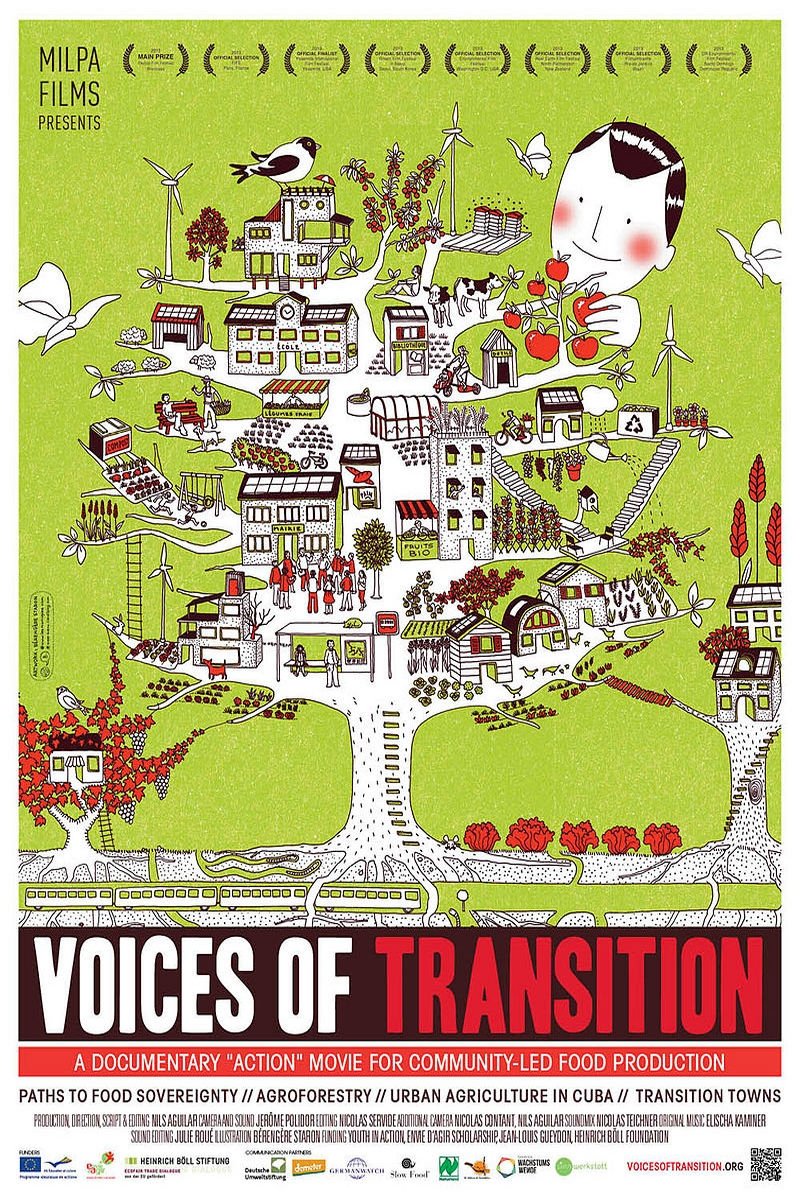
Voices of Transition
2012 film by Nils Aguilar
Applied Research Institute–Jerusalem
organization
Strip-till
Strip-till is a conservation system that uses a minimum tillage. It combines the soil drying and warming benefits of conventional tillage with the soil-protecting advantages of no-till by disturbing only the portion of the soil that is to contain the seed row. This type of tillage is performed with special equipment and can require the farmer to make multiple trips, depending on the strip-till implement used, and field conditions. Each row that has been strip-tilled is usually about eight to ten inches wide.
Al Baydha Project
desert greening project, Saudi Arabia
Slash-and-char
Slash-and-char is an alternative to slash-and-burn that has a lesser effect on the environment. It is the practice of charring the biomass resulting from the slashing instead of burning it. Due to incomplete combustion (pyrolysis) the resulting residue matter charcoal can be utilized as biochar to improve the soil fertility.
push–pull technology
intercropping strategy for controlling agricultural pests
reconciliation ecology
study of maintaining biodiversity in human-dominated ecosystems
Perennial rice
varieties of rice that can grow season after season without re-seeding
Meliponiculture
link=https://pt.wikipedia.org/wiki/Ficheiro:Meliponario_individual.png|thumb|Meliponary with individual posts in the Pau Brasil village, in the Tupiniquim Indigenous Land, Aracruz, [[Espírito Santo]]Meliponiculture is the rational farming of stingless bees, or meliponines (Meliponini tribe), which is different from apiculture (the breeding of bees of the Apis mellifera species; western honey bee or European honey bee; Apini tribe). In meliponiculture, the hives can be organized in meliponary, places with suitable conditions of temperature, solar orientation, humidity, and food supply (flowers
Jean-Baptiste Chavannes
Haitian agronomist