Category
page 1Swimming

swimming
upright=1.5|thumb|right|A competitive swimmer performing the [[breaststroke]]

modern pentathlon
sport which combines fencing, swimming, show jumping or obstacle running, shooting and running
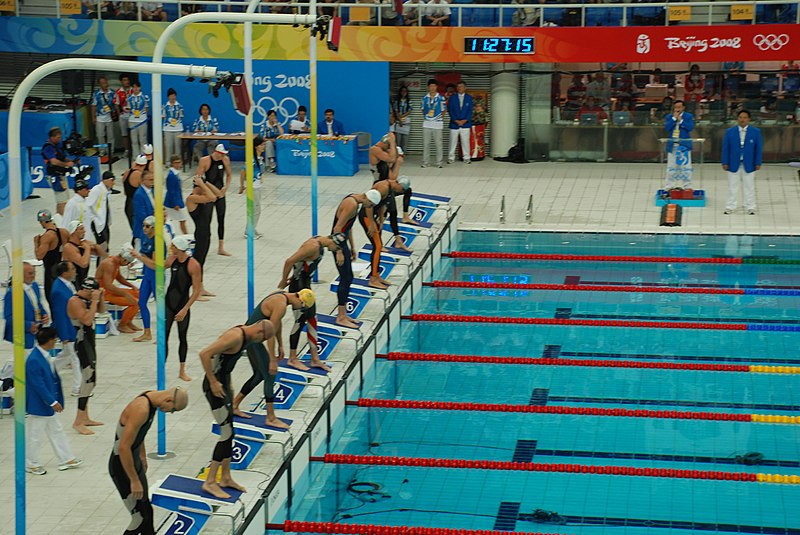
competitive swimming
water-based sport

drowning
Drowning is a type of suffocation induced by the submersion of the mouth and nose in a liquid. Submersion injury refers to both drowning and near-miss incidents. Most instances of fatal drowning occur alone or in situations where others present are either unaware of the victim's situation or unable to offer assistance. After successful resuscitation, drowning victims may experience breathing problems, confusion, or unconsciousness. Occasionally, victims may not begin experiencing these symptoms until several hours after they are rescued. An incident of drowning can also cause further complicat

snorkeling
thumb|A snorkeler amid corals on a [[coral reef near Fiji]]
open water swimming
swimming sport
winter swimming
outdoor swimming during winter, often with ice
aquathlon
An aquathlon is a multisport race consisting of continuous run and swim elements. Competitors complete a swim immediately followed by a run over various distances. Athletes compete for fastest overall course completion, including the time transitioning between the disciplines.
bathing machine
device used for sea bathing during the 19th century
para swimming
sport of swimming adapted for participants with disabilities
masters swimming
special class of competitive swimming for swimmers 25 years and older
swimming lessons
process of learning to swim
aquatic locomotion
biologically propelled motion through a liquid medium; in contrast of passive swimming (floating); involves the expenditure of energy to travel to a desired location
marathon swimming
class of swimming
long-distance swimming
swimming competitions with longer distances
Tumble turn
Turn in swimming
short course
a swimming pool that is 25 metres length
Halliwick
The Halliwick Concept focuses on biophysical principles of motor control in water, in particular developing sense of balance (equilibrioception) and core stability. The Halliwick Concept recognises the benefits that can be derived from activities in water, and sets out the fundamentals necessary for teaching and learning in this environment. The Halliwick Ten-Point-Programme implements the concept in a progressive programme of mental adjustment, disengagement, and development of motor control, with an emphasis on rotational control, and applies the programme to teach physically disabled people
turn
reversal of direction of travel by a swimmer