Category
page 1Symbiosis

Formicidae
thumb|Bright red ant, likely part of the Formica pallidefulva species group, on a flower

termite
Termites are a group of detritophagous eusocial cockroaches which consume a variety of decaying plant material, generally in the form of wood, leaf litter, and soil humus. They are distinguished by their moniliform antennae and the soft-bodied, unpigmented worker caste for which they have been commonly termed "white ants"; however, they are not ants but highly derived cockroaches. About 2,997 extant species are currently described, 2,125 of which are members of the family Termitidae.

lichen
thumb|A tree covered with leafy foliose lichens and shrubby fruticose lichens

symbiosis
thumb|upright=1.5|In a cleaning symbiosis, the [[clownfish feeds on small invertebrates, that otherwise have potential to harm the sea anemone, and the fecal matter from the clownfish provides nutrients to the sea anemone. The clownfish is protected from predators by the anemone's stinging cells, to which the clownfish is immune. The relationship is therefore classified as mutualistic.]]

Actiniaria
order of cnidarians
mycorrhiza
thumb|Introductory video animation providing some basic information about mycorrhizas.
Gobiidae
Gobiidae or gobies is a family of bony fish in the order Gobiiformes, one of the largest fish families comprising over 2,000 species in more than 200 genera. Most of gobiid fish are relatively small, typically less than in length, and the family includes some of the smallest vertebrates in the world, such as Trimmatom nanus and Pandaka pygmaea. Trimmatom nanus are under long when fully grown, while the Pandaka pygmaea standard length is , with a maximum known standard length of . Some large gobies can reach over in length, but that is exceptional. Generally, they are benthic or bottom-dwellers

commensalism
thumb|upright=1.35|Remora are specially adapted to attach themselves to larger fish (or other animals, in this case a sea turtle) that provide locomotion and food.
%20-%20Juvenile%20fed%20by%20host%20parent%20Rock-loving%20Cisticola.jpg)
Indicatoridae
Honeyguides (family Indicatoridae) are a family of 16 species of birds in the order Piciformes. They are also known as indicator birds, or honey birds, although the latter term is also used more narrowly to refer to species of the genus Prodotiscus. They have an Old World tropical distribution, with the greatest number of species in Africa and two in Asia. These birds are best known for their interaction with humans. Honeyguides are noted and named from one or two species that will deliberately lead humans directly to bee colonies, so that they can feast on the grubs and beeswax that are left

mutualism
organism relationship in which each individual benefits from the activity of the other

Lynn Margulis
American evolutionary biologist (1938–2011)

Echeneidae
The remora (), sometimes called suckerfish or sharksucker, is any of a family (Echeneidae) of ray-finned fish in the order Carangiformes. Depending on species, they grow to long. Their distinctive first dorsal fins take the form of a modified oval, sucker-like organ with slat-like structures that open and close to create suction and take a firm hold against the skin of larger marine animals. The disk is made up of stout, flexible membranes that can be raised and lowered to generate suction. By sliding backward, the remora can increase the suction, or it can release itself by swimming forward.
%20(6056495382)%20(cropped).jpg)
Clownfish
Clownfish or anemonefishes (genus Amphiprion) are saltwater fish found in the warm and tropical waters of the Indo-Pacific. They mainly inhabit coral reefs and have a distinctive colouration typically consisting of white vertical bars on a red, orange, yellow, brown or black background. Clownfish developed a symbiotic and mutually beneficial relationship with sea anemones, on which they rely for shelter and protection from predators. In turn, clownfish protect the anemone from anemone-eating fish, as well as clean and fan them, and attract beneficial microorganisms with their waste.

Heinrich Anton de Bary
German surgeon, botanist, microbiologist, and mycologist (1831–1888)

symbiogenesis
thumb|upright=2.2|In the theory of symbiogenesis, a merger of an archaean and an aerobic bacterium created the eukaryotes, with aerobic mitochondria; a second merger added [[chloroplasts, creating the green plants. The original theory by Lynn Margulis proposed an additional preliminary merger, but this is poorly supported and not now generally believed.]]
Symbiogenesis (endosymbiotic theory, or serial endosymbiotic theory) is the leading evolutionary theory of the origin of eukaryotic cells from prokaryotic organisms. The theory holds that mitochondria, plastids such as chloroplasts, and possi

Zooxanthellae
thumb|300px|

pollinator
thumb|250px|A syrphid fly (Eristalinus taeniops) pollinating a [[common hawkweed]]
thumb|250px|A Andrena|mining bee (Andrena lonicerae) pollinating a [[honeysuckle (Lonicera gracilipes).]]

endophyte
thumb|Transmission electron microscope image of a cross section through a soybean (Glycine max) [[root nodule. The nitrogen fixing bacteria, and fungi Bradyrhizobium japonicum, infects the roots and establishes a symbiosis. This high magnification image shows part of a cell with single bacteroid (bacterium-like cell or modified bacterial cell) within their symbiosomes. In this image, you can also see endoplasmic reticulum, Golgi apparatus and cell wall.]]
leafcutter ant
niche of ants who develop a mutualist relationship with fungi they culture on leafcuttings
root nodule
plant part
reciprocal altruism
behaviour whereby an organism acts in a manner that temporarily reduces its fitness while increasing another organism's fitness

fungiculture
thumb|Variety of mushrooms cultivated for culinary use
Fungiculture is the cultivation of fungi such as mushrooms. Cultivating fungi can yield foods (which include mostly mushrooms), medicine, construction materials and other products. A mushroom farm is involved in the business of growing fungi.

endosymbiont
thumb|200px|A representation of the endosymbiotic theory

Aliivibrio fischeri
species of bacterium

Rhizobia
thumb|right|Root nodules, each containing billions of Rhizobiaceae bacteria

myco-heterotrophy
thumb|230px|Monotropa uniflora, an obligate myco-heterotroph known to parasitize fungi belonging to the [[Russulaceae.]]
.jpg)
Ectomycorrhiza
thumbnail|Ectomycorrhizal symbiosis, showing root tips with fungal mycelium from the genus [[Amanita]]

inquiline
thumb|right|Wyeomyia smithii larva is an inquiline species in the pitcher leaves of [[Sarracenia purpurea (magnification 40X).]]
Euprymna scolopes
species of mollusc

nucleomorph
thumb|Diagram of a four membraned plastid containing a nucleomorph
Nucleomorphs are small, vestigial eukaryotic nuclei found between the inner and outer pairs of membranes in certain plastids. They are thought to be vestiges of red and green algal nuclei that were engulfed by a larger eukaryote. Because the nucleomorph lies between two sets of membranes, nucleomorphs support the endosymbiotic theory and are evidence that the plastids containing them are complex plastids. Having two sets of membranes indicate that the plastid, a prokaryote, was engulfed by a eukaryote, an alga, which was then e
arbuscular mycorrhiza
endomycorrhiza in which the symbiont fungus penetrates the cortical cells of the roots of a vascular plant forming arbuscules
cleaner fish
tribe of fishes

phoresis
thumb|Pseudogarypus synchrotron Henderickx et al. 2012 specimen in Baltic amber.thumb|Male Bombus hypnorum with phoretic mites. [[Botevgrad, Bulgaria.]]
thumb|Pseudoscorpion hitching a ride on a fly
thumb|A pseudoscorpion on the leg of a crane fly

Black-ray goby
species of fish

Symbiodinium
Symbiodinium is a genus of dinoflagellates that encompasses the largest and most prevalent group of endosymbiotic dinoflagellates known and have photosymbiotic relationships with many species. These unicellular microalgae commonly reside in the endoderm of tropical cnidarians such as corals, sea anemones, and jellyfish, where the products of their photosynthetic processing are exchanged in the host for inorganic molecules. They are also harbored by various species of demosponges, flatworms, mollusks such as the giant clams, foraminifera (soritids), and some ciliates. Generally, these dinoflage

Mixotricha paradoxa
Mixotricha paradoxa is a species of protozoan that lives inside the gut of the Australian termite species Mastotermes darwiniensis.

Bohadschia argus
species of echinoderm
Devil's garden
stand of trees in the Amazon Rainforest consisting of a single species, Duroia hirsuta
Hartig net
network of inward growing hyphae

SCOBY
thumb|A SCOBY used for brewing kombucha
thumb|Kombucha co-culture with SCOBY biofilm

Myrmecia inquilina
species of insect
vertical transmission
transmission of a pathogen from mother to offspring

Dardanus pedunculatus
species of crustacean
mycotroph
A mycotroph is a plant that gets all or part of its carbon, water, or nutrient supply through symbiotic association with fungi. A holomycotroph gets all its nutrition solely from a mycorrhizal symbiosis. The term can refer to plants that engage in either of two distinct symbioses with fungi:
Many mycotrophs have a mutualistic association with fungi in any of several forms of mycorrhiza. The majority of plant species are mycotrophic in this sense. Examples include Burmanniaceae.
Some mycotrophs are parasitic upon fungi in an association known as myco-heterotrophy.
cleaner shrimp
species of crustacean

Cucumis humifructus
species of plant
actinorhizal plant
plants hosting N-fixing Frankia symbioants in nodules
Polydnavirus
Polydnaviriformidae ( PDV) is a family of insect viriforms; members are known as polydnaviruses. There are two genera in the family: Bracoviriform and Ichnoviriform. Polydnaviruses form a symbiotic relationship with parasitoid wasps. Ichnoviriforms (IV) occur in Ichneumonid wasps and Bracoviriforms (BV) in Braconid wasps. The larvae of wasps in both of those groups are themselves parasitic on Lepidoptera (moths and butterflies), and the polydnaviruses are important in circumventing the immune response of their parasitized hosts. Little or no sequence homology exists between BV and IV, suggesti
Ericoid mycorrhiza
species of fungus
ectosymbiosis
thumb|European mistletoe is an example of an ectosymbiotic parasite that lives on top of trees and removes nutrients and water.
Ectosymbiosis is a form of symbiotic behavior in which an organism lives on the body surface of another organism (the host), including internal surfaces such as the lining of the digestive tube and the ducts of glands. The ectosymbiotic species, or ectosymbiont, is generally an immobile (or sessile) organism existing off of biotic substrate through mutualism, commensalism, or parasitism. Ectosymbiosis is found throughout a diverse array of environments and in many dif
microbial inoculant
agricultural amendment

nectar robbing
foraging behavior
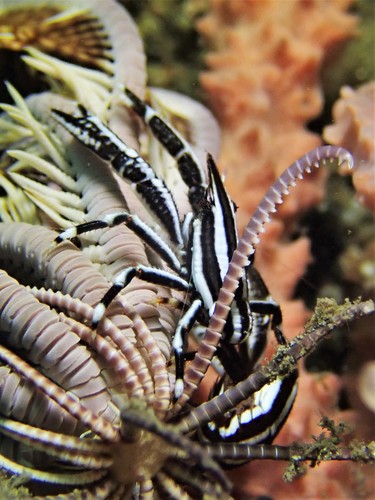
elegant squat lobster
species of crustacean
Trophobiosis
thumb|Acropyga glaesaria and [[Electromyrmococcus abductus]]
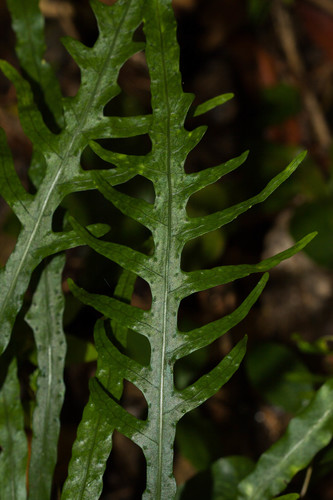
Lecanopteris
Lecanopteris is a genus of ferns in the family Polypodiaceae, subfamily Microsoroideae, according to the Pteridophyte Phylogeny Group classification of 2016 (PPG I). They have swollen hollow rhizomes that provide homes for symbiotic ants. All are epiphytic plants that naturally occur from Southeast Asia to New Guinea. Several species are in commerce, being grown as houseplants and greenhouse curiosities.
Ecological facilitation
species interactions that benefit at least one of the participants and cause harm to neither
Mycangium
thumb|262x262px|Pronotal mycangia of ambrosia beetle Xylosandruscrassiusculus
The term mycangium (pl., mycangia) is used in biology for special structures on the body of an animal that are adapted for the transport of symbiotic fungi (usually in spore form). This is seen in many xylophagous insects (e.g. horntails and bark beetles), which apparently derive much of their nutrition from the digestion of various fungi that are growing amidst the wood fibers. In some cases, as in ambrosia beetles (Coleoptera: Curculionidae: Scolytinae and Platypodinae), the fungi are the sole food, and the excavat
Chlorococcum amblystomatis
species of green algae
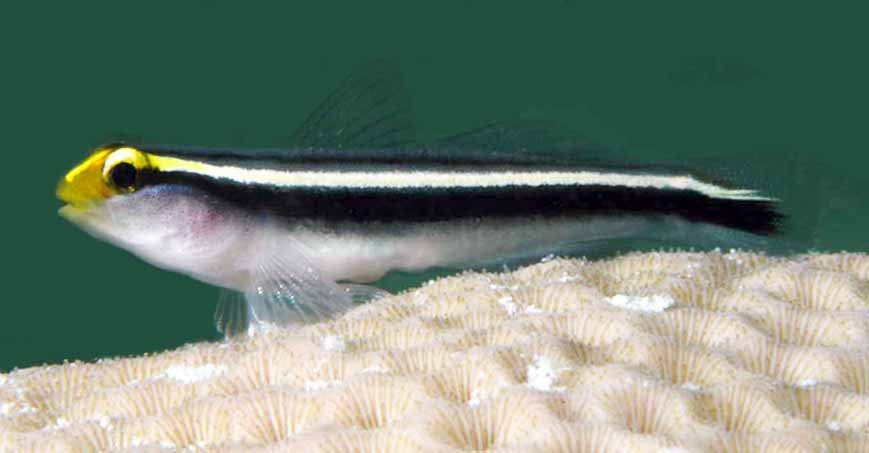
Elacatinus colini
species of fish
cyanobiont
Cyanobionts are cyanobacteria that live in symbiosis with a wide range of organisms such as terrestrial or aquatic plants; as well as, algal and fungal species. They can reside within extracellular or intracellular structures of the host. In order for a cyanobacterium to successfully form a symbiotic relationship, it must be able to exchange signals with the host, overcome defense mounted by the host, be capable of hormogonia formation, chemotaxis, heterocyst formation, as well as possess adequate resilience to reside in host tissue which may present extreme conditions, such as low oxygen leve