Category
page 1Symbols

flower
Flowers, also known as blossoms and blooms, are the reproductive structures of flowering plants. Typically, they are structured in four circular levels around the end of a stalk. These include: sepals, which are modified leaves that support the flower; petals, often designed to attract pollinators; male stamens, where pollen is presented; and female gynoecia, where pollen is received and its movement is facilitated to the egg. When flowers are arranged in a group, they are known collectively as an inflorescence.
.jpg)
dream
thumb|upright=1.5|In this illustration, politician Daniel O'Connell dreams of a confrontation between his outfit and that of [[George IV (r. 1820–1830; shown via a thought bubble)]]

symbol
thumb|upright|A red octagon symbolizes "stop" even without the word.|alt=Silhouette of a red octagon
thumb|upright|Wearing variously colored List of awareness ribbons|ribbons is a symbolic action that shows support for certain campaigns.

pharmacy
right|thumb|250px|The Green Pharmacy Cross (sometimes overlaid with Bowl of Hygieia), is widely used in on pharmacy signs.
thumb|A medication is a drug used to diagnose, cure, treat, or prevent disease.
thumb|The Apothecary or The Chemist by Gabriël Metsu (–67)
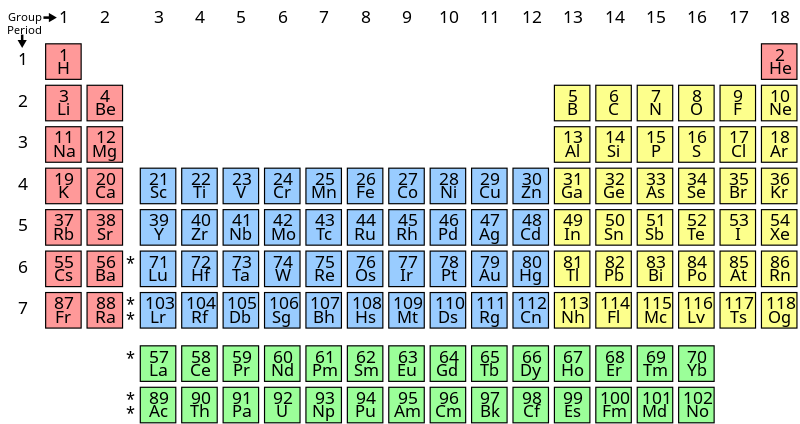
chemical symbol
abbreviations used in chemistry

traffic sign
signboard displaying information for road users

lucid dream
dream where one is aware that they are dreaming

optical character recognition
computer recognition of visual text

triskelion
thumb|Neolithic triple-spiral symbol

Rod of Asclepius
symbolic rod from Greek mythology

cornucopia
thumb|upright|Cornucopia of a Roman statue of Livia as [[Fortuna, 42-52 AD, marble, Altes Museum, Berlin ]]
thumb|Cornucopia, part of a Roman statue, Archaeological Museum A. Salinas, Palermo, Sicily, Italy
In classical antiquity, the cornucopia (; ), also called the horn of plenty, is a symbol of abundance and nourishment, commonly a large horn-shaped container overflowing with produce, flowers, or nuts. In Greek, it was called the horn of Amalthea (), after Amalthea, a nurse of Zeus, who is often part of stories of the horn's origin.

medical prescription
instructions governing the plan of care for an individual patient, often written authorization to obtain a drug from a pharmacist

caduceus
thumb|upright|Modern depiction of the caduceus as the symbol of logistics
thumb|upright| carrying a winged caduceus upright in his left hand. A Roman copy after a Greek original of the 5th century BCE (Museo Pio-Clementino, [[Rome)]]
.jpg)
emblem
thumb|The Wilton Diptych (–1399) features [[angels wearing the White Hart badge, the personal emblem of King Richard II of England]]
thumb|The Emblem of Uzbekistan|national emblem of Uzbekistan
thumb|The family emblem of the fictional Superman dynasty|House of El
cuckoo clock
typically pendulum-regulated clock that strikes the hours with a sound like a common cuckoo's call

rebus
thumb|A rebus-style "escort card" from around 1865, to be read as "May I see you home my dear?"
thumb|A German rebus, circa 1620
heart
symbol representing the heart
hazard symbol
recognisable symbol designed to warn about hazardous or dangerous materials, locations, or objects
mon
Japanese emblems

cockade
thumb|right|A woman fastening a Flag of Poland|red-and-white cockade to a Polish insurgent's square-shaped [[rogatywka cap during the January Uprising of 1863–64]]
Mother Nature
personification of Earth's environment

tamga
thumb|Tamgha of the Bayundur, which represents a [[falcon according to Mahmud al-Kashgari]]
A tamga, or tamgha (from ), was an abstract seal or brand used by Eurasian nomads and cultures influenced by them, initially as a livestock branding. The tamga was used as a livestock branding for a particular tribe, clan or family. They were common among the Eurasian nomads throughout Classical Antiquity and the Middle Ages. As clan and family identifiers, the collection and systematic comparison of tamgas is regarded to provide insights into relations between families, individuals and ethnic groups in
love padlock
padlock attached to a public fixture as a symbol of eternal love
check mark
symbol usually meaning 'yes' or 'correct'
Tudor rose
heraldic badge
sign of the horns
hand gesture
pileus
conical or half-egg-shaped cap, often of felt, worn in Ancient Greece and Rome and by ecclesiastics

triquetra
right|thumb|Interlaced triquetra which is a trefoil knot
The triquetra ( ; from the Latin adjective triquetrus "three-cornered") is a triangular figure composed of three interlaced arcs, or (equivalently) three overlapping vesicae piscis lens shapes. It is used as an ornamental design in architecture, and in medieval manuscript illumination (particularly in the Insular tradition). Its depiction as interlaced is common in Insular ornaments from about the 7th century. In this interpretation, the triquetra represents the topologically simplest possible knot.
thumb|Comparison of associated Reuleau

oneirology
thumb|right|An artist's depiction of a dream
livestock branding
technique for marking livestock so as to identify the owner, traditionally with a hot iron

Borjgali
A borjgali () is a Georgian symbol of the sun and eternity. The Borjgali is often represented with seven rotating wings over the tree of life which can be used to create various shapes and variations and is considered one of the main symbols of Georgian culture.
.svg)
yin-yang
In Chinese philosophy, a taijitu () is a symbol or diagram () representing taiji () in both its monist (wuji) and its dualist (yin and yang) forms. A taijitu in application provides a deductive and inductive theoretical model. Such a diagram was first introduced by Neo-Confucian philosopher Zhou Dunyi of the Song Dynasty in his Taijitu shuo ().
oneiromancy
Oneiromancy () is a form of divination based upon dreams, and also uses dreams to predict the future. Oneirogen plants may also be used to produce or enhance dream-like states of consciousness. Occasionally, the dreamer feels as if they are transported to another time or place, and this is offered as evidence they are in fact providing divine information upon their return.

Chakana
thumb|right|Most commonly used variation of an Andean cross used today; this open Andean cross can also be seen at the Tello Obelisk and on Tiwanaku [[Qirus often with an eye inside]]
The chakana or Andean cross (also "stepped cross", "step motif", or "stepped motif") is a stepped cross motif used by the Inca and pre-incan Andean societies. The most commonly used variation of this symbol today is made up of an equal-armed cross indicating the cardinal points of the compass and a superimposed square. Chakana means 'bridge', and means 'to cross over' in Quechua. The Andean cross motif appears in

Othala
' is a rune that is transliterated as o and œ in the Elder Futhark and the Anglo-Saxon Futhorc writing systems respectively. It is known as ("inheritance, home, native land") in Old English, from which hypothetical Proto-Germanic names such as ' have been reconstructed.

Totenkopf
thumb|220px|August von Mackensen, German field marshal in hussar full dress prior to 1914, with the Totenkopf on his fur busby
Totenkopf (, ) is a German compound word for death's head. The word is often used to denote a figurative, graphic or sculptural symbol, common in Western culture, consisting of the representation of a human skull – usually frontal, more rarely in profile with or without the mandible. In some cases, other human skeletal parts may be added, often including two crossed long bones (femurs) depicted below or behind the skull (when it may be referred to in English as a "skul
house mark
mark of property, later also used as a family or clan emblem, incised on the facade of a building, on animals, in signet and similar in the farmer and burgher culture of Germany and Scandinavia

conch
thumb|Apertural view of an adult queen conch Aliger gigas with the foot, eyes and snout visible
thumb|A shell of a dead Florida crown conch Melongena corona inhabited by a [[hermit crab]]
Number Forms
Unicode block (U+2150-218F)

poppy
upright=1.2|thumb|Poppies on Lake Geneva, [[Montreux]]
A poppy is a flowering plant in the subfamily Papaveroideae of the family Papaveraceae. Poppies are herbaceous plants, often grown for their colourful flowers. One species of poppy, Papaver somniferum, is the source of the narcotic drug mixture opium, which contains powerful medicinal alkaloids such as morphine and has been used since ancient times as an analgesic and narcotic medicinal and recreational drug. It also produces edible seeds. Following the trench warfare in the poppy fields of Flanders, Belgium, during World War I, poppies, s

roundel
thumb|right|The Flag of France|Tricolore cockade of the [[French Air Force was first used on military aircraft before the First World War]]
mason's mark
symbol often found on dressed stone in buildings
Miscellaneous Technical
Unicode block (U+2300-23FF)
ISO 7010
international technical standard for hazard and safety symbols signposts and equipment or places exposed to risk
Adinkra symbols
Ghanaian symbols that represent concepts or aphorisms
estimated sign
estimated symbol (U+212E), e-mark, used in European packaging
astrological symbol
signs ans symbols denoting various astrological concepts
Red Rose of Lancaster
Heraldic device used by the county and House of Lancaster
map symbol
graphical symbol used to identify items on a map, including points, lines, or fields

trefoil
150px|thumb|right|Architectural trefoil

Sankofa
thumb|The sankofa symbol
'''' (pronounced SAHN-koh-fah) is a word in the Akan language of Ghana meaning "to retrieve" (literally "go back and get"; - to return; - to go; - to fetch, to seek and take) This Adinkra symbol represented either with a stylized heart shape or by a bird with its head turned backwards while its feet face forward carrying a precious egg in its mouth. Sankofa is often associated with the proverb, "Se wo were fi na wosankofa a yenkyi''," which translates as: "It is not wrong to go back for that which you have forgotten."
International Symbol of Access
denotes the removal of environmental barriers, to improve accessibility
Hacker Emblem
logo
International Breastfeeding Symbol
reference mark
typographic mark used in Chinese, Japanese, and Korean writing

pompeblêd
thumb|Seeblatt bendwise sinister
'''''' (, German for 'lake leaf', plural ''''; ; ; East Frisian: Pupkeblad) is the term for the stylized leaf of a water lily, used as a charge in heraldry.
Blue Flower
motif

wristband
thumb|Rafael Nadal wearing yellow wrist bands during a [[tennis match.]]
thumb|right|150px|A white terrycloth wristband on an arm, next to a blue silicone wristband.

ISO 7001
public information symbols standard
white feather
symbol used for cowardice or bravery