Category
page 1Systems

theory
thumb|200px|Sketch from Charles Darwin's Notebooks on Transmutation of Species (1837), arguably the first example of a phylogenetic tree. (1) represents a common ancestor, the barred branches represent extant descendants, and the unmarked branches represent extinct descendants.
A theory is, in general, any hypothesis or set of ideas about something, formed in any number of ways through any sort of reasoning for any sort of reason.

system
thumb|upright=1.2|Systems can be isolated, closed, or open.
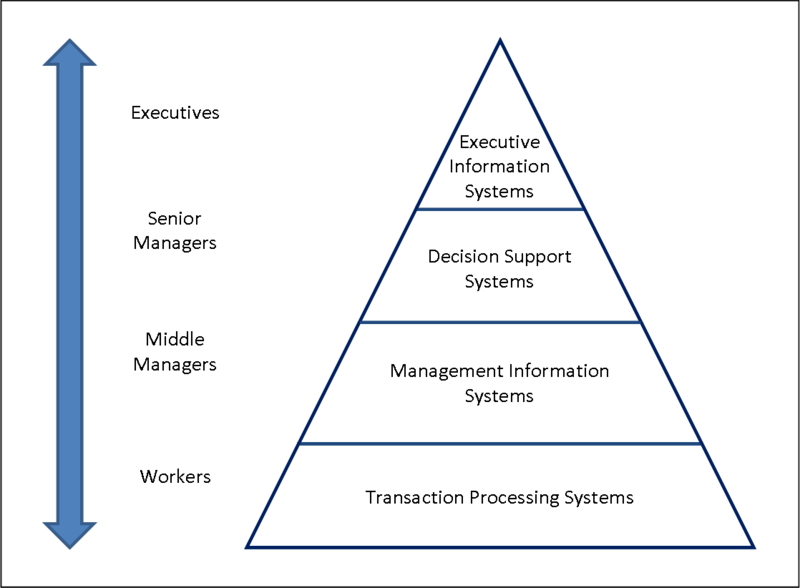
information system
combination of information, resources, activities and people that support tasks in an organization; group of components that interact to produce information
complexity
Complexity characterizes the behavior of a system or model whose components interact in multiple ways and follow local rules, leading to non-linearity, randomness, collective dynamics, hierarchy, and emergence.

synchronization
thumb|Synchronized dancers
robustness
Robustness is the property of being strong and healthy in constitution. When it is transposed into a system, it refers to the ability of tolerating perturbations that might affect the system's functional body. In the same line robustness can be defined as "the ability of a system to resist change without adapting its initial stable configuration". If the probability distributions of uncertain parameters are known, the probability of instability can be estimated, leading to the concept of stochastic robustness.
modularity
Modularity is the degree to which a system's components may be separated and recombined, often with the benefit of flexibility and variety in use. The concept of modularity is used primarily to reduce complexity by breaking a system into varying degrees of interdependence and independence across and "hide the complexity of each part behind an abstraction and interface". However, the concept of modularity can be extended to multiple disciplines, each with their own nuances. Despite these nuances, consistent themes concerning modular systems can be identified.
digital ecosystem
socio-technical system
Systems art
art influenced by cybernetics and systems theory
conceptual system
system composed of non-physical objects, i.e. ideas or concepts