Category
page 1Taxa described in 1791
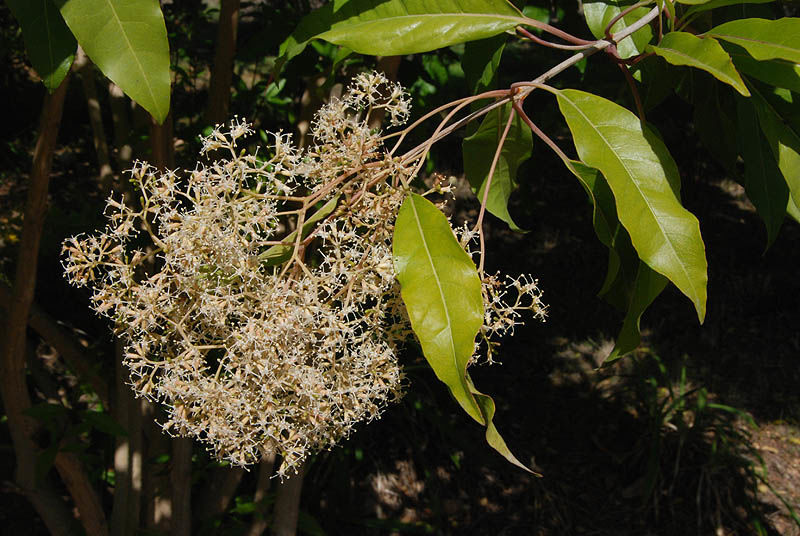
Nuxia
Nuxia is a genus of plants in the family Stilbaceae described as a genus in 1791. It was formerly placed in the Loganiaceae and Buddlejaceae families.
.JPG)
Physcia
Physcia is a genus of lichen-forming fungi in the family Physciaceae. The widely distributed genus contains about 80 species. The genus is cosmopolitan, and has been extensively studied in various regions in the past several decades, with significant biodiversity in South America identified as a central diversity hotspot. Physcia species are foliose, lichens that grow with a loose to close appressed habit. Their upper surface is typically whitish, pale greenish, green-grey, or dark grey in colour. The thallus colour remains relatively unchanged when moistened. Physcia lichens typically grow on

Lobaria
Lobaria is a genus of foliose lichens, formerly classified in the family Lobariaceae, but now placed in the Peltigeraceae. They are commonly known as "lung wort" or "lungmoss" as their physical shape somewhat resembles a lung, and their ecological niche is similar to that of moss.

Erucaria
Erucaria is a genus of flowering plants of the family Brassicaceae, commonly known as Pink-mustard. Species are native to southern and eastern Mediterranean region, Arabian Peninsula, and Iran.
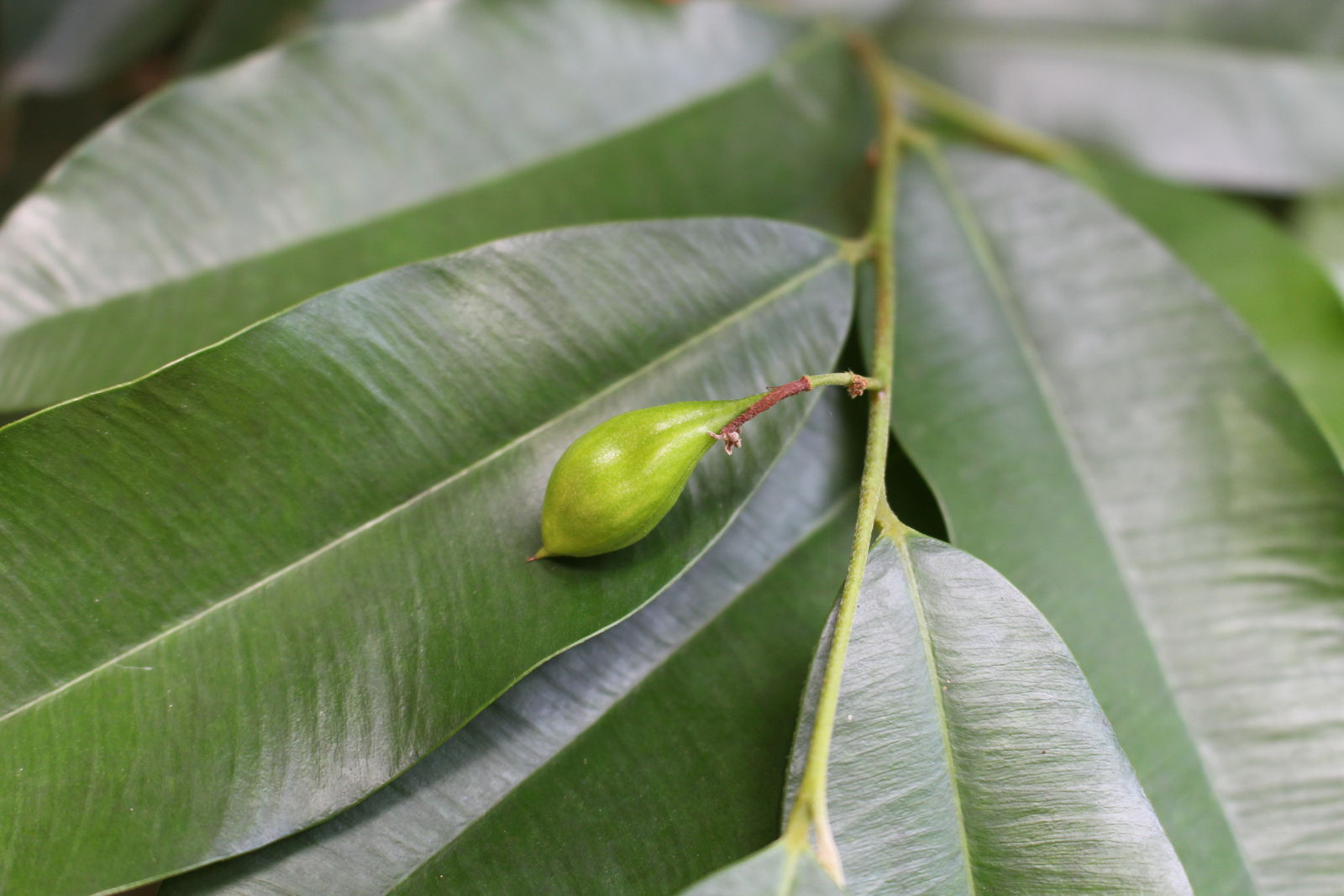
Gyrinops
Gyrinops is a genus of nine species of trees, called lign aloes or lign-aloes trees, in the family Thymelaeaceae. They are native to Southeast Asia, the Indian subcontinent, and New Guinea.
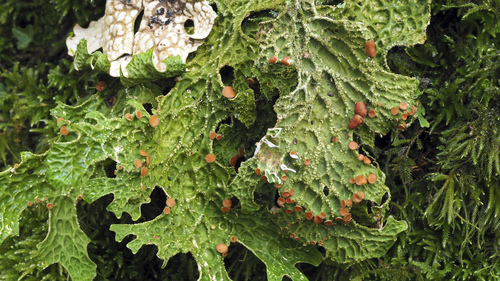
Sticta
Sticta is a genus of lichens in the family Peltigeraceae. The genus has a widespread distribution, especially in tropical areas, and includes about 114 species. These lichens have a leafy appearance, and are colored brown or black. Sticta species with cyanobacteria as photobionts can fix nitrogen from the atmosphere, and due to their relative abundance and high turnover, they contribute appreciably to the rainforest ecosystem. They are commonly called spotted felt lichens.
Cornicularia
Cornicularia is a genus of lichenised ascomycetes in the large family Parmeliaceae. It is a monotypic genus, with a single currently accepted species, the saxicolous lichen Cornicularia normoerica, and is sometimes referred to as the bootstrap lichen. The lichen forms small, dark tufts rarely exceeding 2 cm in height that are anchored so firmly to rocks, with narrow, stiff branches topped by shiny black reproductive discs. It grows on high-elevation, sun-exposed rocks and boulders, where its compact, shrub-like appearance and glossy black-brown surface make it distinctive among mountain l