Category
page 1Taxa described in 1824

Accipitridae
The Accipitridae () is one of the four families within the order Accipitriformes, and is a family of small to large birds of prey with strongly hooked bills and variable morphology based on diet. They feed on a range of prey items from insects to medium-sized mammals, with a number feeding on carrion and a few feeding on fruit. The Accipitridae have a cosmopolitan distribution, being found on all the world's continents (except Antarctica) and a number of oceanic island groups. Some species are migratory. The family contains 256 species which are divided into 12 subfamilies and 75 genera.

Mandrillus
Mandrillus is a genus of large Old World monkeys distributed throughout central and southern Africa, consisting of two species: M. sphinx and M. leucophaeus, the mandrill and drill, respectively. Mandrillus, originally placed under the genus Papio as a type of baboon, is closely related to the genus Cercocebus. They are characterised by their large builds, elongated snouts with furrows on each side, and stub tails. Both species occupy the west central region of Africa and live primarily on the ground. They are frugivores, consuming both meat and plants, with a preference for plants. M. sphinx
Stipeae
The Stipeae are a tribe of grasses within the subfamily Pooidae, with up to 600 described species.

Dermatocarpon
Dermatocarpon is a genus of lichens in the family Verrucariaceae. Members of the genus are commonly called stippleback lichens because they have fruiting structures called perithecia that are flask-shaped structures embedded in the nonfruiting body (thallus), with a hole in the top to release spores, causing an appearance of being covered with small black dots. Its species are told apart chiefly by spore size, the colour and texture of the lower surface, and whether the gives a bloom.
Oidium
genus of fungi

Desmoncus
Desmoncus is a genus of mostly climbing, spiny palms native to the Neotropics. The genus extends from Mexico in the north to Brazil and Bolivia in the south, with two species present in the southeastern Caribbean (Trinidad and the Windward Islands).
==Description==
Desmoncus is best known as a genus of climbing palms. Twenty-three of the 24 species recognised by Andrew Henderson in his revision of the genus are climbers; only one, D. stans is free-standing. Almost all Neotropical climbing palms belong to Desmoncus—the one exception being Chamaedorea elatior.
Daphnopsis
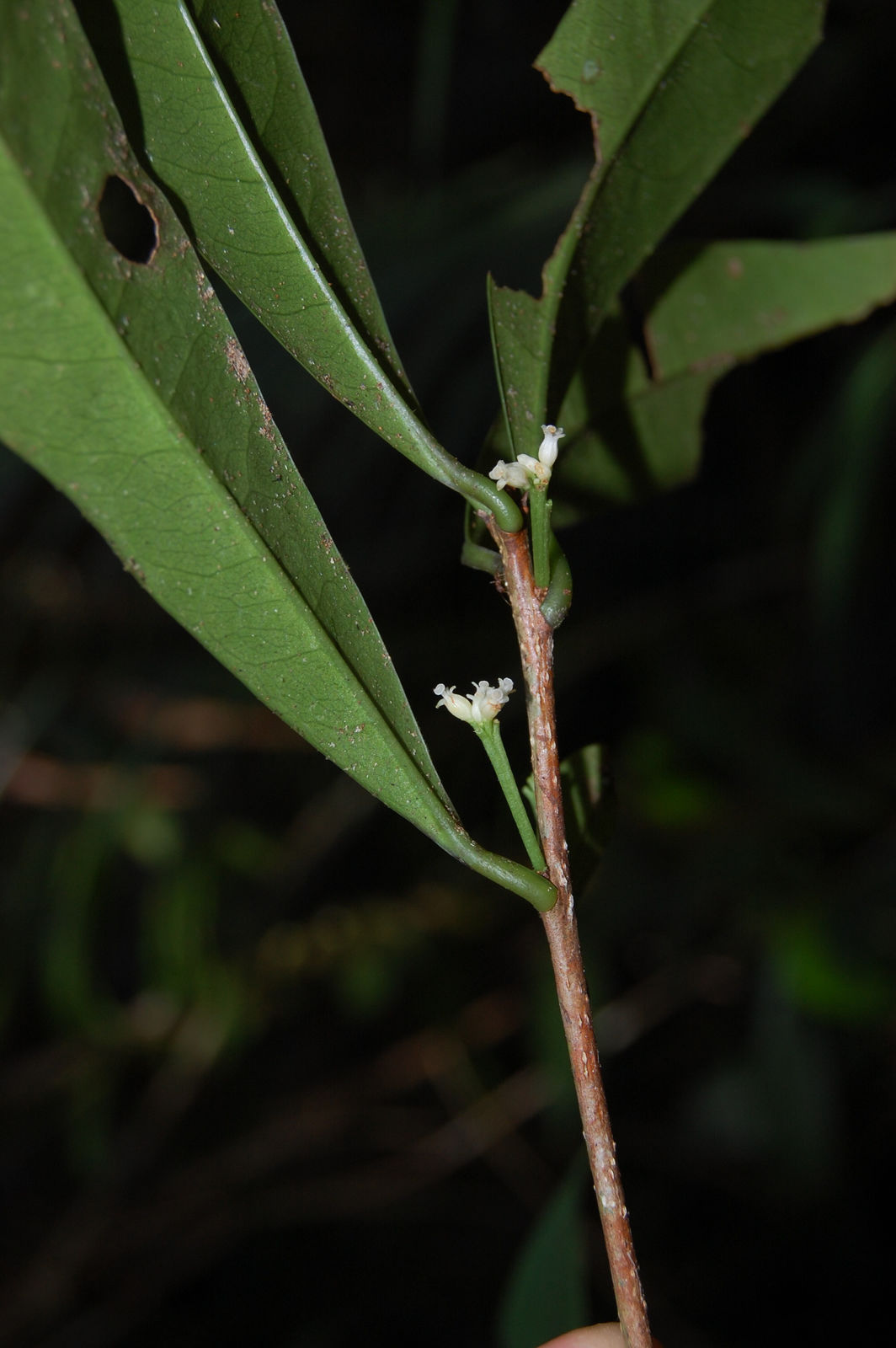
Daphnopsis is a plant genus in the family Thymelaeaceae. It includes 72 species native to the Neotropics. They are shrubs and small trees with tubular or bell-shaped flowers. Individuals are dioecious, with male and female flowers produced on separate trees.
Helminthostachys
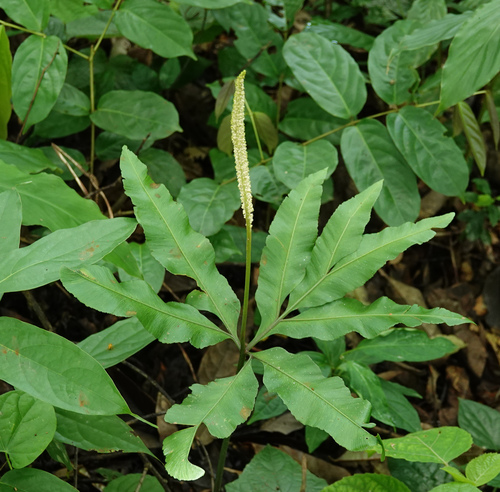
Helminthostachys is a fern genus in the Ophioglossaceae (adder's tongue) family. It is widespread throughout southeast Asia and Australia.
Ceutorhynchus
Ceutorhynchus is a genus of true weevils in the tribe Ceutorhynchini. There are at least 400 described species in Ceutorhynchus.
Barbicornis
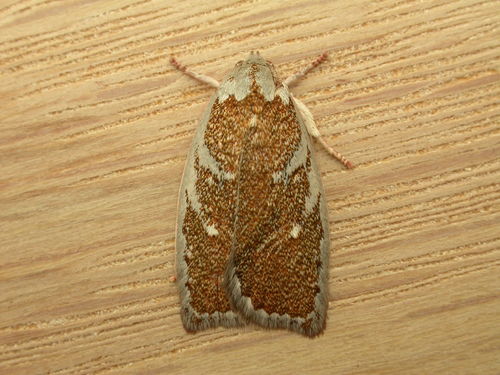
Barbicornis is a monotypic butterfly genus of the family Riodinidae with its single species Barbicornis basilis present in Paraguay, Brazil and Argentina.
Euchaetis
genus of flowering plants
Schoenobiblus
Schoenobiblus is a genus of flowering plants belonging to the family Thymelaeaceae.
Trypetheliaceae
The Trypetheliaceae are a family of mainly lichen-forming fungi in the order Trypetheliales. The family consists almost exclusively of corticolous (bark-dwelling), crustose lichens with an almost strictly tropical distribution.
Anastrus
Anastrus is a genus of skippers in the family Hesperiidae.
Sclerophyton
Sclerophyton is a genus of lichen-forming fungi in the family Opegraphaceae. It has about 15 species. The genus was circumscribed by German lichenologist Franz Gerhard Eschweiler in 1824, with Sclerophyton elegans assigned as the type species.
Astrothelium
Astrothelium is a large genus of corticolous (bark-dwelling) lichens in the family Trypetheliaceae. The genus is characterized by a corticate thallus and diverse ascomata structures, which can be simple, aggregated, or forming . Astrothelium is also notable for the walls of its ascomata, the so-called '''' (i.e., tightly interwoven) arrangement of cells in these walls, and various forms of , transparent spores.
Diorygma
Diorygma is a genus of lichen-forming fungi in the family Graphidaceae. The genus was circumscribed by Franz Gerhard Eschweiler in 1824. Species of the genus are widely distributed in tropical and subtropical regions of the world. These lichens form paint-like crusts on bark and rock that range from chalky white to light green, with elongated, pencil-like slits containing their spores that may flex and branch across the surface. The genus was established in 1824 for tropical script lichens with large, many-celled spores, but molecular studies in the 2000s and 2010s expanded it significantly by
Leiorreuma
Leiorreuma is a genus of script lichens in the family Graphidaceae. It has 18 species. The genus was circumscribed by Franz Gerhard Eschweiler in 1824, with Leiorreuma hepaticum assigned as the type species.
Andrzeiowskia
Andrzeiowskia is a genus of flowering plants belonging to the family Brassicaceae. It includes a single species, Andrzeiowskia cardamine, an annual native to Bulgaria, European and Asiatic Turkey, Cyprus, Lebanon, Syria, and the northern Caucasus.