Category
page 1Taxa described in 1846
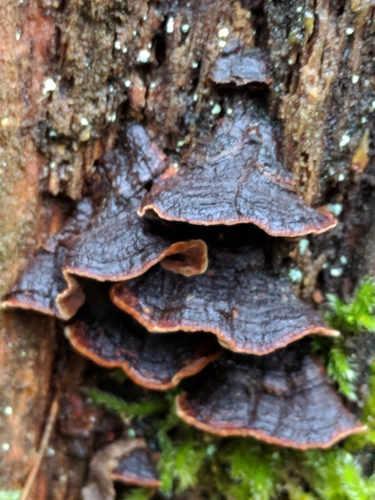
Hymenochaete
Hymenochaete is a genus of fungi in the family Hymenochaetaceae. The genus has a widespread distribution, especially in tropical regions.
Hydnotrya
Hydnotrya is a genus of ascomycete fungi related to the false morels of the genus Gyromitra. There are about 15 species in the genus. A molecular phylogenetic study recovered a species that was described but neglected for 50 years, Hydnotrya bailii.
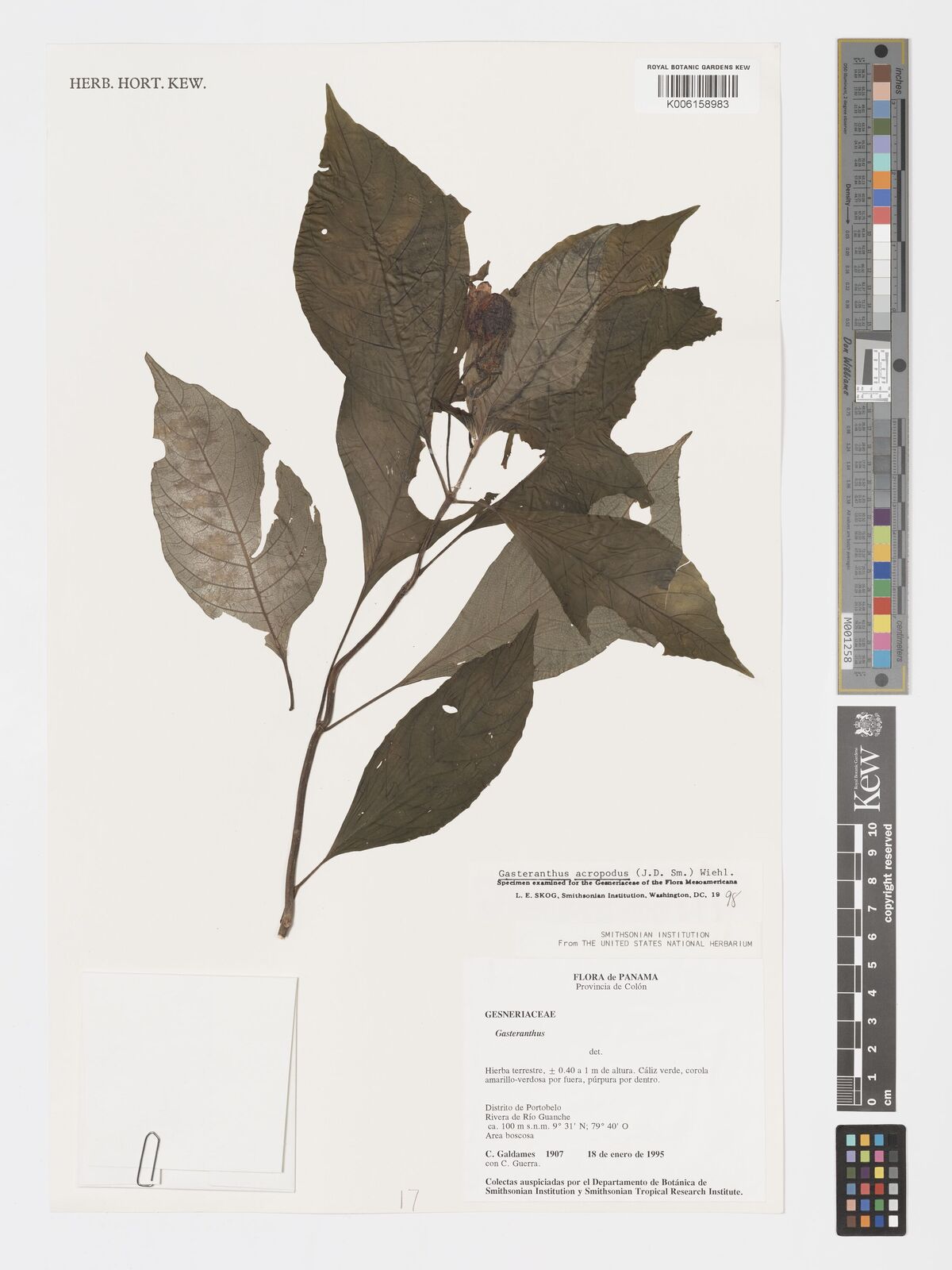
Gasteranthus
Gasteranthus is a genus of 35 species of herbs and soft-stemmed subshrubs in the flowering plant family Gesneriaceae. The species occur in Central America and South America, from southernmost Mexico to Bolivia. Numerous species are threatened with extinction, mainly due to deforestation. This is due to two reasons: For one thing, Gasteranthus species are native to countries in which destruction of primary forest runs rampant; also, these plants do not distribute well and therefore endemism is very frequent, for example on isolated mountain ranges.
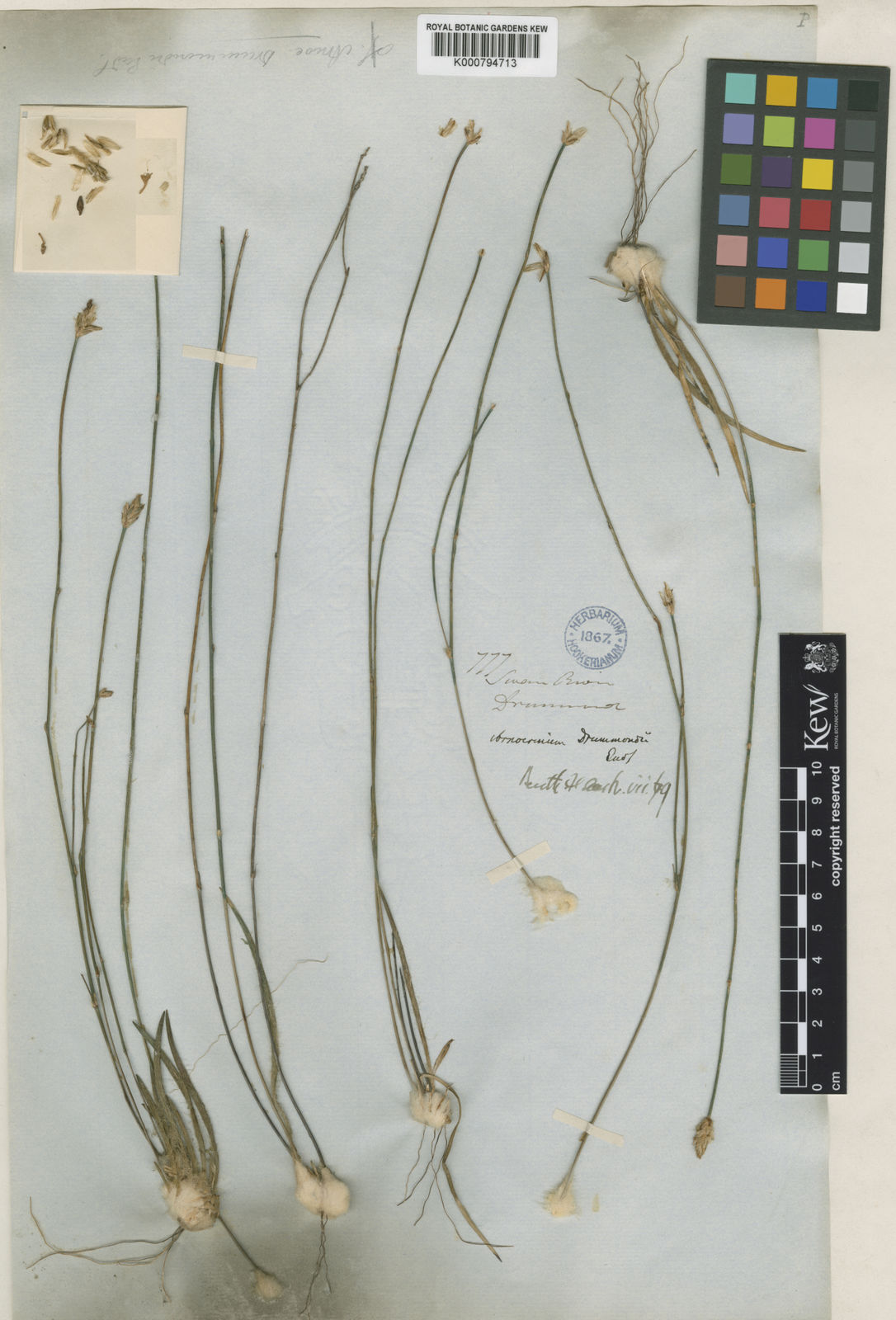
Arnocrinum
Arnocrinum is a genus of herbs in the family Asphodelaceae, first described as a genus in 1846. The entire genus is endemic to the state of Western Australia.
.jpg)
Bacidia
Bacidia is a genus of lichen-forming fungi in the family Ramalinaceae. These lichens are characterised by their crustose growth form, distinctive club-shaped reproductive structures called apothecia that contain long, needle-like spores, and their symbiotic partnership with green algae. Bacidia species typically grow on various substrates including tree bark, rock surfaces, and occasionally soil, and are distinguished from related genera by their specific spore characteristics and internal structures.
Buellia
Buellia is a genus of mostly lichen-forming fungi in the family Caliciaceae. The fungi are usually part of a crustose lichen. In this case, the lichen species is given the same name as the fungus. But members may also grow as parasites on lichens (lichenicolous). The algae in the lichen (the photobiont partner) is always a member of the genus Trebouxia.
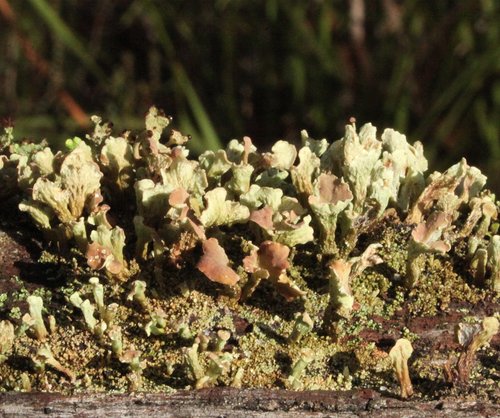
Thysanothecium
Thysanothecium is a genus of three species of lichenized fungi in the family Cladoniaceae. The genus was circumscribed by Camille Montagne and Miles Joseph Berkeley in 1846. The original specimens of the type species, T. hookeri, were collected from the area of Swan River (Australia) by James Drummond, who sent them for to William Jackson Hooker for further analysis.
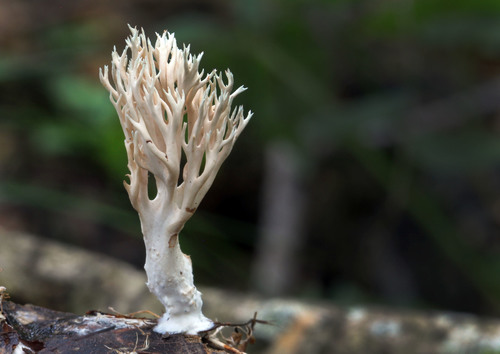
Lachnocladium
Lachnocladium is a genus of clavarioid fungi in the family Peniophoraceae . Based on 2025 data, the genus includes 39 species.
Championia
Championia is a genus of flowering plants belonging to the family Gesneriaceae. It contains a single species, Championia reticulata, a subshrub native to the humid lowland and montane rain forests of southwestern and central Sri Lanka.
Macrocephalon
REDIRECT Maleo
Solanderia
Solanderia is the sole genus of hydrozoans in the monotypic family Solanderiidae. They are commonly known as tree hydroids or sea fan hydroids.
Bilimbia
Bilimbia is a genus of lichen-forming fungi in the family Ramalinaceae. The genus forms crustose (crust-like) lichens that appear as whitish-grey to grey patches on calcium-rich soils or mosses growing over alkaline surfaces. The genus is distinguished by its sessile apothecia (fruiting bodies) that range from light ochre to black, eight-spored asci, and colourless spores with multiple cross-walls. Molecular phylogenetics studies have confirmed that Bilimbia forms a well-supported monophyletic group within the Ramalinaceae, and as of 2025, it contains 24 accepted species.
Troticus
Troticus is a genus of parasitoid wasps in the family Braconidae.
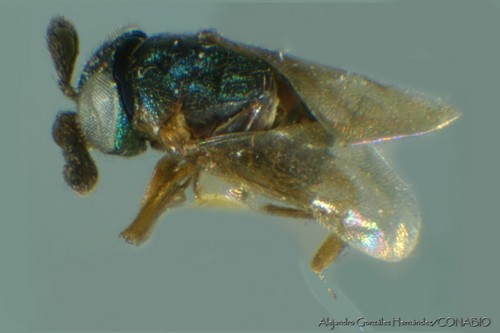
Aenasius
Aenacius is a genus of parasitic wasps in the family Encyrtidae. They are parasitoids of mealybug nymphs.
Combea
Combea is a genus of lichens in the family Opegraphaceae. It has two species. The genus was circumscribed by Italian botanist Giuseppe De Notaris in 1846.
Schizostoma
Schizostoma is a genus of fungus in the family Agaricaceae. It was first described in 1846 by Christian Gottfried Ehrenberg The type species is Schizostoma laceratum
Biatorella
Biatorella is a genus of lichen-forming fungi in the family Biatorellaceae.
Acroscyphus
Acroscyphus is a fungal genus in the family Caliciaceae. This is a monospecific genus, containing the single fruticose lichen species Acroscyphus sphaerophoroides. It is found in various locations in the cordilleras of western North America, including Mexico and British Columbia, as well as high-elevation, exposed regions of Asia (China, Japan), South Africa, Peru, and Patagonia. Commonly known as '''crab's eye lichen''', it forms distinctive cushion-like growths with finger-shaped branches and has a yellow to orange interior. The species typically grows on exposed rocks or dead wood in harsh,