Category
page 1Taxa described in 1848
Herona
Herona is a genus of butterflies in the family Nymphalidae.
Euripus
genus of insects
Anaptychia
Anaptychia is a genus of lichen-forming fungi in the family Physciaceae. Anaptychia species are foliose (leafy) to fruticose (bushy) lichens. They have brown, thin-walled spores with a single septum, and a upper .

Colpophyllia
Colpophyllia is a genus of stony corals in the family Mussidae. It is monotypic with a single species, Colpophyllia natans, commonly known as boulder brain coral or large-grooved brain coral. It inhabits the slopes and tops of reefs, to a maximum depth of . It is characterised by large, domed colonies, which may be up to across, and by the meandering network of ridges and valleys on its surface. The ridges are usually brown with a single groove, and the valleys may be tan, green, or white and are uniform in width, typically . The polyps only extend their tentacles at night.

Dicranolepis
Dicranolepis is a genus of flowering plants belonging to the family Thymelaeaceae.
Dossinia
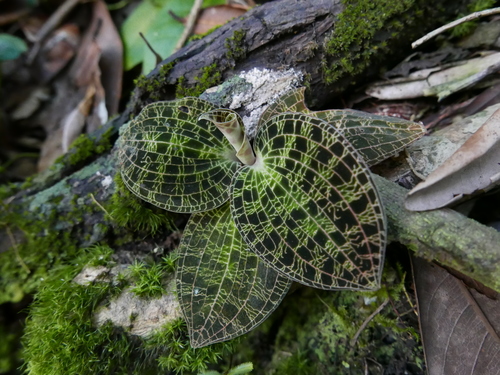
Dossinia is a monotypic genus of orchids containing only the species Dossinia marmorata. It is endemic to Borneo.
Tetramesa
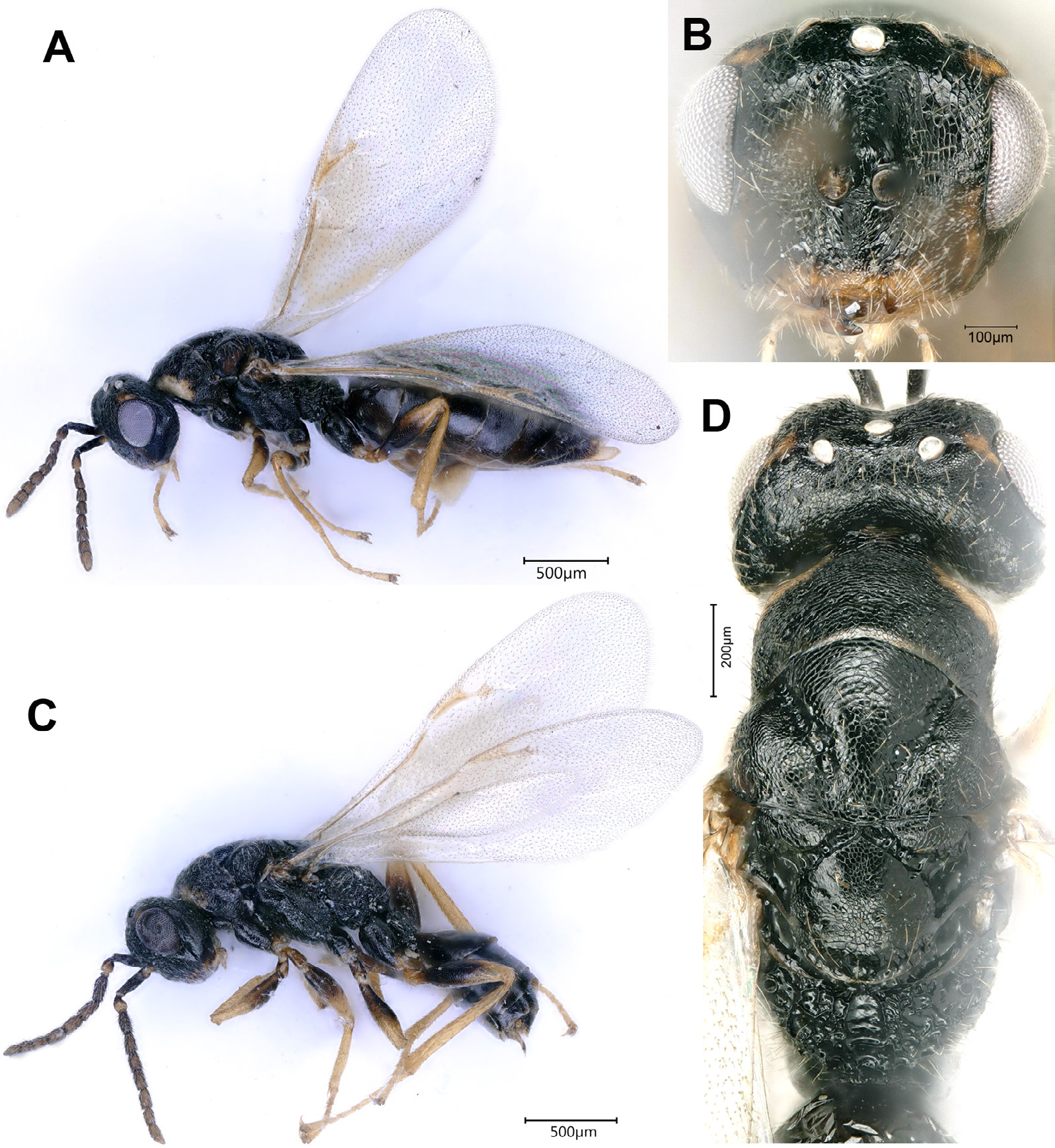
thumb | right | Figure 1.
Tetramesa amica Lotfalizadeh, sp. nov. A female habitus in lateral view B head of female in frontal view C female antenna D male antenna.
Tetramesa is a genus of phytophagous wasps. The genus has over 200 described species , and recently the genera Aiolomorphus and Cathilaria have also been synonymized within Tetramesa in light of phylogenomic evidence. They are generally species-specific gall inducers and can be used as biological control for invasive grasses. Adults feed on nectar.
Kelleria
Kelleria is a genus of miniature shrubs in the family Thymelaeaceae, found in southeastern Australia, New Zealand, New Guinea, and Borneo. The centre of species biodiversity is the Lammermoor Range in Central Otago, NZ.
Osmundastrum
Osmundastrum is genus of leptosporangiate ferns in the family Osmundaceae with one living species, Osmundastrum cinnamomeum, the cinnamon fern. The modern species is native to the Americas and Asia, growing in swamps, bogs and moist woodlands. Fossil records of the genus extend into the Triassic.
Clara
genus of plants
Sphenotrochus
Sphenotrochus is a genus of stony corals belonging to the family Turbinoliidae, and was first described in 1948 by Henri Milne-Edwards and Jules Haime.
Anoplocephala
Anoplocephala is a genus of tapeworms in the family Anoplocephalidae named in 1848 by Émile Blanchard. The type species is Anoplocephala perfoliata, which was originally described as Taenia perfoliata. Anoplocephala is a cestode, belonging to the Cestoda class, meaning that it is a Flatworm parasite. They can be found in fifty-six percent of the wild rhino population in Assam, India.
Aphalara
Aphalara is a genus of jumping plant lice (psyllid), typical of the family Aphalaridae and tribe Aphalarini.
Euphyllura
Euphyllura is a genus of mostly Palaearctic plant lice belonging to the Liviidae and typical of the subfamily Euphyllurinae; the genus was erected by Arnold Förster in 1848. The distribution of species is mostly in southern Europe and Asia, with records from southern Africa and western USA.
Polposipus
Polposipus herculeanus, the Frégate Island giant tenebrionid beetle or Frégate beetle, is a flightless species of beetle in family Tenebrionidae. It is the only species in the genus Polposipus. It is endemic to Frégate Island in the Seychelles. It grows to be about long and has a hard, rounded abdomen covered with tubercles. There appears to be no sexual dimorphism. It is largely arboreal, sheltering under the bark of trees, beneath the crooks of branches, and within bushes during the day. It is believed to be nocturnal, descending to the forest floor at night, though never travelling far. Thi
Lydia
genus of crab