Category
page 1Taxa described in 1856
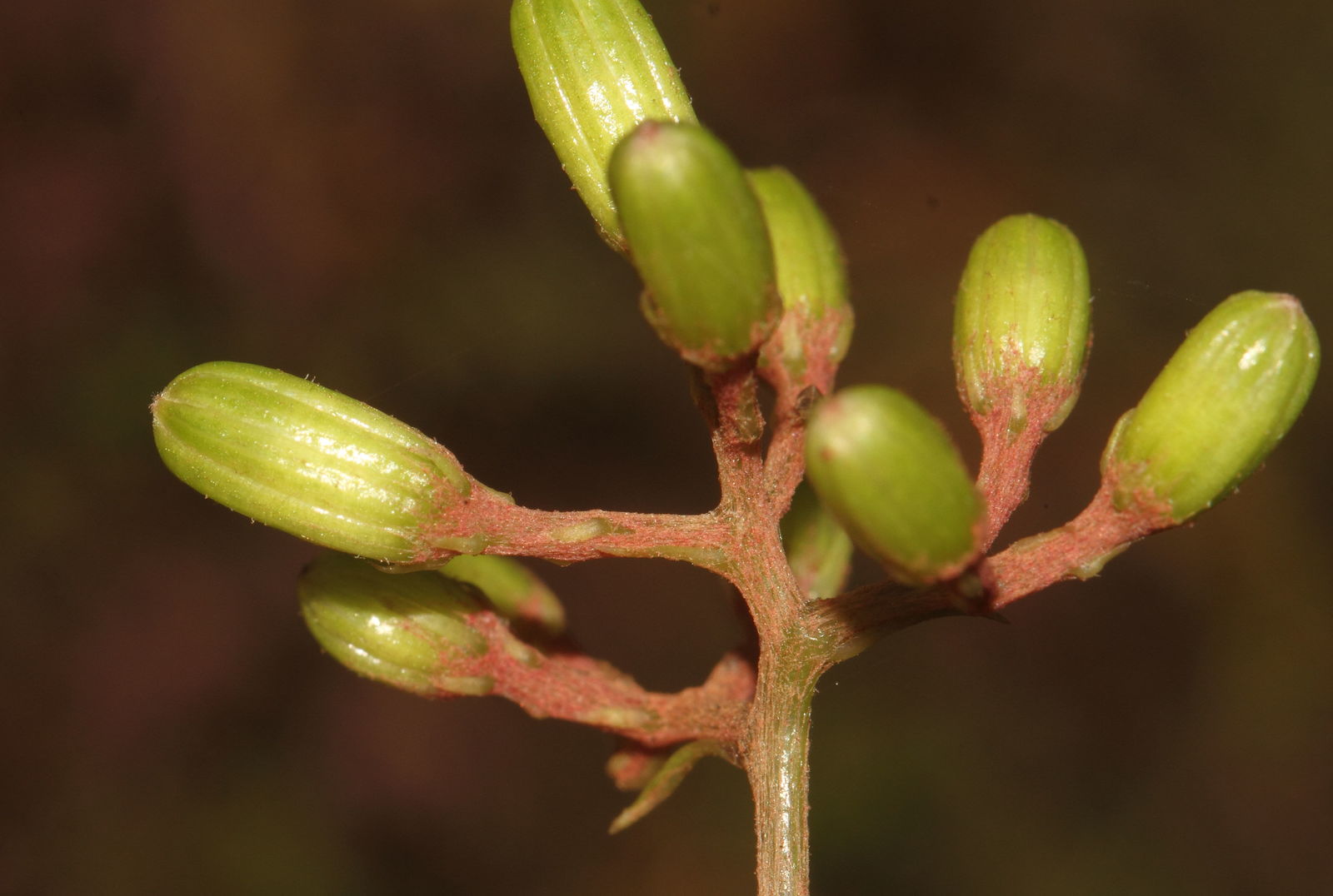
Cissampelopsis
Cissampelopsis is a genus of flowering plants in the daisy family, native to India, China, and Southeast Asia.
Cirrhimuraena
Cirrhimuraena is a genus of eels in the snake eel family Ophichthidae.
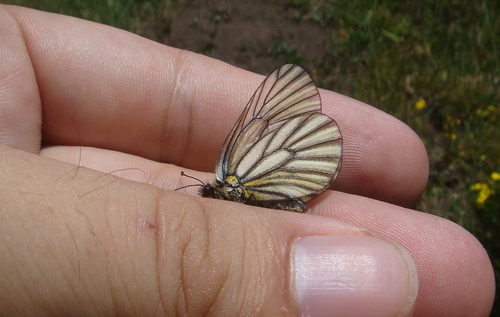
Mesapia peloria
Mesapia is a genus of butterflies in the family Pieridae. It contains only one species, Mesapia peloria, the Tibet blackvein, which is found in India, Nepal and China. It is a mid-sized to large species.
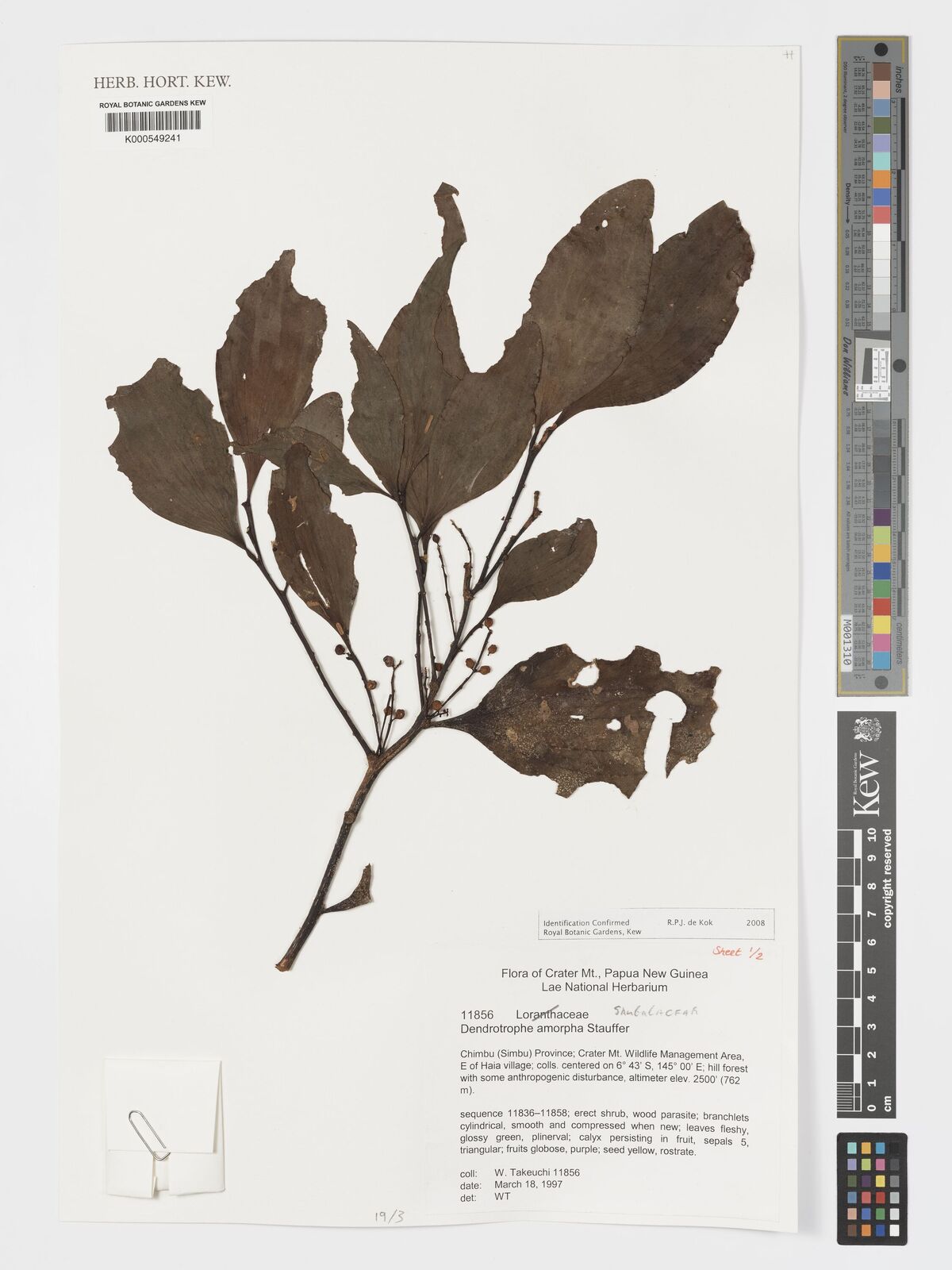
Dendrotrophe
Dendrotrophe is a genus of flowering plants belonging to the family Santalaceae.
Its native range is Southern China, Indochina, Malesia, New Guinea, and Northern Queensland.
Loxechinus albus
Loxechinus albus is an echinoderm of the family Parechinidae, native to coastal southern South America, ranging from Ecuador, along the entire coasts of Peru and Chile, to Argentina, as well as the Falkland Islands. It is the only species in the genus Loxechinus.
It is known as the Chilean sea urchin or red sea urchin, but the latter name is typically used for the North Pacific Mesocentrotus franciscanus and it is not the only species of sea urchin in Chile (although it is the most common and widespread large sea urchins in that country). L. albus is found on rocky reefs and shores in the inte
Nephtheis fascicularis
Nephtheis fascicularis, commonly called the lollipop tunicate, lollipop coral, or blue palm coral, is a species of tunicate that is native to the shallow reefs of Indonesia. It is the only species in its genus Nephtheis. They are not photosynthetic, and live on plankton and small organic particles obtained from the water currents. The branched stems are formed by tiny polyps called zooids. Despite their name and appearance, they and other sea squirts are unrelated to true corals.
Podospora
Podospora is a genus of fungi in the family Podosporaceae. Fossils of Podospora have been reported from 12 million year old rocks from central England.
Tomasellia
Tomasellia is a genus of lichen-forming fungi in the family Naetrocymbaceae. It comprises seven species of corticolous (bark-dwelling), crustose lichens.
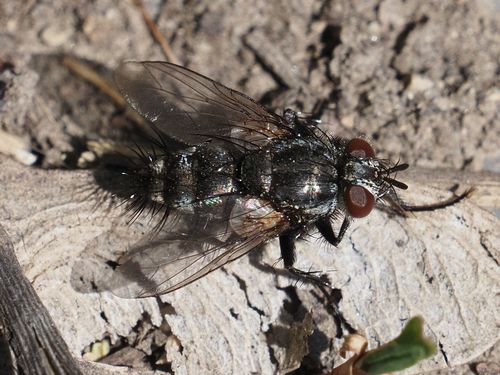
Cyrtophleba
Cyrtophloeba is a genus of flies in the family Tachinidae.
Piccolia
Piccolia is a small genus of crustose lichens in the class Lecanoromycetes. First circumscribed by Italian lichenologist Abramo Bartolommeo Massalongo in 1864, it contains ten species. Due to a lack of molecular data, it has not been assigned to an order or family.
Thyrea
genus of fungi
Spilonema
Spilonema is a genus of lichen-forming fungi in the family Coccocarpiaceae. These lichens form small, dark tufts of thread-like filaments that grow on rocks and are found in various regions from tropical to arctic climates. They partner with nitrogen-fixing cyanobacteria, which gives them their distinctive blue-green colouration and allows them to survive in nutrient-poor environments. The genus was established in 1856 by the French botanist Jean-Baptiste Édouard Bornet, who distinguished these species from similar-looking lichens based on their unique internal structure.
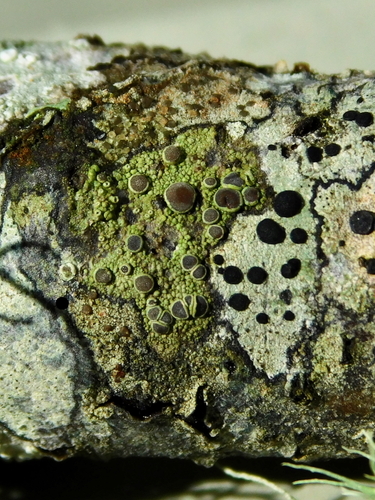
Maronea
genus of fungi
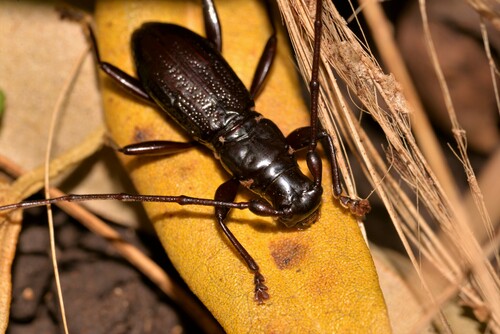
Blaxotes
Blaxotes wollastoni is a species of beetle in the family Cerambycidae, and the only species in the genus Blaxotes. It was described by White in 1856.
Helcita
Helcita is a small genus of planthoppers from the family Derbidae, tribe Zoraidini, currently (2024) with only 4 species. All of the species are uncommon. They have rather restricted and widely separated distribution ranges. Two species are found in tropical parts of Africa, one in Sri Lanka and southern India, and one in Taiwan and some neighbouring islands of Japan. The species of Helcita can be distinguished from other similar genera by a combination of features related to the venation of the forewings and the shape of the head. On the forewing, the media vein has 6 branches with the 3rd br