Category
page 1Taxa described in 1858

Sapsucker
The sapsuckers are species of North American woodpeckers in the genus Sphyrapicus.

Diphyllobothrium
Diphyllobothrium is a genus of tapeworms which can cause diphyllobothriasis in humans through consumption of raw or undercooked fish. The principal species causing diphyllobothriasis is Diphyllobothrium latum, commonly known as the broad or fish tapeworm, or broad fish tapeworm. D. latum is a pseudophyllid cestode that infects fish and mammals. D. latum is native to Scandinavia, western Russia, and the Baltics, though it is now also present in North America, especially the Pacific Northwest. In Far East Russia, D. klebanovskii, having Pacific salmon as its second intermediate ho
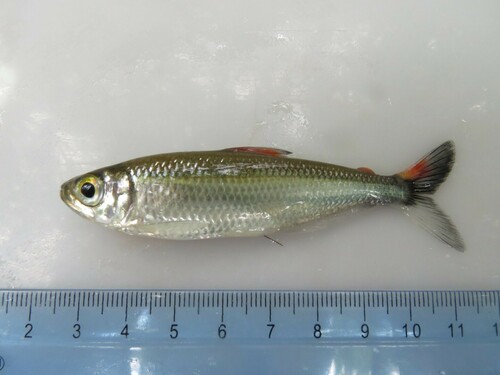
Bryconops
Bryconops is a genus of freshwater ray-finned fish in the family Iguanodectidae from South America. It consists of small fish, all under half-a-foot long, with slender bodies and silvery scales, though there is some mild color variation. Several species can be identified by way of a humeral patch (a mark near the pectoral fin), and others have a reddish ocellus, or eyespot, on one or both lobes of the dorsal fin.
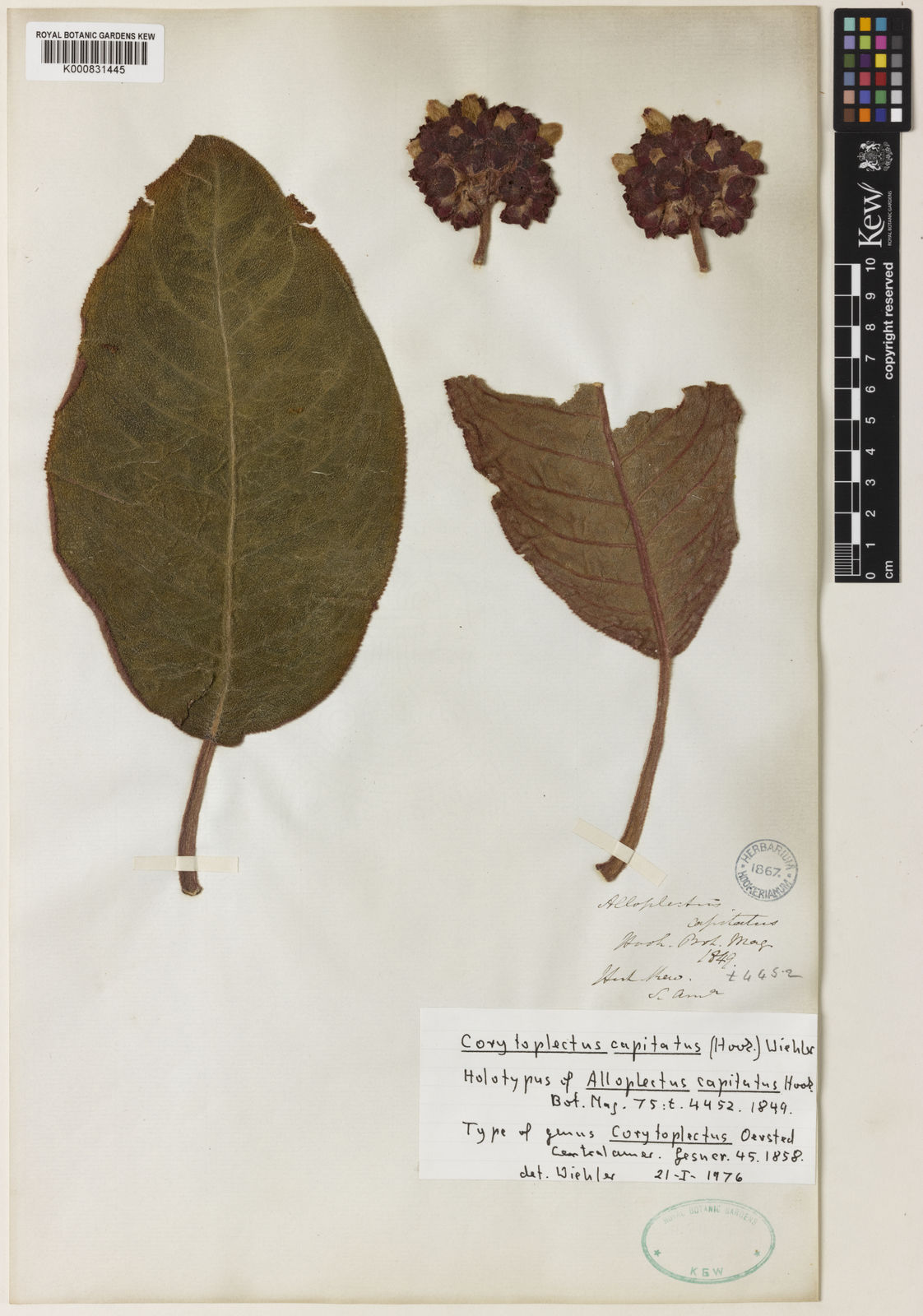
Corytoplectus
Corytoplectus is a genus in the plant family Gesneriaceae. Plants from Corytoplectus are found in Bolivia, Brazil North, Colombia, Ecuador, Guyana, southwestern Mexico, Peru, Venezuela, in the cloud-forests of the high cordillera. The genus contains c. 12 species. The genus differs from the closely related Alloplectus in having an erect umbellate inflorescence and berries. The type species is C. capitatus.

Pentace
Pentace is a genus of flowering plants in the family Malvaceae sensu lato or Tiliaceae. It includes 30 species native to tropical Asia, ranging from Bangladesh through Indochina and Malesia to the Philippines and the Lesser Sunda Islands.
Aphroceras
Aphroceras is a genus of calcareous sponges belonging to the family Grantiidae.
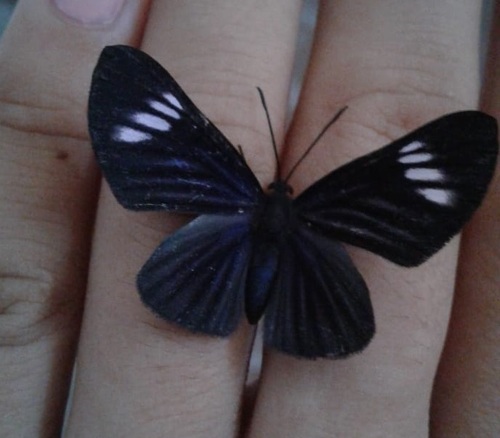
Pheles
Pheles is a genus in the butterfly family Riodinidae present only in the Neotropical realm.
Callispa
Callispa is a genus of tortoise beetles (insects in the subfamily Cassidinae).
Hymenolepis
genus of worms
Biancaea
Biancaea is a genus of flowering plants in the family Fabaceae. It includes seven species, which range from Yemen to south Asia, Indochina, Malesia, China, Korea, and Japan. It belongs to the subfamily Caesalpinioideae and the tribe Caesalpinieae.
Peccania
Peccania is a genus of lichen-forming fungi in the family Phylliscaceae. These lichens are small and form thin, crusty patches or tiny scale-like structures that are tightly attached to rock surfaces. They partner with blue-green bacteria instead of the green algae found in most other lichens, which helps them survive in harsh, drought-prone environments and quickly resume photosynthesis after wetting. Peccania species grow exclusively on rocks, favouring well-lit locations on both limestone and acidic substrates in arid and semi-arid regions, though they can also occupy locally dry spots in o
Pyrenopsis
Pyrenopsis is a genus of lichen-forming fungi in the family Porocyphaceae. The lichens grow on constantly wet, shaded rock faces where they form gelatinous crusts that soften and show reddish tints when moistened. They reproduce through small, buried fruiting bodies that open as pore-like structures at the surface.
Placidiopsis
Placidiopsis is a genus of lichens in the family Verrucariaceae. The genus was circumscribed by Italian naturalist Francesco Beltramini de Casati in 1858, with Placidiopsis grappae assigned as the type species.
Varicellaria
Varicellaria is a genus of crustose lichens. It is the only genus in the family Varicellariaceae. The genus contains 12 recognized species found worldwide. These lichens typically form pale bluish-grey or whitish-grey crusts on tree bark or rocks, and they produce a lichen product called lecanoric acid. Genetic studies have helped clarify the boundaries between species in this group, showing that where they grow (bark versus rock) and certain physical features are important for telling them apart.
Sarcopyrenia
Sarcopyrenia is a genus of lichenicolous (lichen-dwelling) fungi. It has 11 species. It is the only genus in Sarcopyreniaceae, a family in the order Verrucariales. Sarcopyreniaceae is one of the few families composed entirely of lichenicolous fungi. These tiny fungi produce small, black, flask-shaped fruiting bodies (perithecia) typically less than half a millimetre across, containing extremely narrow, thread-like ascospores. While they initially grow on crustose lichens, their fruiting bodies often outlast their hosts and end up sitting on bare rock, making their exact relationship with liche
Trachysphaera
Trachysphaera is a genus of dwarf pill millipedes in the order Glomerida. Just over 30 species are known, making it the third most species-rich genus of Glomerida. Trachysphaera species are patchily distributed throughout Europe and western Asia, extending from Spain to Caucasia. Members of this genus are tiny, with modified appearances resembling that of calcareous stones.
Pyrgillus
Pyrgillus is a genus of lichen-forming fungi in the family Pyrenulaceae. The genus was circumscribed by the Finnish lichenologist William Nylander in 1858.