Category
page 1Taxa described in 1886

Amphicyonidae
Amphicyonidae is an extinct family of terrestrial carnivorans belonging to the suborder Caniformia. They first appeared in North America in the middle Eocene (around 45 Ma), spread to Europe by the late Eocene (35 Ma), and further spread to Asia and Africa by the early Miocene (23 Ma). They had largely disappeared worldwide by the late Miocene (9-7 Ma), with the latest recorded species at the end of the Miocene in Africa. They were among the first carnivorans to evolve large body size. Amphicyonids are colloquially referred to as "bear-dogs".
Taeniidae
The Taeniidae are a family of tapeworms. It is the largest family representing the order Cyclophyllidea. It includes many species of medical and veterinary importance, as Taenia solium (pork tapeworm), Taenia saginata (beef tapeworm), and Echinococcus granulosus. The Taeniidae are parasites of mammals and many are infectious to humans.
Peyritschia
Peyritschia is a genus of Latin American plants in the grass family.
Chimastrum
Chimastrum is a butterfly genus in the family Riodinidae. They are resident in the Neotropics.
Archernis
Archernis is a genus of moths of the family Crambidae.
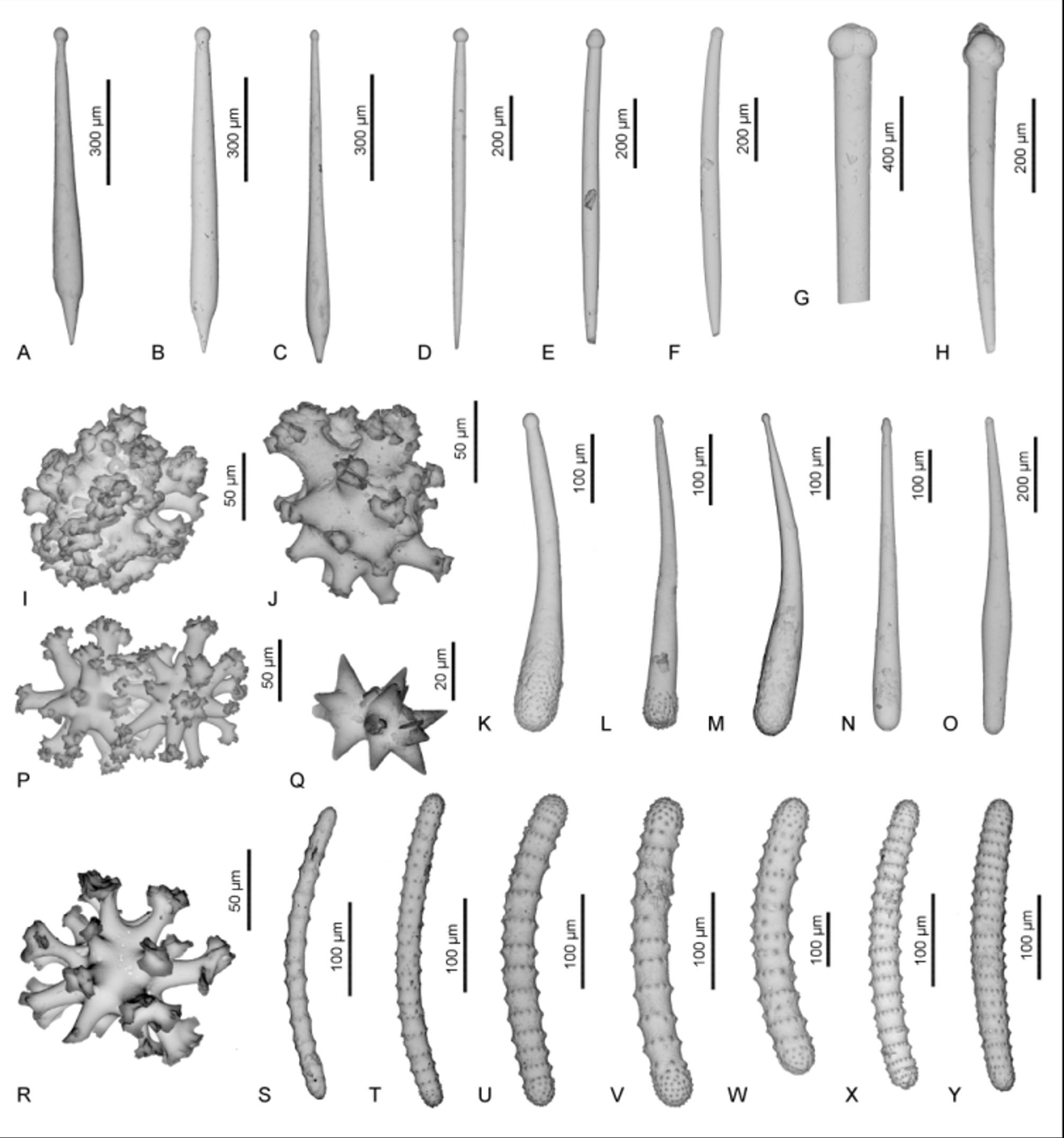
Spirastrellidae
Spirastrellidae is a family of sponges belonging to the order Clionaida.
Acleros
Acleros is an Afrotropical genus of skippers.
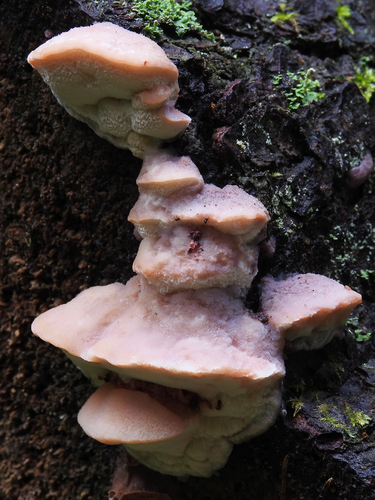
Leptoporus
Leptoporus is a genus of polypore fungi. The type species, Leptoporus mollis (or the soft bracket), is widespread throughout north temperate areas. The generic name is derived from the Ancient Greek words ("thin") and ("pore").
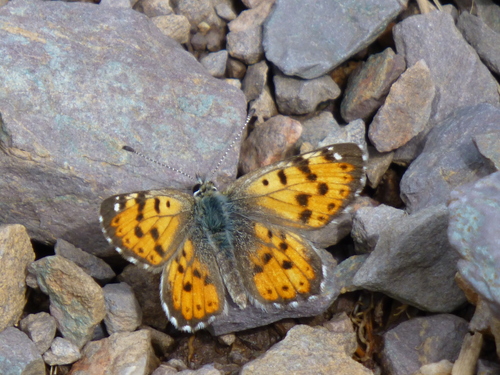
Polycaena
Polycaena is a genus of butterflies of the subfamily Nemeobiinae within the family Riodinidae. The genus was erected by Otto Staudinger in 1886. The species are found in the eastern Palearctic, mainly in the Himalayas.
Basidiobolus
Basidiobolus is a fungus genus. It was circumscribed by the mycologist in 1886, with Basidiobolus ranarum assigned as the type species.
Charltona
Charltona is a genus of moths of the family Crambidae. The genus was erected by Charles Swinhoe in 1886.
Cangetta
Cangetta is a genus of moths of the family Crambidae.
Heteropia
Heteropia is a genus of sponges in the family Heteropiidae, and was first described in 1886 by Henry John Carter. The type species by monotypy is Heteropia ramosa (Carter, 1886), which he first called Aphroceras ramosa in the very same publication.
Isma
Isma is an Indomalayan genus of grass skippers in the family Hesperiidae.
Hidari
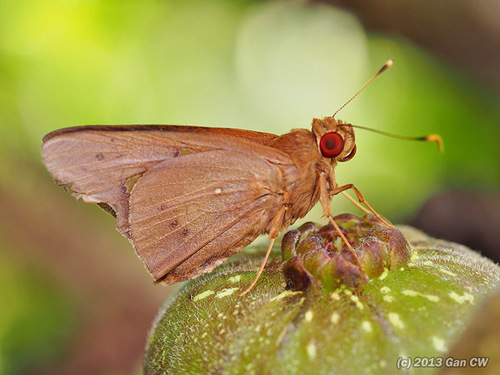
genus of insects
Pirdana
Pirdana is a genus of grass skippers in the family Hesperiidae.
Erionotini
The Erionotini are a tribe of skipper butterflies in the subfamily Hesperiinae.
Dicranophora
genus of fungi
Lotongus
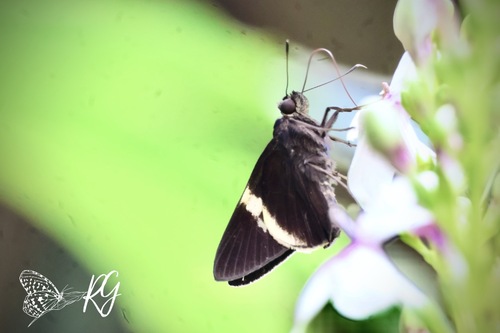
Lotongus is a genus of grass skippers in the family Hesperiidae. The genus is confined to the Indomalayan realm.
Atractiella
Atractiella is a genus of fungi in the family Hoehnelomycetaceae. The widespread genus contains seven species. Basidiocarps (fruit bodies) are minute and stilboid (pin-shaped) Microscopically they produce auricularioid (laterally septate) basidia. Molecular research, based on cladistic analysis of DNA sequences, has shown that the genus is monophyletic (a natural grouping).
Unkana (Hesperiidae)
Unkana is a genus of grass skipper in the family Hesperiidae. The genus is confined to the Indomalayan realm.
Dipoma
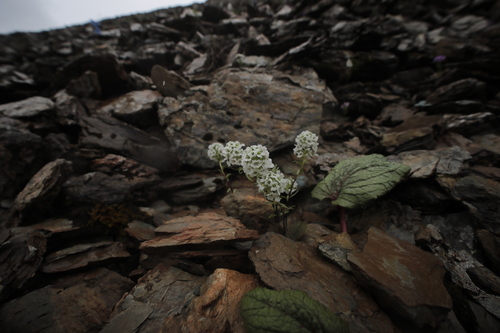
Dipoma is a genus of flowering plants belonging to the family Brassicaceae. It includes a single species, Dipoma iberideum, a perennial native to Sichuan and Yunnan provinces of south-central China.
Anisocycla
Anisocycla is a genus of flowering plants in the family Menispermaceae. It includes three species of lianas and climbing shrubs native to southeastern tropical Africa (Tanzania, Mozambique, and Zimbabwe) and Madagascar.
Anisocycla blepharosepala
Anisocycla grandidieri
Anisocycla linearis
Baorini
Baorini is a tribe in the Hesperiinae subfamily of skipper butterflies.
Autarotis
Autarotis is a genus of moths of the family Crambidae.
Zoopsis
Zoopsis is a genus of liverwort in the family Lepidoziaceae. The genus was first formally described by Carl Moritz Gottsche, Johann Bernhard Wilhelm Lindenberg and Christian Gottfried Daniel Nees von Esenbeck in 1886, based on descriptions found in Joseph Dalton Hooker's Flora Antarctica (1844), who described Zoopsis as a subgenus of Jungermannia. The type species is Zoopsis argentea.
Stigonema
Stigonema is a genus of cyanobacteria in the family Stigonemataceae. Established in 1824 and formally defined in 1886, this genus contains 68 species of filament-forming cyanobacteria that create visible mats or crusts. The organisms are distinguished by their true branching pattern, where side-branches arise from cells along the main filament, and by filaments that are typically several cells thick. Some species also serve as the photosynthetic partner () in certain lichens, embedded within fungal tissue.
Chabula
thumb | right | alt=Chabula moth. | Chabula moth.
Chabula is a genus of moths of the family Crambidae.
Brachysporium
Brachysporium is a genus of anamorphic fungi in the family Trichosphaeriaceae. It has 25 species. The genus was circumscribed in 1886 by Pier Andrea Saccardo, with Brachysporium obovatum assigned as the type species. The genus Cryptadelphia, circumscribed in 2004 to contain six presumed teleomorphs of Brachysporium, has since been placed in synonymy with Brachysporium.