Category
page 1Taxa described in 1891

Coincya
Coincya is a genus of flowering plant that belongs to the family Brassicaceae. Three species of the plant are endemic to the British Isles, these being Coincya wrightii (Lundy cabbage), Coincya cheiranthos (nokkasinapit) and Coincya monensis, which has two subspecies, C. monensis subsp. monensis (Isle of Man cabbage) and C. monensis subsp. recurvata (star mustard). Another four species are endangered and endemic to the south-central Iberian peninsula.
Smithiantha
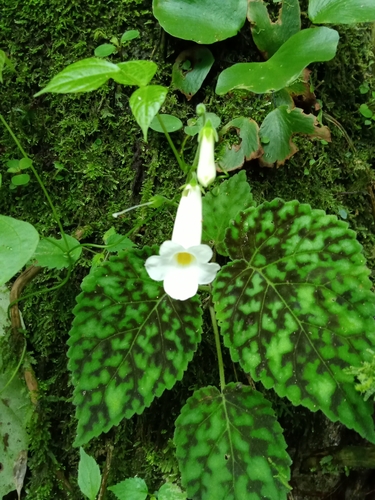
Smithiantha, sometimes referred to as temple bells, is a genus of flowering plants in the family Gesneriaceae, endemic to Mexico, primarily in Oaxaca state.

Bartramia
genus of mosses in the family Bartramiaceae
Planiplax
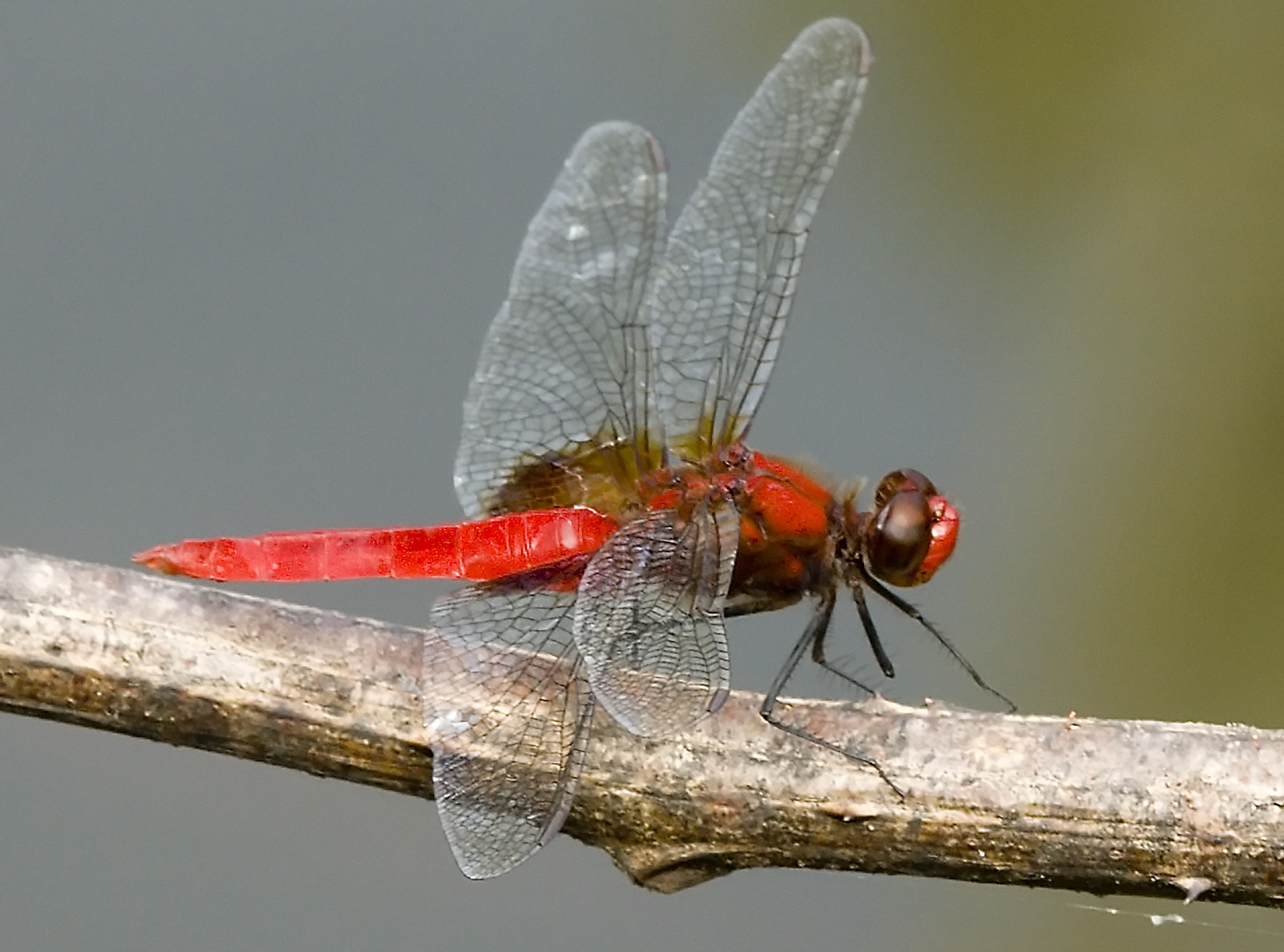
Planiplax is a genus of skimmers in the dragonfly family Libellulidae. There are about five described species in Planiplax.
Sycanthidae
Sycanthidae is a family of calcareous sponges in the order Leucosolenida.

Hypoleucis
Hypoleucis is a genus of skipper butterflies in the family Hesperiidae.
Toxidia
thumb|Toxidia doubledayi, Australia
Toxidia is a genus of butterflies in the subfamily Trapezitinae of family Hesperiidae. The contained species are found in the Australasian realm.

Elaeoluma
Elaeoluma is a genus of plants in the family Sapotaceae described as a genus in 1891.
Nephromopsis
Nephromopsis is a genus of lichenized fungi within the Parmeliaceae family.
Populina
genus of plants
Pharmacophagus
Pharmacophagus antenor, the Madagascar giant swallowtail, is a butterfly from the family Papilionidae. As the common name implies, it is large (12– to 14-cm wingspan) and endemic to Madagascar. It is the only species in the genus Pharmacophagus.
Hesperomyces
thumb|A mature thallus of the [[Hesperomyces halyziae.]]
Chrotoma
Chrotoma is a genus of long-horned beetles in the family Cerambycidae. There is a single species in Chrotoma, C. dunniana, found in the southwest United States and northern Mexico.
Psoroglaena
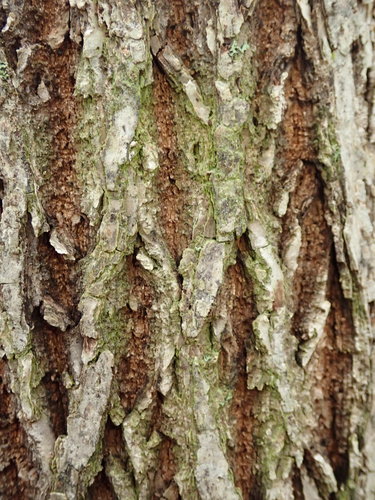
Psoroglaena is a genus of lichen-forming fungi in the family Verrucariaceae. The genus was circumscribed by Johann Müller Argoviensis in 1891, with Psoroglaena cubensis assigned as the type species.
Volvulella
Volvulella is a genus of gastropods belonging to the family Rhizoridae.
Actinoplaca
Actinoplaca is a small genus of lichen-forming fungi in the family Gomphillaceae. The genus is foliicolous, meaning its species grow on the surface of living leaves in humid tropical forests, and has been recorded from Central and South America and tropical Africa. The genus produces distinctive spherical structures on the thallus surface, now understood to be a type of asexual reproductive structure called '''', which were among the first such structures ever described in lichens.
Cataonia
genus of insects
Willkommlangea reticulata
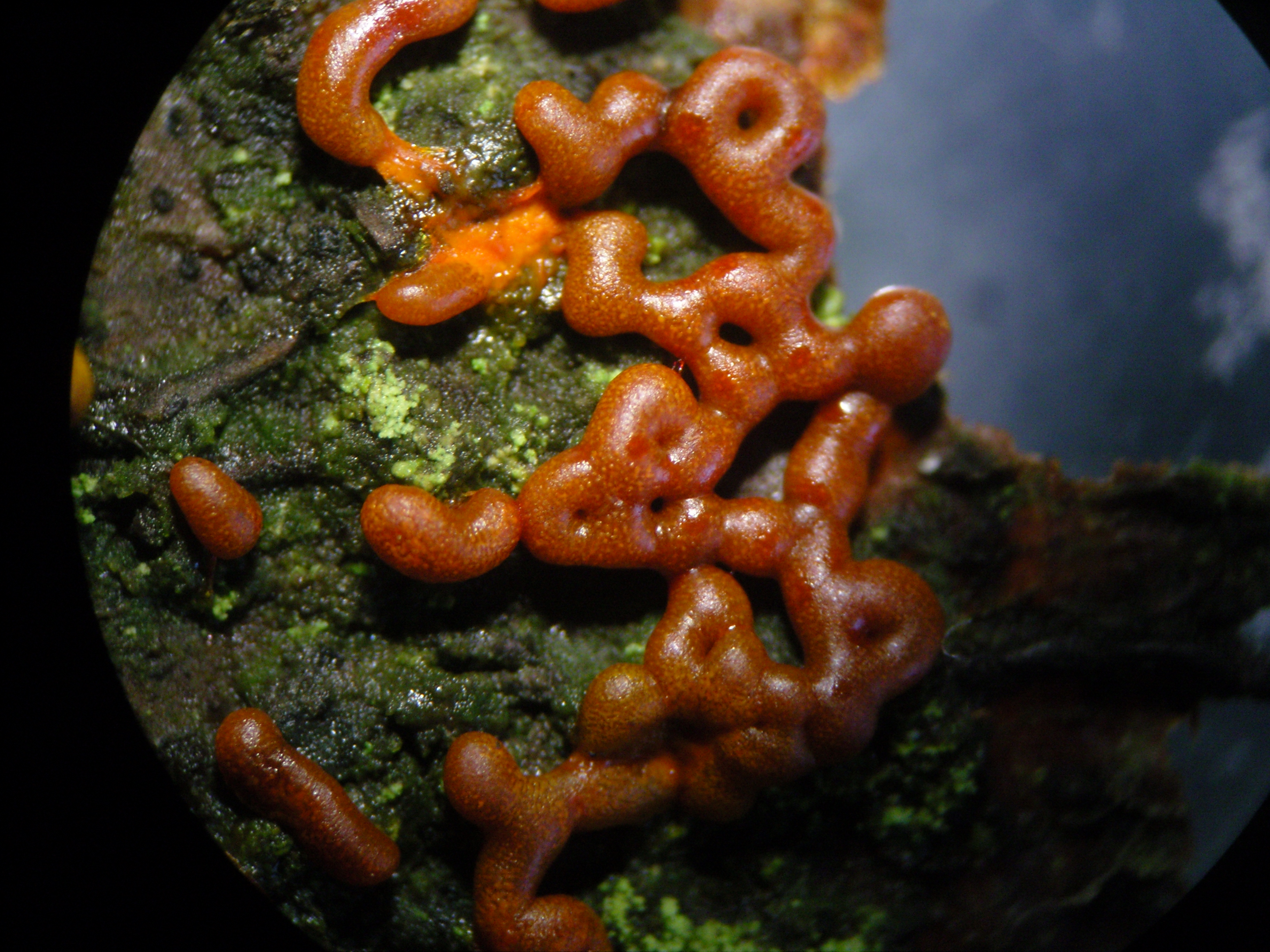
Willkommlangea reticulata is a slime mold species from the order Physarales and the only species of the genus Willkommlangea. It is common worldwide, but rare in Europe. The tropics are possibly the main area of habitat.
Neophyllis
Neophyllis a small genus of lichen-forming fungi in the family Sphaerophoraceae. The genus is endemic to Australasia, occurring in southeastern Australia, Tasmania and New Zealand. It comprises two recognised species characterised by small, leaf-like structures () and black, spherical spore-producing structures (apothecia). The more common and widespread species, N. melacarpa, typically grows on rotting wood and soil in various forest and heathland habitats, while the rarer N. pachyphylla is found mainly on granite and sandstone substrates. First proposed in 1889 as Phyllis and renam
Anomomorpha
Anomomorpha is a genus of lichens in the family Graphidaceae. The genus, described in 1891, has a pantropical distribution. These lichens form pale grey to dull olive crusts on tree bark that often develop low wart-like bumps covered with powdery particles, and produce narrow, usually wavy slit-like fruiting bodies. They are found in tropical rainforests worldwide, growing on shaded to semi-exposed bark in primary or lightly disturbed evergreen forests, with some species being narrowly restricted to specific mountain cloud forests.
Escaryus
Escaryus is a genus of soil centipedes in the family Schendylidae. These centipedes are notable as schendylids adapted to colder temperatures and restricted to cool climates and high latitudes. With more than 30 species, this genus is easily the largest group of such centipedes in the family Schendylidae. Most schendylids are limited to tropical or subtropical regions.
Synarthonia
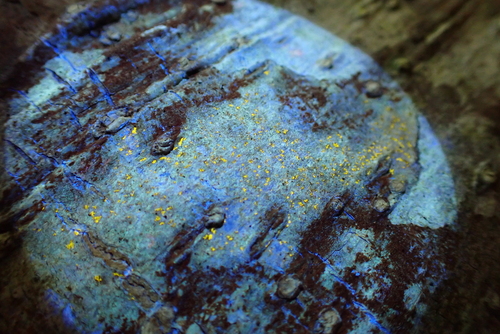
Synarthonia is a genus of lichen-forming fungi in the order Arthoniales. The genus has not been placed into a family. These crustose lichens typically form thin, crust-like growths on tree bark in tropical and temperate regions worldwide, though many species have restricted geographical ranges and are known only from single locations. The genus is distinguished by its reproductive structures, which appear as small grouped patches on the lichen surface, and by its spores that change from colourless to brownish as they mature and have distinctive enlarged tip cells. While most species form tradi
Ascocorticium
The Ascocorticiaceae are a family of fungi in the Ascomycota, class Leotiomycetes. This is a monotypic taxon, containing the single genus Ascocorticium. The family was first described by Joseph Schröter in 1893. Species in this family have a widespread distribution in temperate locales, where they grow saprobically, often on the bark of conifers.
Moniezia
Moniezia a genus of tapeworms that are parasitic in mammals, including sheep, goat and cattle. It comprises four known species such as M. expansa, M. benedeni, M. autumnalis and M. baeri. M. expansa is the most well known species within the genus because of its high prevalence. Members of the genus are among the largest cestodes reaching up to 10 m in length. They inhabit the small intestine of mammalian host. Their life cycle is indirect requiring intermediate host, which are oribatid mites. They are characterized by the presence of interproglottid glands.
Arthrorhabdus
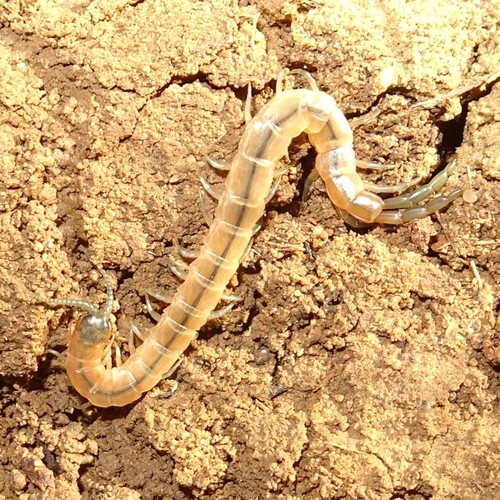
Arthrorhabdus, from the Greek ἄρθρον, a joint, and ῥάβδος, a staff, is a genus of Scolopendrid centipede in the subfamily Scolopendrinae. Species are found in Mexico and the Southern United States (A. pygmaeus), Australia (A. paucispinus & A. mjöbergi), and South Africa (A. formosus). Since a reapprasial in the genus in 2010, the genus only has four species. It may be polyphyletic.
Protanthea
Protanthea simplex is a species of sea anemone found in deep water off the coasts of north west Europe. It is the only species in the monotypic genus Protanthea.