Category
page 1Taxa described in 1909
Chamaemyces
Chamaemyces is a genus of fungi in the family Agaricaceae. It was circumscribed by mycologist Franklin Sumner Earle in 1906.
Dibaeis
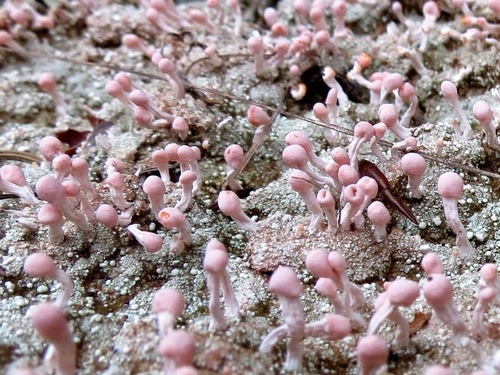
Dibaeis is a genus of lichen-forming fungi in the family Icmadophilaceae. The genus is widely distributed in tropical regions. Dibaeis was circumscribed in 1909 by Frederic Edward Clements with Dibaeis rosea as the type species. Several species were transferred from other genera in a 1993 publication.
Agonimia
Agonimia is a genus of lichen-forming fungi in the family Verrucariaceae. These lichens typically form crusts made of tiny grain-like clumps or small scale-like fragments on tree bark and rocks, with some species developing delicate leaf-like structures up to 5 mm across. The genus includes about 22 species found worldwide, characterized by their black flask-shaped reproductive structures and distinctive brick-patterned ascospores.
Allantoparmelia
Allantoparmelia is a genus of lichenised fungi in the large family Parmeliaceae. It is a genus of only three currently accepted species. All three Allantoparmelia lichens have a foliose growth form. They appear to be a very slow growing group of lichens, with a mean annual thallus diameter increase of only 0.23–0.35 mm per year.
Commicarpus
Commicarpus is a genus of flowering plants belonging to the family Nyctaginaceae. The genus contain some 30 to 35 species which are native to the tropics and subtropics. Most are found in Africa and western Asia, and eight species are native to southern Africa.
Placynthiella
Placynthiella is a genus of lichen-forming fungi in the family Trapeliaceae. The genus has a complex naming history involving multiple independent descriptions by different scientists between 1909 and 1939, with the current accepted name dating to the earliest valid publication by Alexander Elenkin. These lichens form thin, dark green-brown crusts that blend closely with their growing surfaces, making them challenging to spot in the field on acidic soils, decaying wood, and bark. The genus is distinguished from similar lichen groups by its distinctive brown, brick-like fruiting body margins an
Eogenes
Eogenes is a Palearctic genus of grass skippers in the family Hesperiidae.
Phaeosphaeria
Phaeosphaeria is a genus of fungi in the family Phaeosphaeriaceae. It has about 95 species. The genus was circumscribed by Japanese mycologist Ichiro Miyake in 1909, with Phaeosphaeria oryzae assigned as the type species.
Velamysta
Velamysta is a genus of clearwing (ithomiine) butterflies, named by Richard Haensch in 1909. They are in the brush-footed butterfly family, Nymphalidae.
Byssochlamys
Byssochlamys is a former genus of fungi in the Trichocomaceae family, containing teleomorph forms of Paecilomyces.
Several species of the genus Byssochlamys were well known to be associated with food spoilage, especially acidic heat-processed foods. A health concern was the production of the mycotoxin patulin in fruit juices, as well as byssochlamic acid and mycophenolic acid.
Acanthothecis
Acanthothecis is a genus of lichen-forming fungi in the family Graphidaceae. The genus was circumscribed by Frederick Edward Clements in 1909. These lichens form pale grey-brown to olive-green crusts on tree bark and are characterized by elongated, pencil-like slits containing spores, with distinctive tiny spines on internal filaments that help distinguish them from similar genera. The genus includes about 50 species found primarily in tropical and subtropical forests worldwide, where they grow on living tree bark and serve as indicators of relatively undisturbed woodland environments.
Unguiculariopsis
Unguiculariopsis is a genus of lichenicolous fungi in the family Cordieritidaceae. It has 29 species.
Dilepididae
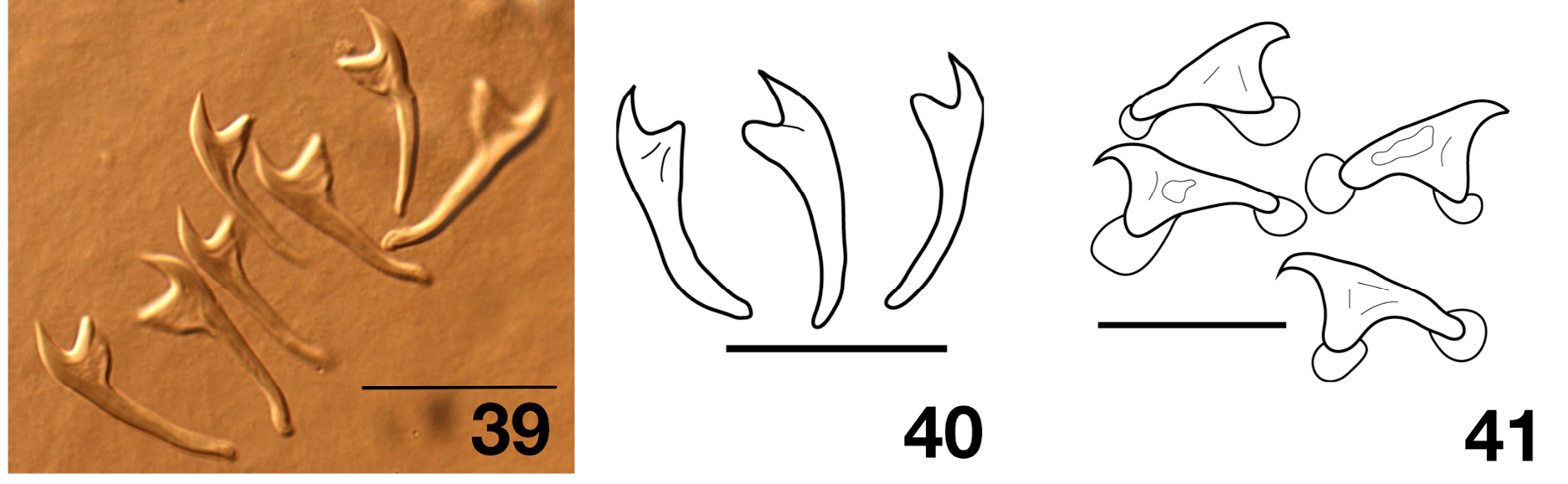
Dilepididae is a family of flatworms belonging to the order Cyclophyllidea.
Kolostoneura
Kolostoneura is a genus of sea cucumber in the family Chiridotidae. K. novaezealandiae was first recorded in the shallow coastal waters of New Zealand, while K. griffithsi is known from the Scotia Sea in Antarctica from depths of 506 m.
Delphinieae
Delphinieae is a tribe of flowering plants in the family Ranunculaceae. It comprises 4 genera found in Eurasia, North America, and Africa.
Ribautia
Ribautia is a genus of centipedes in the family Geophilidae. This genus was described by French myriapodologist Henry Wilfred Brolemann in 1909. Centipedes in this genus are found in South America, tropical Africa, Madagascar, the Arabian peninsula, Australia, New Zealand, and Melanesia.
Collybiopsis
Collybiopsis is a resurrected genus of mushroom-forming fungi in the family Omphalotaceae.
Bethalus
Bethalus is a genus of woodlice belonging to the family Armadillidae. The type specimen for this species was originally designated as Armadillo nigrinus by Gustav Budde-Lund in 1885 but in 1909 he revised this designation to Bethalus nigrinus, creating a new genus in the process. The type specimen is believed to have been collected in South Africa. There are at least 20 species in this genus.
Dinogeophilus
Dinogeophilus is a genus of soil centipedes in the family Schendylidae. This genus contains only two species, Dinogeophilus pauropus and D. oligopodus, which range from in length. These species are notable as the smallest not only in the order Geophilomorpha but also in any epimorphic order of centipedes. The species D. oligopodus is also notable as one of only six species of soil centipedes to feature only 29 pairs of legs and one of only two species to include females with only 29 pairs, the minimum number recorded for females in the order Geophilomorpha.
Epilichen
Epilichen is a small genus of lichen-forming fungi in the family Rhizocarpaceae. These parasitic lichens live on other lichens, beginning as thin, crust-like patches that may break into small islands or scales, and in some cases produce no visible body at all except for their reproductive structures. They reproduce through black, disc-shaped fruiting bodies that contain distinctive brown spores with a "doughnut ring" appearance, and can eventually take over the space occupied by their host lichen once it dies.
Titanotrichum
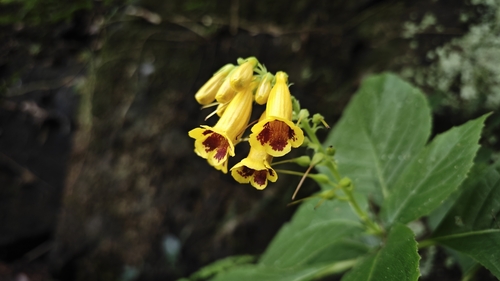
Titanotrichum is a genus of flowering plants belonging to the family Gesneriaceae.

Kebira
genus of sponges
Calyptronectria
Calyptronectria is a genus of fungi in the family Melanommataceae.
Ophiosphaerella
Ophiosphaerella is a genus of fungi in the family Phaeosphaeriaceae. The genus was described by Italian-Argentinian botanist and mycologist Carlos Luigi Spegazzini in 1909.
Raciborskiella
Raciborskiella is a genus of foliicolous (leaf-dwelling) lichens in the family Strigulaceae. Characterized by their thin, dark bluish-grey thalli, these lichens form distinctive patches on leaf surfaces and develop between the leaf cuticle and epidermal cells. The genus was originally proposed by Franz Höhnel in 1909, later merged with Strigula, and then reinstated as a separate genus in 2020 based on molecular phylogenetics studies. Raciborskiella species are distinguished by their exposed, black perithecia, large with gelatinous appendages, and association with the green algal photobiont Cep
Naeviella
Naeviella is a genus of fungi in the family Calloriaceae. It has three species. The genus was circumscribed by American plant ecologist Frederic Clements in 1909.
Lasiosphaeris
Lasiosphaeris is a genus of fungi in the Sordariomycetes class (subclass Sordariomycetidae) of the Ascomycota. The relationship of this taxon to other taxa within the class is unknown (incertae sedis), and it has not yet been placed with certainty into any order or family.
Macronicophilus
Macronicophilus is a genus of soil centipedes in the family Geophilidae. This genus contains only four species. These centipedes exhibit traits so unusual that authorities once placed this genus in its own family, Macronicophilidae. In 2014, however, authorities deemed Macronicophilidae to be a junior synonym of Geophilidae, and references now place this genus in the family Geophilidae instead. These centipedes are found in the northern Andes and the Amazon basin in South America.
Steneurytion
Steneurytion is a genus of centipedes in the family Geophilidae. This genus was first described by Austrian myriapodologist Carl Attems in 1909. These centipedes are found in Australia, New Zealand, and Hawaii.
Arctopeltis
Myriolecis is a genus of lichen-forming fungi in the family Lecanoraceae. These lichens typically form thin, crust-like patches on rocks, bark, or soil, and reproduce through small disc-shaped structures that contain spores. The genus was reinstated in recent years when DNA studies showed that these species form a distinct group separate from the closely related genus Lecanora. Phylogenetic studies place Myriolecis in the MPRPS clade of Lecanoraceae, close to Protoparmeliopsis.
Sepedonophilus
Sepedonophilus is a genus of three species of centipedes in the family Geophilidae. This genus is endemic to Australia, and was first described by Austrian myriapodologist Carl Attems in 1909. Centipedes in this genus feature scattered coxal pores and have no sternal pores; the lateral parts of the labrum almost touch medially, and the intermediate part is inconspicuous; the coxosternite of the second maxillae have peculiar anterior projections. These centipedes range from about 2 cm to 5 cm in length and have 49 to 79 pairs of legs. The smallest species in this genus, Sepedonophilus
Mecophilus
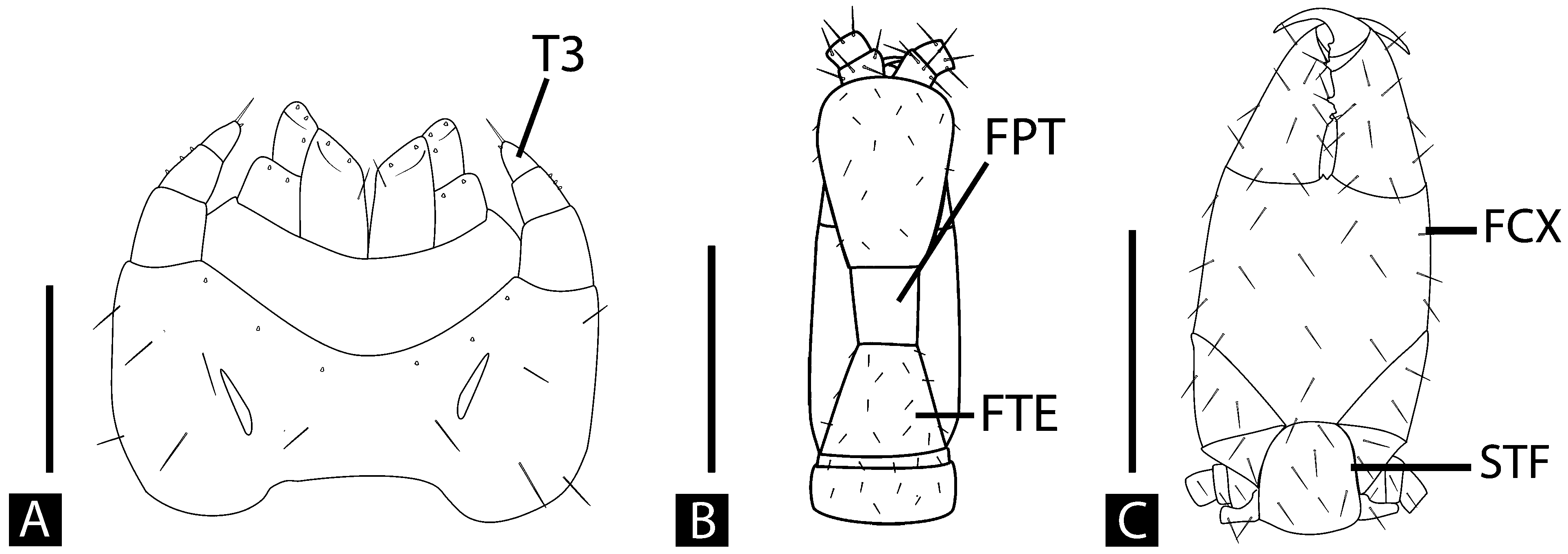
Mecophilus is a genus of soil centipedes in the subfamily Aphilodontinae, a clade formerly known as the family Aphilodontidae but now deemed a subfamily within the family Geophilidae. The species in this genus are among the smallest centipedes in the order Geophilomorpha, reaching only 8 mm in length. This genus is also notable for featuring the fewest legs (only 33 or 35 pairs) in the subfamily Aphilodontinae. The species in this genus are found in the Atlantic Forest in south and southeastern Brazil.
Mycoglaena
Mycoglaena is a genus of fungi in the class Dothideomycetes. The relationship of this taxon to other taxa within the class is unknown (incertae sedis).
Colobometra
Colobometra is a genus of echinoderms.
Syntermes
Syntermes is a genus of large Neotropical higher termites within the subfamily Syntermitinae. The genus is found only in South America where members are distributed widely throughout the continent, being found from the tropical rainforests of Colombia to the savannas of Brazil and Northern Argentina.