Category
page 1Taxa described in 1924
%20panamensis.jpeg)
Lutzomyia
Lutzomyia is a genus of phlebotomine sand flies consisting of nearly 400 species, at least 33 of which have medical importance as vectors of human disease. Species of the genus Lutzomyia are found only in the New World, distributed in southern areas of the Nearctic and throughout the Neotropical realm. Lutzomyia is one of the two genera of the subfamily Phlebotominae to transmit the Leishmania parasite, with the other being Phlebotomus, found only in the Old World. Lutzomyia sand flies also serve as vectors for the bacterial Carrion's disease and a number of arboviruses.
Plinthocoelium
Plinthocoelium is a genus of beetles in the family Cerambycidae.
Dipodascaceae
The Dipodascaceae are a family of yeasts in the order Saccharomycetales. According to the 2007 Outline of Ascomycota, the family contains four genera; however, the placement of Sporopachydermia and Yarrowia is uncertain.
GBIF accepted all the species and also added Magnusiomyces and Protendomycopsis to the family.
Species in the family have a widespread distribution, and are found in decaying plant tissue, or as spoilage organisms in the food industry.
Sporobolomyces
Sporobolomyces is a genus of fungi in the subdivision Pucciniomycotina. It is also known as "mirror yeast", due to its forceful ejection of its spores, which can create a "mirror image" of a growing colony when grown between two opposing agar surfaces.

Problema
Problema is a genus of skippers in the family Hesperiidae.
Chaunanthus
Chaunanthus is a genus of flowering plants belonging to the family Brassicaceae.
Cyanophora
Cyanophora is a genus of glaucophytes, a group of rare but evolutionarily significant freshwater microalgae.
Apocheiridium
Apocheiridium is a genus of pseudoscorpions belonging to the family Cheiridiidae.
Chilocardamum
Chilocardamum is a small genus of four herbaceous cress-like species of plants in the family Brassicaceae, only found growing in Patagonia, southern Argentina.
Microdochium
Microdochium is a genus of ascomycete fungi, which contains several plant pathogens. The teleomorph is Monographella. The genus was circumscribed by German mycologist Hans Sydow in 1924.
Tremellogaster
Tremellogaster is a fungal genus in the Diplocystaceae family. A monotypic genus, it contains the single species Tremellogaster surinamensis, known from Suriname and Guyana.
Entylomella
Entylomella is a genus of smut fungi in the family Entylomataceae. The genus, which contains anamorph forms of Entyloma species, was circumscribed in 1924 by Franz Xaver Rudolf von Höhnel.
Endoscypha perforans
Endoscypha is a fungal genus in the family Helotiaceae. This is a monotypic genus, containing the single species Endoscypha perforans. The genus and species were described as new to science in 1924 by German mycologist Hans Sydow.
Tiphobiosis
Tiphobiosis is a genus of caddisflies belonging to the family Hydrobiosidae. The genus was first recognised by Robert John Tillyard in 1924.
Cystobasidium
Cystobasidium is a genus of fungi in the order Cystobasidiales. The type species is a fungal parasite forming small gelatinous basidiocarps (fruit bodies) on various ascomycetous fungi (including Lasiobolus and Thelebolus spp) on dung. Microscopically, it has auricularioid (laterally septate) basidia producing basidiospores that germinate by budding off yeast cells. Other species are known only from their yeast states. The yeasts Cystobasidium minutum and C. calyptogenae are rare but known human pathogens.
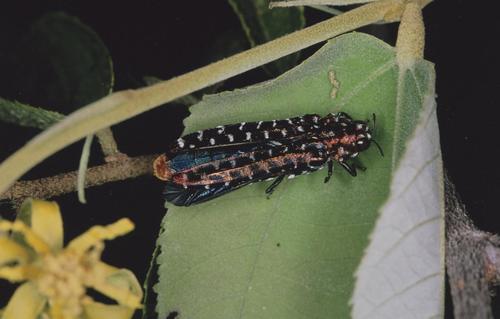
Chalcophlocteis
Chalcophlocteis is a genus of beetles in the family Buprestidae, containing the following species:
Crambella
Crambella is a genus of flowering plants belonging to the family Brassicaceae. It includes a single species, Crambella teretifolia, which is endemic to Morocco.
Lecithoepitheliata
The Lecithoepitheliata are an order of rhabditophoran flatworms. They are free-living worms, found in freshwater, soil, and marine environments. However, it is still poorly known their roles in the natural food web.
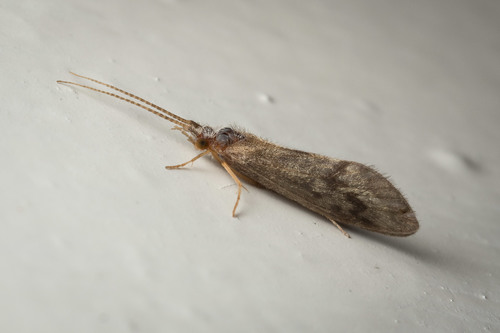
Pycnocentrodes
Pycnocentrodes is a genus of caddisflies belonging to the family Conoesucidae. The genus was first recognised by Robert John Tillyard in 1924. All known species of Pycnocentrodes are endemic to New Zealand.